Loading...
Joao Lourenco vs Phibun
Phibun leads by 1.2 pts · 2 figures compared
…
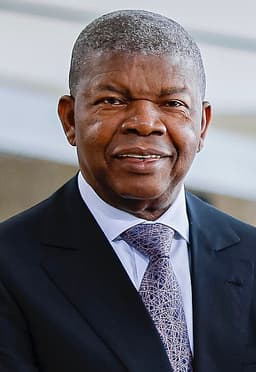
Joao Lourenco
General · Modern
51.3Total

Phibun
General · Modern
52.5Total
Basic Information
Born
1954
1897
Died
—
1964
Era
Modern
Modern
Nationality
Angola
Thailand
Occupation
General
General
Civilization
Other
Eastern
Score Comparison
Military (10%)
25.9
47.5
Political (20%)
68.0
48.0
Influence (20%)
52.5
58.0
Legacy (20%)
40.8
45.0
Leadership (15%)
74.0
71.0
Strategy (15%)
41.0
41.7
TOTAL
51.3
52.5
Joao Lourenco — Complete Timeline
2017 AD
Elected President of AngolaPolitical Action◆ Major
João Lourenço succeeded José Eduardo dos Santos as president after winning the 2017 general election. He became the first new president of Angola in 38 years, marking a transition of power within the MPLA party.
AngolaPresidential TransitionMPLA
Impact: national
Launched Anti-Corruption CampaignPolitical Action◆ Major
Lourenço initiated a campaign against corruption and nepotism, targeting figures from the previous dos Santos administration. He removed Isabel dos Santos from the leadership of Sonangol and José Filomeno dos Santos from the sovereign wealth fund.
AngolaAnti-CorruptionDos Santos Family
Impact: nationalconstructive
2022 AD
Reelected President of AngolaPolitical Action
Lourenço won a second term in the 2022 general election with 51% of the vote. The election was marred by allegations of irregularities and low voter turnout, but the MPLA retained its parliamentary majority.
AngolaElectionMPLA
Impact: national
Phibun — Complete Timeline
1938 AD
Led a coup to become Prime MinisterPolitical Action◆ Major
Phibun (Plaek Phibunsongkhram) became Prime Minister of Thailand after a coup that ousted the previous government. He established a military dictatorship and promoted Thai nationalism.
CoupDictatorshipNationalism
Impact: national
1939 AD
Renamed Siam to ThailandPolitical Action◆ Major
Phibun officially changed the country's name from Siam to Thailand (Prathet Thai), meaning 'Land of the Free'. This was part of his nationalist campaign to unify the Thai people and assert national identity.
NationalismName ChangeIdentity
Impact: nationalconstructive
1941 AD
Allied with Japan during World War IIWar◆ Major
Phibun allied Thailand with Japan after the Japanese invasion of Thailand in December 1941. He declared war on the Allies and allowed Japanese forces to use Thai territory for their campaigns in Southeast Asia.
World War IIAllianceJapan
Impact: regionaldestructive
1944 AD
Resigned after World War IIPolitical Action
Phibun resigned as Prime Minister in 1944 as the tide of war turned against Japan. He was replaced by a civilian government, but he remained influential and later returned to power.
ResignationPost-warPolitical Change
Impact: national
1948 AD
Returned to power in a coupPolitical Action◆ Major
Phibun returned to power through a military coup in 1948, overthrowing the civilian government. He ruled as a military dictator until 1957, aligning Thailand with the United States during the Cold War.
CoupCold WarDictatorship
Impact: national
Expert Analysis
Origins
João Lourenço was born on March 5, 1954, in Lobito, Angola. He studied at the Higher Institute of Engineering in Luanda but left to join the Marxist-oriented Popular Movement for the Liberation of Angola (MPLA) in 1974. Lourenço received military training in the Soviet Union and Algeria, rising through the ranks as a political commissar. His early career was shaped by the Angolan Civil War (1975-2002), where he fought against UNITA rebels.
Plaek Phibunsongkhram (known as Phibun) was born on July 14, 1897, in Nonthaburi, Siam (now Thailand). He attended the Royal Military Academy and later studied at the École d'Artillerie in France. Phibun was a key figure in the 1932 Siamese revolution that transformed the absolute monarchy into a constitutional monarchy. His early military career was marked by nationalist fervor and a desire to modernize Thailand.
Rise to Power
Lourenço's rise was gradual within the MPLA. He served as Minister of Defense from 2014 to 2017, building a reputation as a loyal party insider. In 2017, he was chosen by President José Eduardo dos Santos as his successor, winning the general election with 61% of the vote. Lourenço scored 68.0 in political acumen, reflecting his ability to navigate party politics. His anti-corruption campaign, launched in 2017, targeted dos Santos' children, including Isabel dos Santos (former head of Sonangol) and José Filomeno dos Santos (former sovereign wealth fund head).
Phibun rose to power through a coup in 1938, becoming Prime Minister after ousting Phraya Phahon. He scored 48.0 in political maneuvering, relying on military force. Phibun’s nationalist campaign included renaming Siam to Thailand in 1939, promoting Thai identity, and modernizing the military. He allied with Japan in December 1941 after the Japanese invasion, allowing Japanese troops to use Thai territory. This alliance secured his position but later led to his downfall.
Leadership & Governance
Lourenço’s leadership style is technocratic and reformist. He scored 74.0 in leadership, focusing on economic diversification and anti-corruption. He removed Isabel dos Santos from Sonangol in 2017, froze assets of former officials, and recovered over $5 billion in stolen assets by 2021. However, his governance is criticized for lack of political liberalization; the MPLA remains dominant, and opposition voices are suppressed. Lourenço’s strategy score of 41.0 reflects cautious reforms within a one-party state.
Phibun’s governance was authoritarian and nationalist. He scored 71.0 in leadership, implementing cultural mandates like wearing hats and using Western utensils. His economic policies were statist, with state-owned enterprises in banking and trade. Phibun’s alliance with Japan brought short-term benefits but devastated the economy after WWII. His military strategy scored 47.5, but his political strategy of aligning with the Axis powers proved disastrous, leading to his resignation in 1944.
Triumph & Tragedy
Lourenço’s greatest triumph is his anti-corruption campaign, which recovered billions and weakened the dos Santos clan. He also secured a second term in 2022 with 51% of the vote. However, his tragedy is the failure to address poverty and inequality; Angola remains heavily dependent on oil, and unemployment exceeds 30%. His popularity waned due to economic mismanagement and allegations of election irregularities.
Phibun’s triumph was modernizing Thailand and fostering national identity. He introduced compulsory education, built infrastructure, and changed the country’s name to Thailand. His tragedy was his alliance with Japan, which led to Thailand being treated as a defeated nation after WWII. He was forced to resign in 1944 and was later tried for war crimes, though acquitted. His return to power in 1948 ended in 1957 when he was overthrown by Field Marshal Sarit Thanarat.
Character & Destiny
Lourenço is methodical and patient, shaped by his military background. He avoids confrontation but is determined to consolidate power. His destiny is tied to Angola’s stability; he scored 40.8 in legacy, as his reforms are reversible. Historians view him as a reformer within an authoritarian system, but his impact remains limited.
Phibun was charismatic and ambitious, but prone to miscalculations. His nationalism boosted Thai morale, but his alignment with Japan revealed poor strategic judgment. His score of 45.0 in legacy reflects a mixed record: he modernized Thailand but tarnished its reputation. His character of decisive action led to both achievements and failures.
Legacy
Lourenço’s legacy is still forming. He has weakened the dos Santos network but has not transformed Angola’s political system. His anti-corruption drive is praised internationally, but economic diversification lags. He scored 52.5 in influence, lower than Phibun’s 58.0, due to Angola’s limited global role.
Phibun’s legacy is more tangible. He renamed the country, built a modern army, and promoted national pride. However, his collaboration with Japan is a dark chapter. Thailand’s post-war alignment with the US was a direct reaction to his policies. His influence score of 58.0 reflects his lasting impact on Thai identity.
Conclusion
While Lourenço’s anti-corruption efforts are commendable, Phibun had a greater impact on his nation’s identity and trajectory. Phibun’s total score of 52.5 edges Lourenço’s 51.3, and his legacy of renaming Thailand and modernizing its military endures. Lourenço’s reforms are significant but remain incomplete and reversible. Therefore, Phibun is the more impactful leader in historical terms.
Rankings
🥇
PhibunLeader
Mil: 47.5Pol: 48.0Inf: 58.0
52.5
🥈
Joao Lourenco
Mil: 25.9Pol: 68.0Inf: 52.5
51.3
+1.2 behind
How This Comparison Works
Algorithm
Each figure is scored on 6 dimensions (0—100 scale) based on structured historical data: Military (10%), Political (20%), Influence (20%), Legacy (20%), Leadership (15%), Strategy (15%). The weighted total produces the final ranking.
Data Sources
Scores are computed from structured sub-indicators in the database. Scale factors adjust for era (Ancient ×0.85, Modern ×1.0) and civilization size (Eastern ×1.05, Other ×0.80) to account for differences in population and military scale.
Maximum 3 Figures
Comparisons are limited to 2—3 figures to ensure readability and statistical meaningfulness.
Error Margins
±5 points per dimension — Sub-scores are derived from historical records with inherent uncertainty. Two figures within 5 points on a dimension should be considered roughly equivalent in that area.
Total Score Accuracy
±3 points overall — The weighted combination of 6 dimensions produces a total score with approximately ±3 points of uncertainty. Differences of less than 3 points are not statistically significant— the figures are effectively tied.
Known Limitations
- Historical records are incomplete and uneven across civilizations
- Figures from oral-tradition societies may be underrepresented
- Occupation labels can misclassify multi-role figures
- Scores measure capability and impact, not moral character
- Quantitative scoring is a comparison tool, not absolute truth
Capability Radar
Military (10%) — Battles & Warfare
Battles
10
20
Win Rate
10
15
Expansion
10
25
Political (20%) — Governance & Reform
Reform
40
40
Diplomacy
50
30
Economy
35
35
Influence (20%) — Cultural & Global Reach
Cultural
20
30
Global
25
30
Legacy (20%) — Historical Impact
Historical
25
40
Longevity
20
20
Leadership (15%) — Power & Stability
Tenure
55
65
Stability
30
25
Strategy (15%) — Tactics & Innovation
Strategy
15
20
Tactics
15
25
Reform
20
30
Similar Comparisons
Comments & Discussion
No comments yet. Be the first to share your thoughts!