Loading...
Oscar II vs Osei Kwadwo
Osei Kwadwo leads by 8.3 pts · 2 figures compared
…

Oscar II
Emperor · Modern
47.5Total
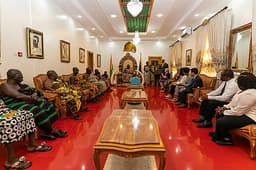
Osei Kwadwo
Emperor · Modern
55.8Total
Basic Information
Born
1829
1735
Died
1907
1777
Era
Modern
Modern
Nationality
Sweden
Ashanti Empire
Occupation
Emperor
Emperor
Civilization
Western
Other
Score Comparison
Military (10%)
25.9
45.0
Political (20%)
46.6
59.3
Influence (20%)
49.4
54.9
Legacy (20%)
39.2
45.8
Leadership (15%)
65.0
85.0
Strategy (15%)
60.0
45.0
TOTAL
47.5
55.8
Oscar II — Complete Timeline
1880 AD
Patronage of the arts and sciencesCultural
Oscar II was a noted patron of the arts and sciences. He supported the Swedish Academy, the Royal Swedish Academy of Sciences, and various cultural institutions. He also personally funded expeditions, such as the Vega Expedition, which completed the first navigation of the Northeast Passage.
SwedenCultureSciencePatronage
Impact: nationalconstructive
1901 AD
Defense reform and military modernizationReform◆ Major
Oscar II oversaw a major reform of the Swedish military, introducing universal conscription and modernizing the army and navy. This was in response to the changing geopolitical situation in Europe and aimed at maintaining Sweden's neutrality and defense capabilities.
SwedenMilitaryConscriptionReform
Impact: nationalconstructive
1905 AD
Dissolution of the union with NorwayPolitical Action
Oscar II was the last king of the united kingdoms of Sweden and Norway. After a political crisis, the Norwegian parliament unilaterally declared the dissolution of the union. Oscar II accepted the separation peacefully, abdicating his claim to the Norwegian throne and recognizing Norway's independence.
SwedenNorwayUnionIndependence
Impact: regional
Osei Kwadwo — Complete Timeline
1760 AD
Reorganization of the Ashanti bureaucracyReform◆ Major
Osei Kwadwo restructured the Ashanti government by creating a more formal bureaucracy with appointed officials, including the Gyaasewahene (treasurer) and other administrative roles. This reduced the influence of hereditary chiefs and improved efficiency.
BureaucracyReformAshanti
Impact: nationalconstructive
1765 AD
Introduction of the 'Osei Kwadwo' system of successionReform◆ Major
Osei Kwadwo implemented a new system for selecting the Asantehene, moving away from strict matrilineal inheritance to allow for the appointment of the most capable candidate from the royal family. This aimed to ensure competent leadership.
Succession ReformAshantiPolitical
Impact: nationalconstructive
1770 AD
Military campaigns against the Akyem and AkwamuWar
Osei Kwadwo led military campaigns to suppress rebellions and expand Ashanti territory, particularly against the Akyem and Akwamu states. These campaigns reinforced Ashanti dominance in the region.
Military CampaignAkyemAkwamu
Impact: regional
Expert Analysis
Origins
Oscar II (1829-1907) was born in Stockholm as the third son of King Oscar I of Sweden and Norway. His early life was marked by diplomatic and military training, but he was not initially destined for the throne. He pursued a career in the navy and later served as a professor at the Royal Swedish Academy of Sciences. His accession came unexpectedly after his brother Charles XV died without male heirs. Oscar II's background in the sciences and arts shaped his patronage of cultural institutions.
Osei Kwadwo (c. 1735-1777) was born in the Ashanti Empire, the son of an influential noble. He rose through the ranks of the Ashanti administration under Asantehene Opoku Ware I and Kusi Obodom. His early career involved military command and bureaucratic roles, which gave him firsthand experience of the empire's administrative weaknesses. He was elected Asantehene in 1764 after a period of political instability.
Rise to Power
Oscar II became king in 1872 at the age of 43, inheriting a dual monarchy facing growing tensions with Norway. His rise was peaceful, but his reign was immediately confronted with constitutional challenges. The Norwegian parliament, the Storting, sought greater autonomy, leading to a political crisis that culminated in the dissolution of the union in 1905. Oscar II's refusal to accept Norwegian demands for a separate consular service triggered a unilateral declaration of independence. He chose not to use military force, accepting the dissolution after negotiations.
Osei Kwadwo's rise was more contested. He came to power in 1764 after a period of decline under his predecessor Kusi Obodom, who had lost territory to the Akyem and Dahomey. Osei Kwadwo was elected by the traditional council, the Gyaasewa, based on his military and administrative reputation. He immediately set about consolidating power by centralizing the bureaucracy and reducing the influence of regional chiefs.
Leadership & Governance
Oscar II governed as a constitutional monarch with limited political power. His leadership style was cautious and diplomatic. He supported defense reform, introducing universal conscription in 1885 and modernizing the navy with new warships. However, his political score of 46.6 reflects his inability to prevent the dissolution of the union. He focused on cultural patronage, founding the Nobel Institute and supporting the Swedish Academy. His governance was reactive rather than proactive.
Osei Kwadwo, with a leadership score of 85.0, was a hands-on reformer. He reorganized the Ashanti government by creating a formal bureaucracy with appointed officials: the Gyaasewahene (treasurer), the Nsumankwahene (chief of state), and others. This reduced the power of hereditary chiefs and increased efficiency. He also reformed the tax system and established a standing army. His political score of 59.3 reflects his successful centralization, though he faced resistance from traditionalists.
Triumph & Tragedy
Oscar II's greatest triumph was overseeing Sweden's peaceful transition through the loss of Norway. He avoided war, preserving Sweden's neutrality. His patronage of the arts left a cultural legacy, including the establishment of the Nobel Prize. However, his failure to maintain the union was a personal and political tragedy. He was the last king of a united Scandinavia, and his reign ended with diminished Swedish influence.
Osei Kwadwo's triumph was the stabilization and expansion of the Ashanti Empire. His bureaucratic reforms created a more efficient state that lasted for decades. His military campaigns against the Akyem and Akwamu (scoring 45.0 in military) expanded Ashanti territory. However, his tragedy was that his reforms created tensions with the old aristocracy, leading to succession disputes after his death. His 'Osei Kwadwo' system of succession, which allowed for appointed heirs, was controversial and later abandoned.
Character & Destiny
Oscar II was intellectual and diplomatic, preferring negotiation over conflict. His character shaped his destiny: his reluctance to use force led to the loss of Norway, but also preserved Sweden's neutrality. He was seen as a symbol of unity but ultimately failed to hold the union together. His patronage of science and culture earned him respect, but his political influence waned.
Osei Kwadwo was pragmatic and authoritarian. His character drove him to centralize power, which strengthened the empire but alienated traditional elites. His destiny was to die in 1777, likely poisoned by opponents of his reforms. His death led to a brief period of instability, but his administrative changes endured.
Legacy
Oscar II's legacy is mixed. He is remembered as the last king of the Swedish-Norwegian union and a patron of culture. The Nobel Prize, established during his reign, remains a major global institution. However, his political legacy is limited; Sweden's neutrality and constitutional monarchy continued after him. His influence score of 49.4 reflects his moderate impact.
Osei Kwadwo's legacy is more profound within the Ashanti context. His bureaucratic reforms laid the foundation for the modern Ashanti state. The 'Osei Kwadwo' system of succession, though short-lived, influenced later succession practices. His military campaigns secured Ashanti dominance in the region. His legacy score of 45.8 is lower but significant for African history.
Conclusion
Osei Kwadwo had greater impact as a reformer who reshaped a major African empire. Despite a lower total score (55.8 vs Oscar II's 47.5), his political and leadership scores (59.3 and 85.0) demonstrate effective governance that transformed the Ashanti state. Oscar II's reign was defined by loss and cultural patronage, but his political influence was limited by constitutional constraints. Osei Kwadwo's reforms created a more centralized and efficient government that lasted beyond his death, while Oscar II's union dissolved. Therefore, Osei Kwadwo's impact on his empire's trajectory was greater.
Rankings
🥇
Osei KwadwoLeader
Mil: 45.0Pol: 59.3Inf: 54.9
55.8
🥈
Oscar II
Mil: 25.9Pol: 46.6Inf: 49.4
47.5
+8.3 behind
How This Comparison Works
Algorithm
Each figure is scored on 6 dimensions (0—100 scale) based on structured historical data: Military (10%), Political (20%), Influence (20%), Legacy (20%), Leadership (15%), Strategy (15%). The weighted total produces the final ranking.
Data Sources
Scores are computed from structured sub-indicators in the database. Scale factors adjust for era (Ancient ×0.85, Modern ×1.0) and civilization size (Eastern ×1.05, Other ×0.80) to account for differences in population and military scale.
Maximum 3 Figures
Comparisons are limited to 2—3 figures to ensure readability and statistical meaningfulness.
Error Margins
±5 points per dimension — Sub-scores are derived from historical records with inherent uncertainty. Two figures within 5 points on a dimension should be considered roughly equivalent in that area.
Total Score Accuracy
±3 points overall — The weighted combination of 6 dimensions produces a total score with approximately ±3 points of uncertainty. Differences of less than 3 points are not statistically significant— the figures are effectively tied.
Known Limitations
- Historical records are incomplete and uneven across civilizations
- Figures from oral-tradition societies may be underrepresented
- Occupation labels can misclassify multi-role figures
- Scores measure capability and impact, not moral character
- Quantitative scoring is a comparison tool, not absolute truth
Capability Radar
Military (10%) — Battles & Warfare
Battles
34
20
Win Rate
37
25
Expansion
44
30
Political (20%) — Governance & Reform
Reform
30
75
Diplomacy
40
55
Economy
30
50
Influence (20%) — Cultural & Global Reach
Cultural
20
40
Global
15
30
Legacy (20%) — Historical Impact
Historical
25
45
Longevity
20
40
Leadership (15%) — Power & Stability
Tenure
35
60
Stability
45
60
Strategy (15%) — Tactics & Innovation
Strategy
46
35
Tactics
50
30
Reform
51
40
Similar Comparisons
Comments & Discussion
No comments yet. Be the first to share your thoughts!