Loading...
Opoku Ware I vs Reza Shah Pahlavi
Reza Shah Pahlavi leads by 0.6 pts · 2 figures compared
…

Opoku Ware I
Emperor · Modern
63.0Total
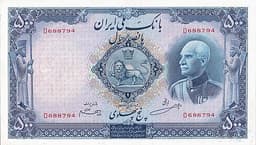
Reza Shah Pahlavi
Emperor · Modern
63.6Total
Basic Information
Born
1700
1878
Died
1750
1944
Era
Modern
Modern
Nationality
Ashanti Empire
Iran
Occupation
Emperor
Emperor
Civilization
Other
Middle Eastern
Score Comparison
Military (10%)
78.0
50.0
Political (20%)
59.3
72.0
Influence (20%)
62.0
72.0
Legacy (20%)
52.0
52.0
Leadership (15%)
80.0
72.0
Strategy (15%)
58.0
60.0
TOTAL
63.0
63.6
Opoku Ware I — Complete Timeline
1723 AD
Conquest of Bono MansoWar◆ Major
Opoku Ware I led the Ashanti army to conquer the Bono kingdom, including its capital Bono Manso. This expansion brought significant wealth and territory under Ashanti control, including gold-producing regions.
ConquestBonoAshanti Expansion
Impact: regional
1740 AD
Consolidation of Ashanti central authorityReform◆ Major
Opoku Ware I strengthened the central authority of the Asantehene by reducing the power of regional chiefs and integrating conquered territories into the Ashanti administrative system. This ensured greater control over the expanding empire.
CentralizationAdministrationAshanti
Impact: nationalconstructive
1742 AD
Conquest of the Akyem statesWar◆ Major
Opoku Ware I defeated the Akyem states, incorporating them into the Ashanti Empire. This campaign avenged the death of Osei Tutu I and further consolidated Ashanti dominance in the region.
ConquestAkyemAshanti
Impact: regional
1744 AD
Conquest of the Gonja kingdomWar◆ Major
Opoku Ware I extended Ashanti rule northward by conquering the Gonja kingdom. This expansion gave Ashanti control over trade routes to the Sahel and increased its influence in the region.
ConquestGonjaTrade Routes
Impact: regional
Reza Shah Pahlavi — Complete Timeline
1921 AD
1921 Persian coup d'étatPolitical Action◆ Major
Reza Khan, a Cossack Brigade officer, led a coup that overthrew the Qajar government. He became Minister of War and later Prime Minister, using the military to consolidate power and suppress regional rebellions.
CoupQajarMilitary
Impact: national
1926 AD
Coronation as Reza Shah PahlaviPolitical Action◆ Major
Reza Khan crowned himself Reza Shah Pahlavi, founding the Pahlavi dynasty. He replaced the Qajar dynasty and began a program of rapid modernization, centralization, and secularization of Iran.
CoronationDynastyModernization
Impact: national
1938 AD
Trans-Iranian Railway completionOther◆ Major
Reza Shah oversaw the completion of the Trans-Iranian Railway, connecting the Caspian Sea to the Persian Gulf. The project was a major infrastructure achievement, facilitating trade and military transport, but was built with forced labor.
InfrastructureModernizationRailway
Impact: nationalconstructive
1941 AD
Forced abdication by Allied powersPolitical Action
Britain and the Soviet Union invaded Iran to secure oil fields and supply routes. Reza Shah refused to expel German nationals, leading to his forced abdication in favor of his son Mohammad Reza Pahlavi. He was exiled to South Africa.
World War IIInvasionExile
Impact: nationaltragic
Expert Analysis
Origins
Opoku Ware I was born around 1700 in the Ashanti Empire, part of the Oyoko clan. He ascended to the Golden Stool after the death of Osei Tutu I in 1717. Little is known about his early life, but he was likely trained in military and administrative affairs. Reza Shah Pahlavi was born as Reza Khan in 1878 in Alasht, Mazandaran, Iran. He came from a modest military family; his father died early, and he joined the Persian Cossack Brigade at age 16. His formative years were marked by the chaos of Qajar rule and foreign interference.
Rise to Power
Opoku Ware I became Asantehene after Osei Tutu I's death, facing challenges from rebellious states. He consolidated power by defeating the Akyem states in 1720, avenging Osei Tutu's death. He then conquered Bono Manso (1722-1724) and the Gonja kingdom (1726-1730), expanding Ashanti territory. Reza Shah rose through the 1921 Persian coup d'état, leading the Cossack Brigade to overthrow the Qajar government. He became Minister of War, then Prime Minister in 1923, and crowned himself Reza Shah Pahlavi in 1925, founding a new dynasty.
Leadership & Governance
Opoku Ware I ruled as an absolute monarch, centralizing power by reducing regional chiefs' authority. He integrated conquered territories into the Ashanti administrative system, using the Golden Stool as a unifying symbol. His military scored 78.0, reflecting his expansionist strategy. Reza Shah pursued rapid modernization: he built the Trans-Iranian Railway, established secular education, and reformed the legal system. His political score of 72.0 shows his skill in navigating power, but his authoritarian rule suppressed dissent. Opoku Ware's governance focused on military expansion, while Reza Shah emphasized infrastructure and state-building.
Triumph & Tragedy
Opoku Ware I's greatest triumph was the conquest of Bono Manso, which brought immense wealth and control over trade routes. He also defeated the Akyem and Gonja, expanding the empire to its largest extent. His tragedy was the lack of a stable succession; his death in 1750 led to internal conflicts. Reza Shah's triumph was the Trans-Iranian Railway, completed in 1938, connecting the Caspian Sea to the Persian Gulf and boosting trade. His tragedy was the forced abdication in 1941 after the Anglo-Soviet invasion, due to his refusal to expel German nationals. This ended his reign and led to his exile.
Character & Destiny
Opoku Ware I was a determined military leader, scoring 80.0 in leadership. His character was shaped by the need to avenge his predecessor and secure the empire. His destiny was to expand Ashanti power, but his centralized rule created tensions. Reza Shah scored 72.0 in leadership; he was ambitious and ruthless, using the military to achieve power. His character drove him to modernize Iran rapidly, but his disregard for democracy and foreign relations led to his downfall. Both leaders were decisive, but Reza Shah's modernization clashed with traditional structures, while Opoku Ware's conquests solidified Ashanti dominance.
Legacy
Opoku Ware I left a legacy of territorial expansion; the Ashanti Empire became a major power in West Africa. His consolidation of central authority influenced later Asantehenes. However, his legacy score is 52.0, as the empire declined after his death. Reza Shah's legacy includes the Pahlavi dynasty and modern infrastructure. His reforms laid the foundation for Iran's development, but his authoritarianism and the dynasty's later unpopularity limited his influence, also scoring 52.0. Both have mixed legacies: Opoku Ware's military achievements contrast with Reza Shah's modernization efforts.
Conclusion
Reza Shah Pahlavi scored higher overall (63.6 vs 63.0), but the gap is narrow. Opoku Ware I excelled in military (78.0) and leadership (80.0), while Reza Shah was stronger in political (72.0) and influence (72.0). In terms of impact, Reza Shah's modernization had a more lasting effect on Iran's structure, even if his dynasty fell. Opoku Ware's conquests were significant but ultimately temporary. Therefore, Reza Shah Pahlavi had a greater impact on the course of history, as his reforms shaped modern Iran. However, Opoku Ware I's military prowess and empire-building remain impressive.
Rankings
🥇
Reza Shah PahlaviLeader
Mil: 50.0Pol: 72.0Inf: 72.0
63.6
🥈
Opoku Ware I
Mil: 78.0Pol: 59.3Inf: 62.0
63.0
+0.6 behind
How This Comparison Works
Algorithm
Each figure is scored on 6 dimensions (0—100 scale) based on structured historical data: Military (10%), Political (20%), Influence (20%), Legacy (20%), Leadership (15%), Strategy (15%). The weighted total produces the final ranking.
Data Sources
Scores are computed from structured sub-indicators in the database. Scale factors adjust for era (Ancient ×0.85, Modern ×1.0) and civilization size (Eastern ×1.05, Other ×0.80) to account for differences in population and military scale.
Maximum 3 Figures
Comparisons are limited to 2—3 figures to ensure readability and statistical meaningfulness.
Error Margins
±5 points per dimension — Sub-scores are derived from historical records with inherent uncertainty. Two figures within 5 points on a dimension should be considered roughly equivalent in that area.
Total Score Accuracy
±3 points overall — The weighted combination of 6 dimensions produces a total score with approximately ±3 points of uncertainty. Differences of less than 3 points are not statistically significant— the figures are effectively tied.
Known Limitations
- Historical records are incomplete and uneven across civilizations
- Figures from oral-tradition societies may be underrepresented
- Occupation labels can misclassify multi-role figures
- Scores measure capability and impact, not moral character
- Quantitative scoring is a comparison tool, not absolute truth
Capability Radar
Military (10%) — Battles & Warfare
Battles
75
20
Win Rate
80
30
Expansion
80
15
Political (20%) — Governance & Reform
Reform
65
85
Diplomacy
70
55
Economy
60
70
Influence (20%) — Cultural & Global Reach
Cultural
60
60
Global
50
55
Legacy (20%) — Historical Impact
Historical
65
65
Longevity
55
55
Leadership (15%) — Power & Stability
Tenure
70
60
Stability
65
50
Strategy (15%) — Tactics & Innovation
Strategy
75
40
Tactics
70
25
Reform
65
75
Similar Comparisons
Comments & Discussion
No comments yet. Be the first to share your thoughts!