Loading...
Christian IX of Denmark vs Reza Shah Pahlavi
Reza Shah Pahlavi leads by 5.8 pts · 2 figures compared
…
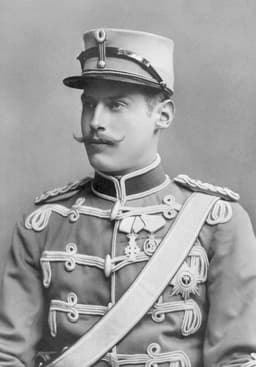
Christian IX of Denmark
Emperor · Modern
57.8Total
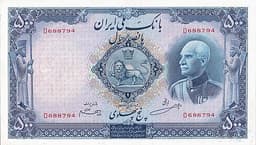
Reza Shah Pahlavi
Emperor · Modern
63.6Total
Basic Information
Born
1818
1878
Died
1906
1944
Era
Modern
Modern
Nationality
Denmark
Iran
Occupation
Emperor
Emperor
Civilization
Western
Middle Eastern
Score Comparison
Military (10%)
22.0
50.0
Political (20%)
68.0
72.0
Influence (20%)
61.0
72.0
Legacy (20%)
54.0
52.0
Leadership (15%)
72.0
72.0
Strategy (15%)
58.2
60.0
TOTAL
57.8
63.6
Christian IX of Denmark — Complete Timeline
1863 AD
Accession to the thronePolitical Action◆ Major
Christian IX became King of Denmark on November 15, 1863, after the death of King Frederick VII. His accession occurred during a period of political crisis over the Schleswig-Holstein question.
AccessionSuccession
Impact: national
Marriage alliances of his childrenPolitical Action◆ Major
Christian IX's children married into European royal families: Alexandra married Edward VII of the UK, Dagmar married Tsar Alexander III of Russia, and George became King of Greece. This earned him the nickname 'Father-in-law of Europe'.
Marriage AlliancesRoyal DiplomacyDynastic Strategy
Impact: globalconstructive
1864 AD
Second Schleswig WarWar◆ Major
Denmark under Christian IX fought the Second Schleswig War against Prussia and Austria. The war ended in Danish defeat, leading to the loss of Schleswig, Holstein, and Lauenburg, permanently reducing Danish territory.
WarDefeatTerritorial Loss
Impact: regionaltragic
1866 AD
Signing of the Danish Constitution of 1866Reform
Christian IX signed a revised constitution in 1866 that reorganized the Danish parliament (Rigsdag) and strengthened the powers of the monarchy and the upper house. This followed the political upheaval after the 1864 war.
ConstitutionPolitical Reform
Impact: national
1901 AD
Establishment of the Danish monarchy as a constitutional monarchyReform◆ Major
In 1901, Christian IX accepted the principle of parliamentary rule by appointing a government based on the majority in the Folketing (lower house). This effectively established constitutional monarchy in Denmark, limiting royal power.
Constitutional ReformParliamentary System
Impact: nationalconstructive
Reza Shah Pahlavi — Complete Timeline
1921 AD
1921 Persian coup d'étatPolitical Action◆ Major
Reza Khan, a Cossack Brigade officer, led a coup that overthrew the Qajar government. He became Minister of War and later Prime Minister, using the military to consolidate power and suppress regional rebellions.
CoupQajarMilitary
Impact: national
1926 AD
Coronation as Reza Shah PahlaviPolitical Action◆ Major
Reza Khan crowned himself Reza Shah Pahlavi, founding the Pahlavi dynasty. He replaced the Qajar dynasty and began a program of rapid modernization, centralization, and secularization of Iran.
CoronationDynastyModernization
Impact: national
1938 AD
Trans-Iranian Railway completionOther◆ Major
Reza Shah oversaw the completion of the Trans-Iranian Railway, connecting the Caspian Sea to the Persian Gulf. The project was a major infrastructure achievement, facilitating trade and military transport, but was built with forced labor.
InfrastructureModernizationRailway
Impact: nationalconstructive
1941 AD
Forced abdication by Allied powersPolitical Action
Britain and the Soviet Union invaded Iran to secure oil fields and supply routes. Reza Shah refused to expel German nationals, leading to his forced abdication in favor of his son Mohammad Reza Pahlavi. He was exiled to South Africa.
World War IIInvasionExile
Impact: nationaltragic
Expert Analysis
Origins
Christian IX was born on April 8, 1818, in Gottorp, Schleswig, as a prince of the House of Oldenburg. His father was Frederick William, Duke of Schleswig-Holstein-Sonderburg-Glücksburg, a minor royal line. Christian grew up in a relatively modest court, receiving military training and serving in the Danish army. He married Princess Louise of Hesse-Kassel in 1842, and their children would become pivotal in European royalty. In contrast, Reza Shah Pahlavi was born Reza Khan on March 15, 1878, in Alasht, Mazandaran, Iran, into a humble military family. His father, Abbas Ali Khan, died when Reza was young, leaving him to be raised by his mother. He joined the Persian Cossack Brigade at age 16, a Russian-officered unit, where he learned modern military tactics and rose through the ranks. Both men came from non-royal backgrounds—Christian from a minor ducal house, Reza from a military family—but their paths to power diverged sharply.
Rise to Power
Christian IX's rise was accidental. He was not the heir apparent to the Danish throne; the main line of the House of Oldenburg was dying out. In 1852, the London Protocol recognized him as successor to King Frederick VII of Denmark, due to his wife's connection to the royal family. He became king on November 15, 1863, upon Frederick's death, inheriting a contentious situation in the duchies of Schleswig and Holstein. Reza Shah's rise was through force. In 1921, as a colonel in the Cossack Brigade, he led a coup (the 1921 Persian coup d'état) against the Qajar government, seizing control of Tehran. He became Minister of War and later Prime Minister, using his military power to suppress rebellions and consolidate authority. By 1925, he had the Majlis (parliament) depose the Qajar dynasty and crown him as Reza Shah Pahlavi, founder of a new dynasty.
Leadership & Governance
Christian IX ruled as a constitutional monarch, but his early reign saw conflict with the Folketing (lower house). In 1866, he signed a revised constitution that strengthened the monarchy and the upper house, limiting democratic progress. However, after the 1901 election, he accepted parliamentary rule, appointing a government from the majority party, a key step in Danish democracy. His political score of 68.0 reflects his adaptation, but his military score of 22.0 highlights Denmark's defeat in the Second Schleswig War (1864), where he lost 40% of Denmark's territory. Reza Shah governed as an autocrat, centralizing power and suppressing dissent. He implemented sweeping reforms: building the Trans-Iranian Railway (completed 1938, 1,400 km), establishing modern education, and banning the veil for women. His political score of 72.0 and leadership score of 72.0 indicate strong control, but his military score of 50.0 reflects a modest army modernization that failed to prevent the 1941 Anglo-Soviet invasion.
Triumph & Tragedy
Christian IX's greatest triumph was the marriage alliances of his children: his daughter Alexandra married Edward VII of the UK, Dagmar married Tsar Alexander III of Russia, and his son Frederick became king of Denmark. This earned him the nickname "father-in-law of Europe," and his descendants sit on multiple European thrones today. His greatest tragedy was the Second Schleswig War (1864), where Denmark lost Schleswig, Holstein, and Lauenburg to Prussia and Austria, a national humiliation that reduced Denmark's size by 40%. Reza Shah's triumph was the modernization of Iran: he built the Trans-Iranian Railway, established the University of Tehran (1934), and reformed the legal and educational systems. His tragedy came in 1941 when Britain and the Soviet Union invaded Iran to secure oil and supply routes. He refused to expel German nationals, leading to his forced abdication on September 16, 1941, and exile to South Africa, where he died in 1944.
Character & Destiny
Christian IX was pragmatic and adaptable. He initially resisted parliamentary rule but eventually accepted it, ensuring the monarchy's survival. His character was cautious and family-oriented, focusing on dynastic ties. This secured his legacy as a constitutional monarch but also led to foreign policy failures like the 1864 war. Reza Shah was ambitious, authoritarian, and nationalistic. He drove modernization with an iron fist, suppressing tribal and religious opposition. His destiny was shaped by his refusal to compromise with foreign powers; his neutrality stance in WWII led to invasion and abdication. Historians note that his reforms were transformative but imposed without building broad support, making them vulnerable after his fall.
Legacy
Christian IX's legacy is the Danish constitutional monarchy and his widespread royal descendants. The 1901 shift to parliamentary rule set a precedent for modern Denmark. His influence score of 61.0 reflects his dynastic impact, but his legacy score of 54.0 is tempered by the territorial loss. Reza Shah's legacy is the Pahlavi dynasty and Iran's modernization. The Trans-Iranian Railway remains a vital infrastructure, and his secular reforms changed Iranian society. However, his authoritarian methods and the 1953 coup that restored his son, Mohammad Reza Pahlavi, are controversial. His legacy score of 52.0 is limited by the short duration of the dynasty (1925–1979) and the Islamic Revolution that overthrew his son.
Conclusion
While Christian IX achieved dynastic success and established constitutional monarchy, Reza Shah had a greater impact on his nation's development. Reza Shah's total score of 63.6 vs. Christian's 57.8 reflects this. Christian's influence was personal and familial, spread across Europe, but Reza's reforms fundamentally transformed Iran's infrastructure, education, and society. Christian's reign saw Denmark's decline as a power, while Reza's reign saw Iran's rise as a modern state. Taking a clear stance: Reza Shah Pahlavi had greater impact because his modernization efforts—though flawed—created lasting institutions and infrastructure that shaped Iran's 20th-century trajectory, whereas Christian IX's legacy is primarily dynastic and symbolic.
Rankings
🥇
Reza Shah PahlaviLeader
Mil: 50.0Pol: 72.0Inf: 72.0
63.6
🥈
Christian IX of Denmark
Mil: 22.0Pol: 68.0Inf: 61.0
57.8
+5.8 behind
How This Comparison Works
Algorithm
Each figure is scored on 6 dimensions (0—100 scale) based on structured historical data: Military (10%), Political (20%), Influence (20%), Legacy (20%), Leadership (15%), Strategy (15%). The weighted total produces the final ranking.
Data Sources
Scores are computed from structured sub-indicators in the database. Scale factors adjust for era (Ancient ×0.85, Modern ×1.0) and civilization size (Eastern ×1.05, Other ×0.80) to account for differences in population and military scale.
Maximum 3 Figures
Comparisons are limited to 2—3 figures to ensure readability and statistical meaningfulness.
Error Margins
±5 points per dimension — Sub-scores are derived from historical records with inherent uncertainty. Two figures within 5 points on a dimension should be considered roughly equivalent in that area.
Total Score Accuracy
±3 points overall — The weighted combination of 6 dimensions produces a total score with approximately ±3 points of uncertainty. Differences of less than 3 points are not statistically significant— the figures are effectively tied.
Known Limitations
- Historical records are incomplete and uneven across civilizations
- Figures from oral-tradition societies may be underrepresented
- Occupation labels can misclassify multi-role figures
- Scores measure capability and impact, not moral character
- Quantitative scoring is a comparison tool, not absolute truth
Capability Radar
Military (10%) — Battles & Warfare
Battles
35
20
Win Rate
41
30
Expansion
40
15
Political (20%) — Governance & Reform
Reform
30
85
Diplomacy
75
55
Economy
40
70
Influence (20%) — Cultural & Global Reach
Cultural
40
60
Global
55
55
Legacy (20%) — Historical Impact
Historical
60
65
Longevity
55
55
Leadership (15%) — Power & Stability
Tenure
60
60
Stability
65
50
Strategy (15%) — Tactics & Innovation
Strategy
43
40
Tactics
47
25
Reform
53
75
Similar Comparisons
Comments & Discussion
No comments yet. Be the first to share your thoughts!