Loading...
Charles X of France vs Reza Shah Pahlavi
Reza Shah Pahlavi leads by 26.5 pts · 2 figures compared
…

Charles X of France
Emperor · Modern
37.1Total
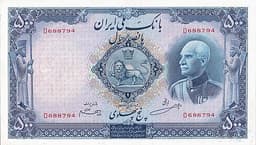
Reza Shah Pahlavi
Emperor · Modern
63.6Total
Basic Information
Born
1757
1878
Died
1836
1944
Era
Modern
Modern
Nationality
France
Iran
Occupation
Emperor
Emperor
Civilization
Western
Middle Eastern
Score Comparison
Military (10%)
21.1
50.0
Political (20%)
25.0
72.0
Influence (20%)
46.3
72.0
Legacy (20%)
35.8
52.0
Leadership (15%)
31.2
72.0
Strategy (15%)
60.0
60.0
TOTAL
37.1
63.6
Charles X of France — Complete Timeline
1825 AD
Coronation of Charles XCultural◆ Major
Charles X was crowned at Reims Cathedral in a lavish ceremony that revived medieval traditions, including the use of the Holy Ampulla. The coronation emphasized divine right and traditionalist Catholicism, signaling his rejection of the constitutional principles of the Charter of 1814.
CoronationDivine RightTraditionalism
Impact: national
1830 AD
Invasion of Algiers (1830)War◆ Major
Charles X ordered a military expedition to invade Algiers, aiming to boost his popularity and distract from domestic unrest. The French captured Algiers in July 1830, beginning the colonization of Algeria. The victory came too late to save his throne, as the July Revolution erupted simultaneously.
Colonial WarAlgeriaDistraction
Impact: global
July Revolution (1830)Political Action
Charles X issued the July Ordinances, dissolving the Chamber of Deputies, restricting press freedom, and altering the electoral system. This sparked three days of street fighting in Paris (July 27-29, 1830). The revolution forced Charles to abdicate and flee to England, ending the Bourbon Restoration.
RevolutionAbdicationBourbon
Impact: nationaldestructive
July Ordinances (Ordonnances de Juillet)Political Action
On July 25, 1830, Charles X signed four ordinances that suspended the press, dissolved the newly elected Chamber, changed the electoral system to favor the aristocracy, and called for new elections. These authoritarian decrees directly triggered the July Revolution and his overthrow.
AuthoritarianismPress CensorshipRevolution
Impact: nationaldestructive
Exile of Charles XPolitical Action◆ Major
After abdicating in favor of his grandson, the Duke of Bordeaux, Charles X fled to England and later to Scotland and Prague. He lived in exile until his death in 1836, never returning to France. His exile marked the definitive end of the senior Bourbon line's rule.
ExileAbdicationBourbon
Impact: nationaltragic
Reza Shah Pahlavi — Complete Timeline
1921 AD
1921 Persian coup d'étatPolitical Action◆ Major
Reza Khan, a Cossack Brigade officer, led a coup that overthrew the Qajar government. He became Minister of War and later Prime Minister, using the military to consolidate power and suppress regional rebellions.
CoupQajarMilitary
Impact: national
1926 AD
Coronation as Reza Shah PahlaviPolitical Action◆ Major
Reza Khan crowned himself Reza Shah Pahlavi, founding the Pahlavi dynasty. He replaced the Qajar dynasty and began a program of rapid modernization, centralization, and secularization of Iran.
CoronationDynastyModernization
Impact: national
1938 AD
Trans-Iranian Railway completionOther◆ Major
Reza Shah oversaw the completion of the Trans-Iranian Railway, connecting the Caspian Sea to the Persian Gulf. The project was a major infrastructure achievement, facilitating trade and military transport, but was built with forced labor.
InfrastructureModernizationRailway
Impact: nationalconstructive
1941 AD
Forced abdication by Allied powersPolitical Action
Britain and the Soviet Union invaded Iran to secure oil fields and supply routes. Reza Shah refused to expel German nationals, leading to his forced abdication in favor of his son Mohammad Reza Pahlavi. He was exiled to South Africa.
World War IIInvasionExile
Impact: nationaltragic
Expert Analysis
Origins
Charles X of France (born 1757) was the grandson of Louis XV and brother of Louis XVI. As a child, he was styled Count of Artois. He fled France during the Revolution, living in exile in England, Russia, and other European courts. His early experiences cemented his ultra-royalist views, opposing any compromise with revolutionary ideals.
Reza Shah Pahlavi (born 1878) came from humble beginnings in a Mazandarani family. He joined the Persian Cossack Brigade as a young man, rising through the ranks. His military career gave him firsthand knowledge of Iran's weakness and the need for a strong central state.
Rise to Power
Charles X became king in 1824 upon the death of his brother Louis XVIII. He had spent decades as leader of the ultra-royalist faction, opposing the Charter of 1814. His accession was marked by a lavish coronation at Reims in 1825, reviving medieval rituals. He appointed conservative ministers and pushed for laws compensating émigrés and strengthening the Church.
Reza Shah's rise began with the 1921 coup d'état, where he led Cossack forces to seize Tehran. He became Minister of War and then Prime Minister in 1923. In 1925, he persuaded the Majlis to depose the Qajar dynasty and crowned himself king, founding the Pahlavi dynasty. His military background gave him the leverage to consolidate power.
Leadership & Governance
Charles X governed as an absolute monarch in spirit, though constrained by the Charter. He favored the aristocracy and clergy, passing the Anti-Sacrilege Act (1825) and indemnifying émigrés (1825). He appointed Jules de Polignac as Prime Minister in 1829, an ultra-royalist, ignoring the liberal majority in the Chamber. His leadership score of 31.2 reflects his inability to adapt.
Reza Shah pursued rapid modernization from above. He built the Trans-Iranian Railway (completed 1938), established secular courts, and banned the veil for women. He centralized power, crushed tribal revolts, and expanded the military. His political score of 72.0 indicates his effectiveness, but his authoritarian methods suppressed dissent. The contrast is stark: Charles X scored 25.0 in political skill versus Reza Shah's 72.0.
Triumph & Tragedy
Charles X's greatest triumph was the conquest of Algiers in 1830, a military success that briefly boosted his popularity. However, his tragedy was the July Revolution: his July Ordinances (dissolving the Chamber, restricting press, altering elections) triggered three days of uprising, forcing his abdication. He scored only 21.1 in military and 35.8 in legacy.
Reza Shah's triumph was the unification and modernization of Iran. He established the Pahlavi dynasty, built infrastructure, and reformed education. His tragedy came in 1941: Britain and the Soviet Union invaded Iran, and he was forced to abdicate in favor of his son, Mohammad Reza Pahlavi. He died in exile in Johannesburg in 1944. His military score of 50.0 and legacy of 52.0 reflect his mixed record.
Character & Destiny
Charles X was stubborn, devout, and out of touch. He believed in divine right and refused to compromise with liberal forces. His character led directly to his downfall: he ignored warnings and pushed the July Ordinances, misjudging the public mood. Historians view him as an anachronism.
Reza Shah was autocratic, ambitious, and ruthless. He modernized by force, suppressing opposition. His character shaped his fate: his refusal to expel German nationals during WWII gave the Allies a pretext for invasion. His authoritarian style created enemies, and his forced abdication ended his reign.
Legacy
Charles X's legacy is that of a failed restoration monarch. His reign proved that absolute monarchy was no longer viable in France. The July Revolution established the July Monarchy under Louis-Philippe, a more liberal constitutional monarchy. Charles X's score of 35.8 in legacy reflects his negative impact.
Reza Shah's legacy is complex. He laid the foundations for modern Iran, but his authoritarian methods and Westernization created tensions. The Pahlavi dynasty continued under his son until the 1979 Islamic Revolution. His influence score of 72.0 indicates his lasting imprint, but his legacy is contested. He scored 52.0 in legacy overall.
Conclusion
Reza Shah Pahlavi had a greater impact than Charles X. His total score of 63.6 versus Charles X's 37.1 reflects this. Reza Shah transformed Iran's infrastructure, military, and society, while Charles X's reign was a brief, reactionary interlude. Though both were overthrown and died in exile, Reza Shah's modernization efforts shaped Iran for decades, whereas Charles X's policies were quickly reversed. The data supports Reza Shah as the more consequential figure.
Rankings
🥇
Reza Shah PahlaviLeader
Mil: 50.0Pol: 72.0Inf: 72.0
63.6
🥈
Charles X of France
Mil: 21.1Pol: 25.0Inf: 46.3
37.1
+26.5 behind
How This Comparison Works
Algorithm
Each figure is scored on 6 dimensions (0—100 scale) based on structured historical data: Military (10%), Political (20%), Influence (20%), Legacy (20%), Leadership (15%), Strategy (15%). The weighted total produces the final ranking.
Data Sources
Scores are computed from structured sub-indicators in the database. Scale factors adjust for era (Ancient ×0.85, Modern ×1.0) and civilization size (Eastern ×1.05, Other ×0.80) to account for differences in population and military scale.
Maximum 3 Figures
Comparisons are limited to 2—3 figures to ensure readability and statistical meaningfulness.
Error Margins
±5 points per dimension — Sub-scores are derived from historical records with inherent uncertainty. Two figures within 5 points on a dimension should be considered roughly equivalent in that area.
Total Score Accuracy
±3 points overall — The weighted combination of 6 dimensions produces a total score with approximately ±3 points of uncertainty. Differences of less than 3 points are not statistically significant— the figures are effectively tied.
Known Limitations
- Historical records are incomplete and uneven across civilizations
- Figures from oral-tradition societies may be underrepresented
- Occupation labels can misclassify multi-role figures
- Scores measure capability and impact, not moral character
- Quantitative scoring is a comparison tool, not absolute truth
Capability Radar
Military (10%) — Battles & Warfare
Battles
38
20
Win Rate
37
30
Expansion
41
15
Political (20%) — Governance & Reform
Reform
5
85
Diplomacy
10
55
Economy
10
70
Influence (20%) — Cultural & Global Reach
Cultural
10
60
Global
5
55
Legacy (20%) — Historical Impact
Historical
15
65
Longevity
10
55
Leadership (15%) — Power & Stability
Tenure
10
60
Stability
5
50
Strategy (15%) — Tactics & Innovation
Strategy
47
40
Tactics
50
25
Reform
50
75
Similar Comparisons
Comments & Discussion
No comments yet. Be the first to share your thoughts!