Loading...
Nurhaci vs Qin Shi Huang
Qin Shi Huang leads by 14.0 pts · 2 figures compared
…
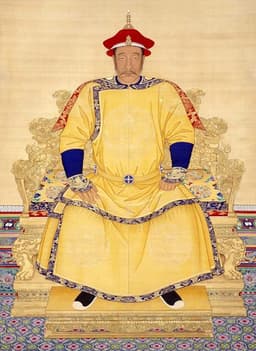
Nurhaci
Emperor · Modern
71.2Total
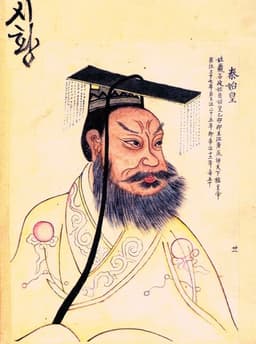
Qin Shi Huang
Emperor · Ancient
85.2Total
Basic Information
Born
1559
-259
Died
1626
-210
Era
Modern
Ancient
Nationality
China
China
Occupation
Emperor
Emperor
Civilization
Eastern
Eastern
Score Comparison
Military (10%)
79.9
80.0
Political (20%)
85.0
90.0
Influence (20%)
40.0
85.0
Legacy (20%)
84.0
90.0
Leadership (15%)
79.0
78.0
Strategy (15%)
76.0
82.0
TOTAL
71.2
85.2
Nurhaci — Complete Timeline
1616 AD
Unified the Jurchen TribesWar
Nurhaci completed the unification of the fragmented Jurchen tribes of Manchuria. He organized them into the Eight Banners system, a military and social structure that became the foundation of his power. He then proclaimed the Later Jin dynasty.
JurchenUnificationEight Banners
Impact: regionalconstructive
Proclaimed the Later Jin DynastyPolitical Action◆ Major
Nurhaci proclaimed the establishment of the Later Jin dynasty in Manchuria, claiming legitimacy as a successor to the Jin dynasty. This act formally declared his independence from the Ming dynasty and established a rival state.
Later JinDynastyFoundation
Impact: regionalconstructive
1618 AD
Issued the Seven GrievancesPolitical Action◆ Major
Nurhaci issued the Seven Grievances, a formal declaration of war against the Ming dynasty. The grievances listed alleged Ming injustices against the Jurchens, including interference in tribal affairs and killing of Jurchen leaders. This justified his invasion of Ming territory.
Ming-Qing TransitionDeclaration of WarPropaganda
Impact: regionaldestructive
1619 AD
Battle of SarhuWar
Nurhaci's forces decisively defeated a large Ming army at the Battle of Sarhu. The Ming sent four separate armies into Manchuria, but Nurhaci used interior lines to defeat them in detail. This victory secured his control over Manchuria.
Ming-Qing TransitionBattleManchuria
Impact: regionalconstructive
1626 AD
Defeated by Yuan Chonghuan at NingyuanWar◆ Major
Nurhaci led an invasion of Ming territory but was defeated at the Battle of Ningyuan by Ming general Yuan Chonghuan. The Ming used European-style cannons to repel the Later Jin forces. Nurhaci was wounded during the battle and died shortly after.
Ming-Qing TransitionBattleDefeat
Impact: regionaltragic
Qin Shi Huang — Complete Timeline
246 BC
Construction of the Mausoleum and Terracotta ArmyOther◆ Major
Qin Shi Huang commissioned a vast mausoleum complex near Xi'an, guarded by thousands of life-sized terracotta soldiers, horses, and chariots. The project employed hundreds of thousands of workers and reflected his obsession with immortality and imperial power.
Impact: global
230 BC
Conquest of the Six Warring StatesWar
From 230 to 221 BCE, Ying Zheng led the Qin state in a series of campaigns that conquered the Han, Zhao, Wei, Chu, Yan, and Qi states. This unified China under a single ruler for the first time, ending the Warring States period.
Impact: global
221 BC
Standardization of Writing, Currency, and MeasurementsReform◆ Major
Qin Shi Huang ordered the standardization of Chinese script, currency, and weights and measures across the unified empire. This facilitated administration, trade, and cultural integration, laying a foundation for future dynasties.
Impact: globalconstructive
Proclamation of the Qin DynastyPolitical Action
After conquering the last independent state, Ying Zheng declared himself Shi Huangdi (First Emperor), founding the Qin Dynasty. He adopted a new title to signify his supreme authority and initiated centralized imperial rule.
Impact: global
214 BC
Initiation of the Great Wall ConstructionOther◆ Major
Qin Shi Huang ordered the connection and extension of existing northern fortifications to create a unified defensive wall against nomadic Xiongnu raids. This project involved massive conscripted labor and became the precursor to the later Great Wall.
Impact: regional
213 BC
Burning of Books and Burying of ScholarsPolitical Action◆ Major
On the advice of Li Si, Qin Shi Huang ordered the burning of historical records and philosophical texts not aligned with Legalist doctrine. He also had 460 Confucian scholars buried alive to suppress dissent and consolidate ideological control.
Impact: nationaldestructive
Expert Analysis
nurhaci-vs-qin-shi-huang
# The First Emperor and the Last Khan
On a winter morning in 221 BC, Ying Zheng stood before the conquered palaces of the last independent kingdom, his gaze sweeping over a land that had known nothing but war for five centuries. He declared himself *Shi Huangdi*—the First Emperor—and set in motion a transformation so profound that China would never be the same. Eighteen centuries later, in the forests of Manchuria, another man rose from obscurity, a Jurchen chieftain named Nurhaci who would lay the foundation for the last imperial dynasty. Between these two figures lies the entire arc of Chinese imperial history: one who created the template, and one who perfected it.
Origins
Qin Shi Huang was born in 259 BC, the son of a king and a concubine, into a world of relentless warfare. The Warring States period had reduced China to seven rival kingdoms, each hungry for supremacy. His mother, Zhao Ji, was a woman of political intrigue, and his childhood was shadowed by conspiracies at the Qin court. From his earliest years, Ying Zheng learned that power was a weapon to be wielded without mercy.
Nurhaci entered the world in 1559, when the Ming dynasty ruled China but had grown corrupt and weak. His Jurchen people lived in scattered tribes across Manchuria, raiding and trading with their Chinese neighbors. Nurhaci’s grandfather and father were killed in a Ming military action when he was young—a wound that would fester for decades. Unlike the First Emperor, who inherited a throne, Nurhaci inherited only resentment and a fragmented people.
Rise to Power
Ying Zheng became king of Qin at age thirteen, but real power eluded him until he was twenty-two. His regent, Lü Buwei, and his mother’s lover, Lao Ai, both sought to control him. When Ying Zheng discovered their plots, he acted with chilling finality: Lao Ai was torn apart by chariots, Lü Buwei was forced to drink poison, and his mother was placed under house arrest. Having secured his throne, he turned to conquest. From 230 to 221 BC, his armies devoured the six rival states one by one—Han, Zhao, Wei, Chu, Yan, and Qi—using superior strategy, iron discipline, and a willingness to massacre entire cities that resisted.
Nurhaci’s rise was slower and more organic. He began as a minor chieftain who sold furs and ginseng to Ming traders. His genius lay in organization: he created the Eight Banner system, a military-administrative structure that bound Manchu families into a single, mobile fighting force. By 1616, he had unified the Jurchen tribes and proclaimed the Later Jin dynasty, deliberately invoking the name of the earlier Jin dynasty that had once ruled northern China. His Seven Grievances of 1618—a list of Ming injustices against his people—served as both a declaration of war and a propaganda masterpiece.
Leadership & Governance
Qin Shi Huang ruled as an absolute autocrat. He abolished the feudal system that had fragmented China and divided the empire into thirty-six commanderies, each governed by officials appointed by the central government. He standardized writing, currency, weights, and measures—a revolution that made China administratively one. He connected the northern walls into what would become the Great Wall, a project that cost countless lives. His Legalist philosophy, guided by his minister Li Si, held that law should be harsh and uniform, and that dissent was treason.
Nurhaci governed through a different logic. The Eight Banner system was not just an army but a society: each banner was a self-contained community of warriors and their families, bound by loyalty to the khan. He absorbed conquered Chinese populations into his state, employing Ming defectors who brought knowledge of artillery and siegecraft. Where Qin Shi Huang burned books and buried scholars alive in 213 BC to suppress competing ideas, Nurhaci adopted Chinese administrative methods while preserving Manchu identity. His rule was pragmatic, not ideological.
Triumph & Tragedy
The First Emperor’s greatest triumph was the creation of a unified China—a feat that had eluded every ruler before him. His greatest tragedy was his obsession with immortality. He sent expeditions for the elixir of life, consumed mercury pills, and built a mausoleum complex near Xi’an guarded by thousands of life-sized terracotta soldiers, a silent army for the afterlife. He died in 210 BC while on a tour of his empire, his death concealed for weeks as his courtiers feared a succession crisis. Within three years, his dynasty collapsed, destroyed by rebellion and the very harshness that had held it together.
Nurhaci’s triumph was the destruction of Ming power in the northeast. At the Battle of Sarhu in 1619, his forces defeated a Ming army four times their size by exploiting the enemy’s divided command and using interior lines. But his tragedy came in 1626, when he besieged the Ming fortress of Ningyuan. There, general Yuan Chonghuan—a man as stubborn as the walls he defended—used Portuguese cannons to shatter the Manchu assault. Nurhaci was wounded in the fighting and died soon after, his dream of conquering China unfulfilled. That task would fall to his son, Hong Taiji, and his grandson, the Shunzhi Emperor.
Character & Destiny
Qin Shi Huang was a man of terrifying certainty. He believed that history began with him—hence his title “First Emperor”—and that all before was chaos. His paranoia drove him to build hidden roads and underground palaces, to sleep in different rooms each night, to trust no one. This suspicion, born of a childhood surrounded by treachery, ensured that his empire would not outlive him.
Nurhaci was a survivor, not a visionary. He learned to read Chinese, studied Ming military manuals, and understood that power came from alliances as much as from swords. His pragmatism allowed his dynasty to endure: the Qing would rule China for nearly three centuries, adapting to each challenge with flexibility that the Qin never possessed.
Legacy
Qin Shi Huang’s legacy is written into the DNA of China. The standardized script he ordered is still used today. The administrative structure he created—centralized, bureaucratic, uniform—became the model for every dynasty that followed. He is remembered as both a unifier and a tyrant, a man who built an empire in blood and then tried to live forever.
Nurhaci’s legacy is the Qing dynasty itself, which at its height doubled China’s territory and brought Tibet, Xinjiang, and Mongolia into the empire. He is honored as the founding father of a dynasty that, for all its flaws, gave China its modern borders. Where Qin Shi Huang’s dynasty lasted fifteen years, Nurhaci’s creation lasted 268.
Conclusion
One man tried to freeze time, to make his empire eternal through sheer force of will. The other built a machine that could adapt, absorb, and endure. The First Emperor’s terracotta army still stands guard over an empty tomb, a monument to ambition without succession. Nurhaci’s descendants conquered China not by burning its past, but by wearing its robes, learning its language, and claiming its mandate. In the end, the difference between them is the difference between a flash of lightning and a slow-burning fire—both illuminate, but only one warms the house long enough for a dynasty to be built.
Rankings
🥇
Qin Shi HuangLeader
Mil: 80.0Pol: 90.0Inf: 85.0
85.2
🥈
Nurhaci
Mil: 79.9Pol: 85.0Inf: 40.0
71.2
+14.0 behind
How This Comparison Works
Algorithm
Each figure is scored on 6 dimensions (0—100 scale) based on structured historical data: Military (10%), Political (20%), Influence (20%), Legacy (20%), Leadership (15%), Strategy (15%). The weighted total produces the final ranking.
Data Sources
Scores are computed from structured sub-indicators in the database. Scale factors adjust for era (Ancient ×0.85, Modern ×1.0) and civilization size (Eastern ×1.05, Other ×0.80) to account for differences in population and military scale.
Maximum 3 Figures
Comparisons are limited to 2—3 figures to ensure readability and statistical meaningfulness.
Error Margins
±5 points per dimension — Sub-scores are derived from historical records with inherent uncertainty. Two figures within 5 points on a dimension should be considered roughly equivalent in that area.
Total Score Accuracy
±3 points overall — The weighted combination of 6 dimensions produces a total score with approximately ±3 points of uncertainty. Differences of less than 3 points are not statistically significant— the figures are effectively tied.
Known Limitations
- Historical records are incomplete and uneven across civilizations
- Figures from oral-tradition societies may be underrepresented
- Occupation labels can misclassify multi-role figures
- Scores measure capability and impact, not moral character
- Quantitative scoring is a comparison tool, not absolute truth
Capability Radar
Military (10%) — Battles & Warfare
Battles
85
85
Win Rate
90
90
Expansion
88
90
Political (20%) — Governance & Reform
Reform
85
95
Diplomacy
80
75
Economy
70
90
Influence (20%) — Cultural & Global Reach
Cultural
85
95
Global
80
85
Legacy (20%) — Historical Impact
Historical
90
95
Longevity
88
95
Leadership (15%) — Power & Stability
Tenure
75
70
Stability
78
65
Strategy (15%) — Tactics & Innovation
Strategy
85
85
Tactics
88
80
Reform
92
95
Similar Comparisons
Comments & Discussion
QinConqueror6/17/2026
Calling this a comparison between equals? Please. Qin Shi Huang literally invented imperial China while Nurhaci was just a tribal strongman who got lucky. The First Emperor standardized writing, weights, measures—he created the DNA of Chinese civilization. Nurhaci's greatest achievement was borrowing the Ming bureaucracy he destroyed. It's like comparing a master architect to a really skilled demolition contractor.
马背上的哲学家6/17/2026
努尔哈赤比秦始皇更懂人性。秦始皇上位就搞焚书坑儒,把知识分子全得罪光了,结果秦朝十五年就完蛋。努尔哈赤却懂得拉拢汉人官员,创立八旗制度把不同民族拧在一起,清朝能撑两百多年不是没道理的。统一容易,让人心服才叫本事。
ScriptKeeper6/17/2026
Every history buff knows Qin Shi Huang burned books, but nobody mentions Nurhaci commissioned the first Manchu script from scratch. The First Emperor destroyed knowledge; the Jurchen khan created an entire writing system so his people's epics wouldn't vanish. Which legacy would you rather have? I'll take the man who gave his culture a voice over the one who tried to silence everyone else.
数据质疑者6/17/2026
网上老吹秦始皇统一度量衡多伟大,可你们知道努尔哈赤统治时期后金人口从十几万暴涨到近百万吗?这增长率比秦朝任何时期都高。秦朝靠严刑峻法压着人口增长,努尔哈赤八旗制度下每家每户生娃有奖励。数字不会骗人,想要人口红利就得学努尔哈赤。
Historian1366/17/2026
You're all missing the real story. Nurhaci fought 40+ years of tribal wars before even touching the Ming border, building alliances through marriage like a chess grandmaster. Qin Shi Huang conquered in 9 years flat through pure military brutality. One was a patient empire-builder who understood time; the other was a speedrunner. I know which strategy produced a dynasty that actually lasted.