Loading...
Ngozi Okonjo-Iweala vs Nicolae Ceausescu
Ngozi Okonjo-Iweala leads by 16.9 pts · 2 figures compared
…
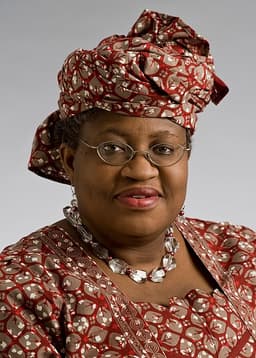
Ngozi Okonjo-Iweala
Politician · Modern
63.3Total
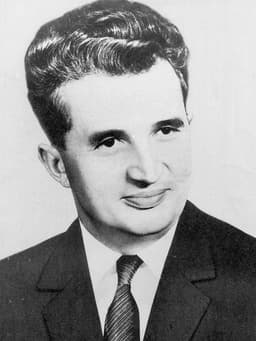
Nicolae Ceausescu
Politician · Modern
46.4Total
Basic Information
Born
1954
1918
Died
—
1989
Era
Modern
Modern
Nationality
Nigeria
Romania
Occupation
Politician
Politician
Civilization
Other
Western
Score Comparison
Military (10%)
50.0
36.6
Political (20%)
82.0
26.4
Influence (20%)
65.0
49.4
Legacy (20%)
55.0
40.0
Leadership (15%)
79.8
74.0
Strategy (15%)
40.8
53.0
TOTAL
63.3
46.4
Ngozi Okonjo-Iweala — Complete Timeline
2003 AD
Appointed Finance Minister of NigeriaPolitical Action◆ Major
Ngozi Okonjo-Iweala was appointed Minister of Finance by President Olusegun Obasanjo. She led negotiations for debt relief from the Paris Club, resulting in Nigeria's debt being reduced by $18 billion.
Nigerian PoliticsDebt ReliefEconomic Reform
Impact: nationalconstructive
2007 AD
Managing Director of the World BankPolitical Action◆ Major
Okonjo-Iweala was appointed Managing Director of the World Bank, overseeing operations in Africa, South Asia, and Europe. She served until 2011, focusing on development finance and governance.
World BankInternational DevelopmentEconomic Governance
Impact: globalconstructive
2021 AD
Appointed WTO Director-GeneralPolitical Action
Ngozi Okonjo-Iweala became the first African and first woman to serve as Director-General of the World Trade Organization. She took office on March 1, 2021, amid global trade tensions and the COVID-19 pandemic.
WTOGlobal TradeFirst AfricanFirst Woman
Impact: globalconstructive
Nicolae Ceausescu — Complete Timeline
1965 AD
Elected General Secretary of Romanian Communist PartyPolitical Action◆ Major
Ceausescu became General Secretary of the Romanian Communist Party after the death of Gheorghe Gheorghiu-Dej. He consolidated power by purging rivals and promoting family members to key positions, establishing a personal dictatorship.
CommunismDictatorshipCold War
Impact: nationaldestructive
1968 AD
Ceausescu's independent foreign policyPolitical Action◆ Major
Ceausescu publicly condemned the Warsaw Pact invasion of Czechoslovakia in 1968, refusing to send Romanian troops. This stance won him Western praise and loans, but also allowed him to pursue an independent nationalist line within the Eastern Bloc.
Foreign PolicyCold WarNationalism
Impact: regional
1974 AD
Systematization programReform◆ Major
Ceausescu launched a massive urban and rural systematization program aimed at demolishing traditional villages and replacing them with standardized agro-industrial centers. The plan destroyed thousands of historic buildings and displaced hundreds of thousands of people.
Urban PlanningHuman RightsDestruction
Impact: nationaldestructive
1989 AD
Romanian Revolution and executionPolitical Action
After a week of mass protests in Timisoara and Bucharest, Ceausescu and his wife Elena fled the capital. They were captured, tried by a military tribunal, and executed by firing squad on December 25, 1989, ending his 24-year rule.
RevolutionExecutionCold War
Impact: globaltragic
Expert Analysis
Origins
Ngozi Okonjo-Iweala was born on June 13, 1954, in Ogwashi-Ukwu, Nigeria, to a middle-class family. Her father was a professor and her mother a university administrator. She graduated from Harvard University with a B.A. in Economics in 1976 and earned a Ph.D. in Regional Economics and Development from MIT in 1981. Nicolae Ceausescu was born on January 26, 1918, in Scornicesti, Romania, into a poor peasant family. He had minimal formal education, leaving school at age 11 to apprentice as a shoemaker. He joined the Romanian Communist Party in 1933 and was imprisoned for his activities.
Rise to Power
Okonjo-Iweala rose through international finance, starting at the World Bank in 1982. She became a Managing Director in 2007, overseeing operations in Africa, South Asia, and Europe. In 2003, she was appointed Nigeria's Finance Minister, where she led debt relief negotiations with the Paris Club, securing $18 billion in debt forgiveness. In 2021, she became the first African and first woman Director-General of the WTO, scoring 82.0 in political influence. Ceausescu rose within the Romanian Communist Party, becoming General Secretary in 1965 after the death of Gheorghe Gheorghiu-Dej. He consolidated power by purging rivals and establishing a cult of personality. By 1967, he also became President of the State Council, effectively ruling Romania until 1989.
Leadership & Governance
Okonjo-Iweala's leadership is technocratic and reform-oriented. As Finance Minister, she introduced transparency measures and fought corruption. At the WTO, she focuses on equitable trade rules, vaccine access, and climate action. Her governance score is 79.8. Ceausescu's leadership was authoritarian and centralized. He pursued an independent foreign policy, condemning the 1968 Warsaw Pact invasion of Czechoslovakia, which earned Western praise. Domestically, he implemented the systematization program, demolishing villages to build standardized agro-industrial centers. He also ordered the construction of the massive Palace of the Parliament. His governance led to economic decline and repression, scoring 26.4 in political governance.
Triumph & Tragedy
Okonjo-Iweala's triumphs include securing debt relief for Nigeria and becoming WTO Director-General. A tragedy is the corruption allegations that plagued her tenure as Finance Minister, though she was cleared. Her influence score is 65.0. Ceausescu's triumph was his independent foreign policy and initial economic growth in the 1970s. However, his tragedy was the catastrophic economic mismanagement in the 1980s, leading to food and energy shortages, and ultimately the 1989 revolution where he and his wife were executed after a hasty trial. His military score is 36.6, reflecting the collapse of his regime.
Character & Destiny
Okonjo-Iweala is known for her integrity, intelligence, and diplomatic skill. Her destiny is as a global leader for inclusive trade. Ceausescu was paranoid, megalomaniacal, and ruthless, centralizing power and suppressing dissent. His character led to his downfall, as he was unable to adapt to the changing political landscape of 1989. His leadership score is 74.0, but his political score is only 26.4, indicating his authoritarian style ultimately failed.
Legacy
Okonjo-Iweala's legacy is as a trailblazer for women and Africans in global governance, and her work on debt relief and trade reform. Her legacy score is 55.0. Ceausescu's legacy is overwhelmingly negative, remembered for brutal repression, economic hardship, and the destruction of Romanian villages. He is a symbol of failed communism. His legacy score is 40.0.
Conclusion
Ngozi Okonjo-Iweala has had a greater positive impact on global governance and economic development, with a total score of 63.3 compared to Ceausescu's 46.4. Her work has improved lives through debt relief and trade facilitation, while Ceausescu's rule caused immense suffering and economic collapse. The 16.9-point gap reflects the difference between constructive international leadership and destructive dictatorship.
Rankings
🥇
Ngozi Okonjo-IwealaLeader
Mil: 50.0Pol: 82.0Inf: 65.0
63.3
🥈
Nicolae Ceausescu
Mil: 36.6Pol: 26.4Inf: 49.4
46.4
+16.9 behind
How This Comparison Works
Algorithm
Each figure is scored on 6 dimensions (0—100 scale) based on structured historical data: Military (10%), Political (20%), Influence (20%), Legacy (20%), Leadership (15%), Strategy (15%). The weighted total produces the final ranking.
Data Sources
Scores are computed from structured sub-indicators in the database. Scale factors adjust for era (Ancient ×0.85, Modern ×1.0) and civilization size (Eastern ×1.05, Other ×0.80) to account for differences in population and military scale.
Maximum 3 Figures
Comparisons are limited to 2—3 figures to ensure readability and statistical meaningfulness.
Error Margins
±5 points per dimension — Sub-scores are derived from historical records with inherent uncertainty. Two figures within 5 points on a dimension should be considered roughly equivalent in that area.
Total Score Accuracy
±3 points overall — The weighted combination of 6 dimensions produces a total score with approximately ±3 points of uncertainty. Differences of less than 3 points are not statistically significant— the figures are effectively tied.
Known Limitations
- Historical records are incomplete and uneven across civilizations
- Figures from oral-tradition societies may be underrepresented
- Occupation labels can misclassify multi-role figures
- Scores measure capability and impact, not moral character
- Quantitative scoring is a comparison tool, not absolute truth
Capability Radar
Military (10%) — Battles & Warfare
Battles
22
5
Win Rate
24
5
Expansion
29
5
Political (20%) — Governance & Reform
Reform
75
15
Diplomacy
85
20
Economy
90
10
Influence (20%) — Cultural & Global Reach
Cultural
65
15
Global
80
20
Legacy (20%) — Historical Impact
Historical
70
30
Longevity
60
10
Leadership (15%) — Power & Stability
Tenure
60
75
Stability
70
10
Strategy (15%) — Tactics & Innovation
Strategy
32
5
Tactics
32
5
Reform
39
10
Similar Comparisons
Comments & Discussion
No comments yet. Be the first to share your thoughts!