Loading...
This comparison has not been analyzed yet.
One-time AI generation (~1 minute). Scores and timeline are already available below.
Nelson Mandela vs Valentin Paniagua
Nelson Mandela leads by 2.8 pts · 2 figures compared
…
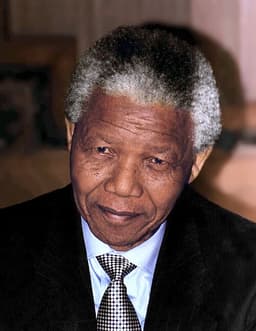
Nelson Mandela
Politician · Modern
57.0Total

Valentin Paniagua
Politician · Modern
54.2Total
Basic Information
Born
1918
1936
Died
2013
—
Era
Modern
Modern
Nationality
South Africa
Peru
Occupation
Politician
Politician
Civilization
Other
Western
Score Comparison
Military (10%)
10.0
47.7
Political (20%)
78.0
72.0
Influence (20%)
40.0
50.2
Legacy (20%)
68.0
44.2
Leadership (15%)
82.0
72.0
Strategy (15%)
50.0
42.5
TOTAL
57.0
54.2
Nelson Mandela — Complete Timeline
1964 AD
Rivonia TrialPolitical Action
Nelson Mandela and other anti-apartheid leaders were tried for sabotage and conspiracy. Mandela was sentenced to life imprisonment, delivering a speech from the dock that became a rallying cry against apartheid. The trial drew international attention to the anti-apartheid struggle.
Impact: global
1990 AD
Release from PrisonPolitical Action
After 27 years of imprisonment, Mandela was released from Victor Verster Prison by President F.W. de Klerk. His release was a pivotal moment in South Africa's transition from apartheid to multiracial democracy, leading to negotiations for a new constitution.
Impact: globalprogressive
1993 AD
Awarding of the Nobel Peace PrizeCultural◆ Major
Mandela and F.W. de Klerk were jointly awarded the Nobel Peace Prize for their roles in ending apartheid and laying the foundations for a democratic South Africa. The award recognized their peaceful transition and commitment to reconciliation.
Impact: globalprogressive
1994 AD
Inauguration as President of South AfricaPolitical Action
Mandela was inaugurated as South Africa's first Black president after the country's first fully democratic elections. His presidency focused on national reconciliation, establishing the Truth and Reconciliation Commission, and dismantling the legacy of apartheid.
Impact: globalprogressive
Valentin Paniagua — Complete Timeline
2000 AD
Appointed Interim President of PeruPolitical Action
After the resignation of President Alberto Fujimori amid a corruption scandal, Valent
InterimTransitionDemocracy
Impact: nationalconstructive
2001 AD
Oversaw the transition to democratic electionsPolitical Action◆ Major
Paniagua's interim government organized free and fair elections in 2001, which were won by Alejandro Toledo. This marked the end of the Fujimori era and the restoration of democratic governance in Peru.
ElectionDemocracyTransition
Impact: nationalconstructive
Created the Truth and Reconciliation CommissionPolitical Action◆ Major
Paniagua established the Truth and Reconciliation Commission (CVR) to investigate human rights abuses committed during the internal conflict between the government and insurgent groups (1980-2000). The CVR's report documented thousands of deaths and disappearances.
Human RightsTruth CommissionJustice
Impact: nationalconstructive
This comparison has not been analyzed yet.
One-time AI generation (~1 minute). Scores and timeline are already available below.
Rankings
🥇
Nelson MandelaLeader
Mil: 10.0Pol: 78.0Inf: 40.0
57.0
🥈
Valentin Paniagua
Mil: 47.7Pol: 72.0Inf: 50.2
54.2
+2.8 behind
How This Comparison Works
Algorithm
Each figure is scored on 6 dimensions (0—100 scale) based on structured historical data: Military (10%), Political (20%), Influence (20%), Legacy (20%), Leadership (15%), Strategy (15%). The weighted total produces the final ranking.
Data Sources
Scores are computed from structured sub-indicators in the database. Scale factors adjust for era (Ancient ×0.85, Modern ×1.0) and civilization size (Eastern ×1.05, Other ×0.80) to account for differences in population and military scale.
Maximum 3 Figures
Comparisons are limited to 2—3 figures to ensure readability and statistical meaningfulness.
Error Margins
±5 points per dimension — Sub-scores are derived from historical records with inherent uncertainty. Two figures within 5 points on a dimension should be considered roughly equivalent in that area.
Total Score Accuracy
±3 points overall — The weighted combination of 6 dimensions produces a total score with approximately ±3 points of uncertainty. Differences of less than 3 points are not statistically significant— the figures are effectively tied.
Known Limitations
- Historical records are incomplete and uneven across civilizations
- Figures from oral-tradition societies may be underrepresented
- Occupation labels can misclassify multi-role figures
- Scores measure capability and impact, not moral character
- Quantitative scoring is a comparison tool, not absolute truth
Capability Radar
Military (10%) — Battles & Warfare
Battles
0
29
Win Rate
7
34
Expansion
9
37
Political (20%) — Governance & Reform
Reform
95
70
Diplomacy
95
65
Economy
60
40
Influence (20%) — Cultural & Global Reach
Cultural
85
20
Global
90
20
Legacy (20%) — Historical Impact
Historical
90
40
Longevity
80
25
Leadership (15%) — Power & Stability
Tenure
60
15
Stability
80
75
Strategy (15%) — Tactics & Innovation
Strategy
8
38
Tactics
12
42
Reform
17
43
Similar Comparisons
Comments & Discussion
No comments yet. Be the first to share your thoughts!