Loading...
Nelson Mandela vs Qin Shi Huang
Qin Shi Huang leads by 28.2 pts · 2 figures compared
…
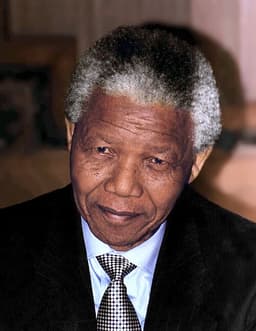
Nelson Mandela
Politician · Modern
57.0Total
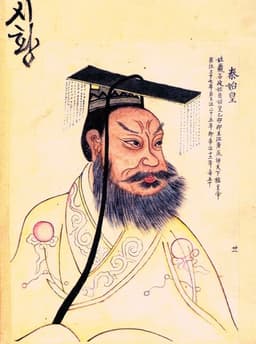
Qin Shi Huang
Emperor · Ancient
85.2Total
Basic Information
Born
1918
-259
Died
2013
-210
Era
Modern
Ancient
Nationality
South Africa
China
Occupation
Politician
Emperor
Civilization
Other
Eastern
Score Comparison
Military (10%)
10.0
80.0
Political (20%)
78.0
90.0
Influence (20%)
40.0
85.0
Legacy (20%)
68.0
90.0
Leadership (15%)
82.0
78.0
Strategy (15%)
50.0
82.0
TOTAL
57.0
85.2
Nelson Mandela — Complete Timeline
1964 AD
Rivonia TrialPolitical Action
Nelson Mandela and other anti-apartheid leaders were tried for sabotage and conspiracy. Mandela was sentenced to life imprisonment, delivering a speech from the dock that became a rallying cry against apartheid. The trial drew international attention to the anti-apartheid struggle.
Impact: global
1990 AD
Release from PrisonPolitical Action
After 27 years of imprisonment, Mandela was released from Victor Verster Prison by President F.W. de Klerk. His release was a pivotal moment in South Africa's transition from apartheid to multiracial democracy, leading to negotiations for a new constitution.
Impact: globalprogressive
1993 AD
Awarding of the Nobel Peace PrizeCultural◆ Major
Mandela and F.W. de Klerk were jointly awarded the Nobel Peace Prize for their roles in ending apartheid and laying the foundations for a democratic South Africa. The award recognized their peaceful transition and commitment to reconciliation.
Impact: globalprogressive
1994 AD
Inauguration as President of South AfricaPolitical Action
Mandela was inaugurated as South Africa's first Black president after the country's first fully democratic elections. His presidency focused on national reconciliation, establishing the Truth and Reconciliation Commission, and dismantling the legacy of apartheid.
Impact: globalprogressive
Qin Shi Huang — Complete Timeline
246 BC
Construction of the Mausoleum and Terracotta ArmyOther◆ Major
Qin Shi Huang commissioned a vast mausoleum complex near Xi'an, guarded by thousands of life-sized terracotta soldiers, horses, and chariots. The project employed hundreds of thousands of workers and reflected his obsession with immortality and imperial power.
Impact: global
230 BC
Conquest of the Six Warring StatesWar
From 230 to 221 BCE, Ying Zheng led the Qin state in a series of campaigns that conquered the Han, Zhao, Wei, Chu, Yan, and Qi states. This unified China under a single ruler for the first time, ending the Warring States period.
Impact: global
221 BC
Standardization of Writing, Currency, and MeasurementsReform◆ Major
Qin Shi Huang ordered the standardization of Chinese script, currency, and weights and measures across the unified empire. This facilitated administration, trade, and cultural integration, laying a foundation for future dynasties.
Impact: globalconstructive
Proclamation of the Qin DynastyPolitical Action
After conquering the last independent state, Ying Zheng declared himself Shi Huangdi (First Emperor), founding the Qin Dynasty. He adopted a new title to signify his supreme authority and initiated centralized imperial rule.
Impact: global
214 BC
Initiation of the Great Wall ConstructionOther◆ Major
Qin Shi Huang ordered the connection and extension of existing northern fortifications to create a unified defensive wall against nomadic Xiongnu raids. This project involved massive conscripted labor and became the precursor to the later Great Wall.
Impact: regional
213 BC
Burning of Books and Burying of ScholarsPolitical Action◆ Major
On the advice of Li Si, Qin Shi Huang ordered the burning of historical records and philosophical texts not aligned with Legalist doctrine. He also had 460 Confucian scholars buried alive to suppress dissent and consolidate ideological control.
Impact: nationaldestructive
Expert Analysis
nelson-mandela-vs-qin-shi-huang
# The Unifier and the Liberator: Qin Shi Huang and Nelson Mandela
On a spring morning in 221 BC, a young king in his thirties stood atop a captured city wall, watching his armies march through the gates of the last independent state. He had done what no one before him had dared: conquered all of China. Two thousand two hundred years later, on a summer day in 1994, an old man in his seventies stood on a balcony in Pretoria, raising his hand to a crowd that had waited a lifetime for this moment. Both men unified a fractured land. Both reshaped the world. But their paths, their methods, and their legacies could not be more different.
Origins
Ying Zheng was born into war. The Warring States period had torn China apart for centuries, and his father, king of Qin, ruled a frontier state hardened by constant conflict. The boy grew up in a palace where assassination was a constant threat, where power meant survival. He learned early that mercy was weakness.
Nelson Mandela was born into a different kind of war. In the rolling hills of Mvezo, in the Eastern Cape of South Africa, he grew up in a royal Thembu household, listening to elders tell stories of a time before the white man came. But that time was gone. His father lost his chieftaincy for defying a white magistrate. Mandela learned early that dignity had a price.
The China of 259 BC was a world of iron swords and warring kingdoms, where a ruler could burn books and bury scholars alive without a second thought. The South Africa of 1918 was a world of segregation laws and passbooks, where a black man could be jailed for walking on the wrong street. These were not just different times. They were different universes of possibility.
Rise to Power
Qin Shi Huang’s ascent was a campaign. At thirteen, he inherited a throne. At twenty-two, he purged his regent and began the conquest. From 230 to 221 BC, his armies swept through the Six Warring States like a scythe through wheat. He did not negotiate. He did not compromise. He conquered.
Mandela’s rise was a journey. A young lawyer in Johannesburg, he joined the African National Congress in the 1940s, at first arguing for peaceful protest. But after the Sharpeville massacre in 1960, when police killed sixty-nine unarmed protesters, he turned to sabotage. In 1964, at the Rivonia Trial, he stood in a courtroom and said, “I have fought against white domination, and I have fought against black domination. I have cherished the ideal of a democratic and free society.” The judge sentenced him to life.
One man rose through the army. The other rose through the prison.
Leadership & Governance
As First Emperor, Qin Shi Huang did not rule a country. He built one. He standardized writing, currency, and measurements across his empire—a feat of administrative genius that would outlast his dynasty by two thousand years. He ordered the connection of existing northern fortifications into what would become the Great Wall. He built roads, canals, and a capital city that awed the world.
But he also burned books. In 213 BC, on the advice of his chancellor Li Si, he ordered the destruction of historical records and philosophical texts that did not align with his ideology. He buried scholars alive. He believed that unity required uniformity, and that dissent was treason.
Mandela governed differently. As president from 1994 to 1999, he did not seek revenge. He created a Truth and Reconciliation Commission, where perpetrators of apartheid violence could confess and be forgiven. He invited his former jailer to his inauguration. He shared the Nobel Peace Prize in 1993 with F.W. de Klerk, the man who had imprisoned him. He believed that unity required healing, and that forgiveness was strength.
Triumph & Tragedy
Qin Shi Huang’s greatest moment was his proclamation as Shi Huangdi—First Emperor—in 221 BC. His greatest failure was the same: he unified China through terror, and his dynasty collapsed within four years of his death. His legacy is the Terracotta Army, thousands of life-sized soldiers buried to guard his tomb, a monument to his obsession with control and his fear of death.
Mandela’s greatest moment was his inauguration as South Africa’s first black president in 1994. His greatest failure was the same: he could not end poverty, could not heal all wounds, could not make the rainbow nation perfect. But he tried. His legacy is a nation that did not descend into civil war, a peaceful transition that many thought impossible.
Character & Destiny
Qin Shi Huang was a man of iron will and paranoia. He built a mausoleum with rivers of mercury and crossbows set to fire at intruders. He searched for an elixir of immortality. He died in 210 BC at age forty-nine, possibly from mercury poisoning from those very elixirs. His personality shaped his empire: efficient, brilliant, and utterly ruthless.
Mandela was a man of patience and grace. He spent twenty-seven years in prison, learning Afrikaans, reading books, and planning for a future he might never see. He emerged not bitter, but determined. His personality shaped his presidency: forgiving, strategic, and deeply human.
Legacy
Qin Shi Huang left China a blueprint. The administrative system he created—centralized bureaucracy, standardized laws, unified script—became the foundation of every Chinese dynasty that followed. He is remembered as both a unifier and a tyrant, a man who built an empire with blood and iron.
Mandela left the world a model. His example of reconciliation after oppression inspired movements for justice everywhere. He is remembered as a liberator, a father of a nation, a symbol of what humanity can achieve when it chooses forgiveness over revenge.
Conclusion
Two men, two thousand years apart, each facing a fractured land. One chose the sword. The other chose the handshake. One unified through fear. The other unified through hope. Both succeeded. Both failed. The First Emperor’s dynasty crumbled, but his idea of China endured. Mandela’s presidency ended, but his idea of a just society endures.
Perhaps the deepest difference is this: Qin Shi Huang believed that unity required sameness. Mandela believed that unity required difference. One built walls. The other built bridges. The Terracotta Army still stands, silent and eternal. And in South Africa, a nation still learning to be one, Mandela’s voice echoes: “It always seems impossible until it is done.”
Rankings
🥇
Qin Shi HuangLeader
Mil: 80.0Pol: 90.0Inf: 85.0
85.2
🥈
Nelson Mandela
Mil: 10.0Pol: 78.0Inf: 40.0
57.0
+28.2 behind
How This Comparison Works
Algorithm
Each figure is scored on 6 dimensions (0—100 scale) based on structured historical data: Military (10%), Political (20%), Influence (20%), Legacy (20%), Leadership (15%), Strategy (15%). The weighted total produces the final ranking.
Data Sources
Scores are computed from structured sub-indicators in the database. Scale factors adjust for era (Ancient ×0.85, Modern ×1.0) and civilization size (Eastern ×1.05, Other ×0.80) to account for differences in population and military scale.
Maximum 3 Figures
Comparisons are limited to 2—3 figures to ensure readability and statistical meaningfulness.
Error Margins
±5 points per dimension — Sub-scores are derived from historical records with inherent uncertainty. Two figures within 5 points on a dimension should be considered roughly equivalent in that area.
Total Score Accuracy
±3 points overall — The weighted combination of 6 dimensions produces a total score with approximately ±3 points of uncertainty. Differences of less than 3 points are not statistically significant— the figures are effectively tied.
Known Limitations
- Historical records are incomplete and uneven across civilizations
- Figures from oral-tradition societies may be underrepresented
- Occupation labels can misclassify multi-role figures
- Scores measure capability and impact, not moral character
- Quantitative scoring is a comparison tool, not absolute truth
Capability Radar
Military (10%) — Battles & Warfare
Battles
0
85
Win Rate
7
90
Expansion
9
90
Political (20%) — Governance & Reform
Reform
95
95
Diplomacy
95
75
Economy
60
90
Influence (20%) — Cultural & Global Reach
Cultural
85
95
Global
90
85
Legacy (20%) — Historical Impact
Historical
90
95
Longevity
80
95
Leadership (15%) — Power & Stability
Tenure
60
70
Stability
80
65
Strategy (15%) — Tactics & Innovation
Strategy
8
85
Tactics
12
80
Reform
17
95
Similar Comparisons
Comments & Discussion
秦统天下6/17/2026
说得好听叫“统一者”,但秦始皇统一六国是靠坑杀降卒、焚书坑儒换来的。他修长城征发数百万民夫,死伤无数。反观曼德拉,坐牢27年出来,靠和平谈判终结种族隔离。一个用铁血专政强行捏合,一个用宽恕和解凝聚人心。拿秦始皇和曼德拉比,简直是侮辱解放二字。历史进程不同?那为什么曼德拉没像他那样活埋反对派?