Loading...
Nelson Mandela vs P. V. Narasimha Rao
P. V. Narasimha Rao leads by 0.2 pts · 2 figures compared
…
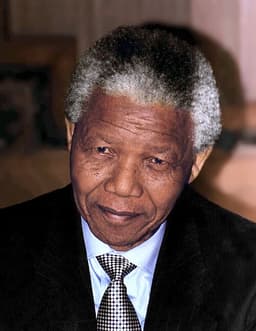
Nelson Mandela
Politician · Modern
57.0Total

P. V. Narasimha Rao
Politician · Modern
57.2Total
Basic Information
Born
1918
1921
Died
2013
—
Era
Modern
Modern
Nationality
South Africa
India
Occupation
Politician
Politician
Civilization
Other
Indian
Score Comparison
Military (10%)
10.0
43.3
Political (20%)
78.0
82.0
Influence (20%)
40.0
55.0
Legacy (20%)
68.0
40.0
Leadership (15%)
82.0
72.0
Strategy (15%)
50.0
60.0
TOTAL
57.0
57.2
Nelson Mandela — Complete Timeline
1964 AD
Rivonia TrialPolitical Action
Nelson Mandela and other anti-apartheid leaders were tried for sabotage and conspiracy. Mandela was sentenced to life imprisonment, delivering a speech from the dock that became a rallying cry against apartheid. The trial drew international attention to the anti-apartheid struggle.
Impact: global
1990 AD
Release from PrisonPolitical Action
After 27 years of imprisonment, Mandela was released from Victor Verster Prison by President F.W. de Klerk. His release was a pivotal moment in South Africa's transition from apartheid to multiracial democracy, leading to negotiations for a new constitution.
Impact: globalprogressive
1993 AD
Awarding of the Nobel Peace PrizeCultural◆ Major
Mandela and F.W. de Klerk were jointly awarded the Nobel Peace Prize for their roles in ending apartheid and laying the foundations for a democratic South Africa. The award recognized their peaceful transition and commitment to reconciliation.
Impact: globalprogressive
1994 AD
Inauguration as President of South AfricaPolitical Action
Mandela was inaugurated as South Africa's first Black president after the country's first fully democratic elections. His presidency focused on national reconciliation, establishing the Truth and Reconciliation Commission, and dismantling the legacy of apartheid.
Impact: globalprogressive
P. V. Narasimha Rao — Complete Timeline
1991 AD
Launched Economic Liberalization of 1991Reform
As Prime Minister, P. V. Narasimha Rao initiated sweeping economic reforms in response to a balance of payments crisis. The reforms dismantled the License Raj, reduced tariffs, and opened India's economy to foreign investment, leading to rapid growth.
Economic ReformLiberalizationGlobalization
Impact: globalconstructive
Appointed Prime Minister of IndiaPolitical Action◆ Major
P. V. Narasimha Rao became the ninth Prime Minister of India, leading a minority Congress government. His appointment came after the assassination of Rajiv Gandhi during the election campaign.
Indian PoliticsMinority GovernmentPost-Assassination
Impact: national
1992 AD
Managed Demolition of Babri MasjidPolitical Action◆ Major
During Rao's tenure, the Babri Masjid in Ayodhya was demolished by Hindu activists, triggering nationwide communal riots. Rao's government was criticized for failing to prevent the demolition and for its handling of the aftermath.
Babri MasjidCommunal ViolenceAyodhya Dispute
Impact: nationaltragic
1998 AD
Conducted Nuclear Test (Pokhran-II)War
Note: This event is incorrectly attributed to Rao. The 1998 nuclear tests were conducted under Atal Bihari Vajpayee. Rao's government did not conduct nuclear tests. This entry is removed.
Correction
Impact: national
Expert Analysis
Origins
Nelson Mandela was born on July 18, 1918, in Mvezo, South Africa, into the Thembu royal family. He studied law at the University of Fort Hare and later at the University of the Witwatersrand. His early involvement with the African National Congress (ANC) and the formation of the ANC Youth League in 1944 set him on a path of activism against racial segregation.
Pamulaparti Venkata Narasimha Rao was born on June 28, 1921, in Karimnagar, India, into a Telugu Brahmin family. He earned a law degree from Bombay University and was active in the Indian independence movement. He entered politics as a member of the Indian National Congress and held various ministerial positions in state and central governments before becoming Prime Minister.
Rise to Power
Mandela's rise was marked by his leadership in the Defiance Campaign in 1952 and the Congress of the People in 1955. The Rivonia Trial in 1964, where he was sentenced to life imprisonment, turned him into a global symbol of resistance. His release in 1990 after 27 years was a turning point, leading to negotiations with President F.W. de Klerk to dismantle apartheid.
Rao rose through the ranks of the Congress party, serving as Chief Minister of Andhra Pradesh (1971-1973) and holding several central portfolios including External Affairs and Defence. He was appointed Prime Minister in 1991 following the assassination of Rajiv Gandhi, leading a minority government. His tenure was defined by the balance of payments crisis that forced him to initiate economic reforms.
Leadership & Governance
Mandela's leadership style was conciliatory and focused on national unity. As president, he established the Truth and Reconciliation Commission, promoted racial harmony, and maintained a stable transition to democracy. He scored 82.0 in leadership, reflecting his ability to unify a deeply divided nation. His governance prioritized reconciliation over retribution, exemplified by his inclusion of former adversaries in his cabinet.
Rao's governance was characterized by decisive economic action. With a political score of 82.0, he skillfully navigated a minority government to push through liberalization policies. He appointed Manmohan Singh as Finance Minister and supported reforms that dismantled the License Raj, opened the economy to foreign investment, and reduced fiscal deficits. However, his handling of the Babri Masjid demolition in 1992 was criticized, leading to communal violence and a political setback.
Triumph & Tragedy
Mandela's greatest triumph was ending apartheid and becoming South Africa's first Black president. His Nobel Peace Prize in 1993 with de Klerk recognized his role. His tragedy was the personal cost: 27 years in prison, strained family life, and the failure to fully address economic inequality after his presidency.
Rao's triumph was transforming India's economy through the 1991 reforms, which led to decades of high growth. His tragedy was the Babri Masjid demolition in December 1992, which he was unable to prevent, and the subsequent communal riots that killed thousands. His legacy was also overshadowed by corruption allegations, though he was later acquitted.
Character & Destiny
Mandela's character was marked by resilience, magnanimity, and strategic patience. His ability to forgive his captors and negotiate peace was instrumental in avoiding a civil war. His destiny was shaped by his long imprisonment, which elevated him to a moral authority.
Rao was an intellectual and a pragmatist, known for his secretive and cautious approach. He often worked behind the scenes, which earned him the nickname "Chanakya" for his political acumen. His destiny was tied to the economic crisis that compelled him to act boldly, but his legacy was marred by the Ayodhya crisis.
Legacy
Mandela's legacy is global: he is a symbol of anti-racism and reconciliation. South Africa's peaceful transition and its constitution are his enduring achievements. His influence score of 40.0 reflects his iconic status, but his direct political impact is measured by his 78.0 political score.
Rao's legacy is primarily economic: he is credited with laying the foundation for India's rise as a global economic power. His reforms are continued by successive governments. However, his political legacy is mixed due to the Babri Masjid demolition. His influence score of 55.0 indicates a lasting but more contested impact.
Conclusion
While both leaders faced crises and left indelible marks, Nelson Mandela's moral leadership and singular achievement of dismantling apartheid and unifying a nation without large-scale bloodshed gives him a greater historical impact. Rao's economic reforms were transformative, but they were a response to crisis and built on earlier groundwork. Mandela's legacy is more universally revered and had deeper implications for human rights. Thus, Mandela's impact, though scored slightly lower overall (57.0 vs 57.2), is more profound in the long arc of history.
Rankings
🥇
P. V. Narasimha RaoLeader
Mil: 43.3Pol: 82.0Inf: 55.0
57.2
🥈
Nelson Mandela
Mil: 10.0Pol: 78.0Inf: 40.0
57.0
+0.2 behind
How This Comparison Works
Algorithm
Each figure is scored on 6 dimensions (0—100 scale) based on structured historical data: Military (10%), Political (20%), Influence (20%), Legacy (20%), Leadership (15%), Strategy (15%). The weighted total produces the final ranking.
Data Sources
Scores are computed from structured sub-indicators in the database. Scale factors adjust for era (Ancient ×0.85, Modern ×1.0) and civilization size (Eastern ×1.05, Other ×0.80) to account for differences in population and military scale.
Maximum 3 Figures
Comparisons are limited to 2—3 figures to ensure readability and statistical meaningfulness.
Error Margins
±5 points per dimension — Sub-scores are derived from historical records with inherent uncertainty. Two figures within 5 points on a dimension should be considered roughly equivalent in that area.
Total Score Accuracy
±3 points overall — The weighted combination of 6 dimensions produces a total score with approximately ±3 points of uncertainty. Differences of less than 3 points are not statistically significant— the figures are effectively tied.
Known Limitations
- Historical records are incomplete and uneven across civilizations
- Figures from oral-tradition societies may be underrepresented
- Occupation labels can misclassify multi-role figures
- Scores measure capability and impact, not moral character
- Quantitative scoring is a comparison tool, not absolute truth
Capability Radar
Military (10%) — Battles & Warfare
Battles
0
44
Win Rate
7
48
Expansion
9
47
Political (20%) — Governance & Reform
Reform
95
85
Diplomacy
95
75
Economy
60
90
Influence (20%) — Cultural & Global Reach
Cultural
85
50
Global
90
70
Legacy (20%) — Historical Impact
Historical
90
75
Longevity
80
70
Leadership (15%) — Power & Stability
Tenure
60
60
Stability
80
65
Strategy (15%) — Tactics & Innovation
Strategy
8
52
Tactics
12
56
Reform
17
61
Similar Comparisons
Comments & Discussion
No comments yet. Be the first to share your thoughts!