Loading...
Nebuchadnezzar I vs Zenobia
Nebuchadnezzar I leads by 0.7 pts · 2 figures compared
…
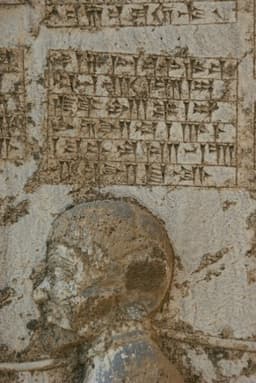
Nebuchadnezzar I
Emperor · Ancient
56.3Total
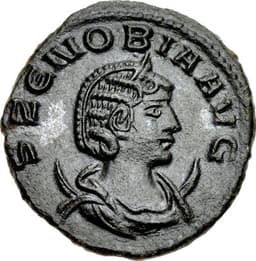
Zenobia
Emperor · Ancient
55.6Total
Basic Information
Born
-1125
240
Died
-1104
274
Era
Ancient
Ancient
Nationality
Babylon
Palmyrene Empire
Occupation
Emperor
Emperor
Civilization
Middle Eastern
Middle Eastern
Score Comparison
Military (10%)
70.0
61.7
Political (20%)
68.0
61.3
Influence (20%)
52.5
56.4
Legacy (20%)
42.5
48.3
Leadership (15%)
64.0
58.8
Strategy (15%)
57.5
52.5
TOTAL
56.3
55.6
Nebuchadnezzar I — Complete Timeline
1115 BC
Recovery of the Marduk Statue from ElamWar
Nebuchadnezzar I led a military campaign into Elam and successfully retrieved the statue of the god Marduk, which had been taken by the Elamites centuries earlier. This act restored the central religious symbol of Babylon and legitimized his rule.
Religious RestorationMilitary CampaignElam
Impact: regionalconstructive
1110 BC
Restoration of Babylonian PowerPolitical Action◆ Major
Following the recovery of the Marduk statue, Nebuchadnezzar I consolidated Babylonian control over Mesopotamia. He reasserted Babylonian dominance over rival states and re-established the kingdom as a major regional power after a period of weakness.
Political ConsolidationRegional PowerMesopotamia
Impact: regionalconstructive
Zenobia — Complete Timeline
269 AD
Conquest of EgyptWar◆ Major
Zenobia, queen of Palmyra, led her army in conquering Egypt from the Roman Empire. She claimed descent from Cleopatra and presented herself as a liberator. The conquest gave Palmyra control of Egypt's grain supply and established Zenobia as a major power in the East.
Palmyrene EmpireEgyptConquest
Impact: regional
270 AD
Conquest of Anatolia and SyriaWar◆ Major
Zenobia expanded the Palmyrene Empire by conquering much of Anatolia and Syria, including the cities of Antioch and Tarsus. Her general Zabdas defeated the Roman prefect Tenagino Probus. By 271, Zenobia controlled a vast territory from Egypt to the Bosphorus.
Palmyrene EmpireConquestRoman Empire
Impact: regional
Declaration of independence from RomePolitical Action◆ Major
Zenobia declared Palmyra's independence from the Roman Empire, minting coins with her image and assuming the title of Augusta. She established a separate court and administration, challenging Roman authority in the East and creating the Palmyrene Empire.
Palmyrene EmpireIndependenceRoman Empire
Impact: regional
272 AD
Battle of EmesaWar◆ Major
Zenobia's army was defeated by the Roman emperor Aurelian at the Battle of Emesa. Despite initial success, the Palmyrene forces were routed. Zenobia fled to Palmyra, which was then besieged by Aurelian. This battle marked the beginning of the end of the Palmyrene Empire.
Palmyrene EmpireBattleRoman Empire
Impact: regionaltragic
Capture and exilePolitical Action◆ Major
Zenobia was captured by Aurelian while attempting to flee to the Sassanid Empire. She was taken to Rome and paraded in Aurelian's triumph in 274 AD. According to most accounts, she was granted a villa in Tibur (Tivoli) and lived out her life in comfortable exile.
CaptureExileRoman Empire
Impact: regionaltragic
Expert Analysis
Origins
Nebuchadnezzar I (c. 1125–1104 BCE) was the fourth king of the Second Dynasty of Isin, ruling during a period of Babylonian decline. He was the son of Ninurta-nadin-shumi, a king who had struggled to maintain power against Assyrian and Elamite pressure. Nebuchadnezzar I's early life is not well-documented, but he inherited a weakened state. He focused on rebuilding Babylonian prestige through military campaigns and religious restoration.
Zenobia (c. 240–274 CE) was a queen of the Palmyrene Empire in Syria. She was the second wife of King Odaenathus, who had secured Palmyra's autonomy within the Roman Empire. After Odaenathus's assassination in 267 CE, Zenobia became regent for her son Vaballathus. She was educated in Greek, Aramaic, and Egyptian, and claimed descent from Cleopatra VII and the Ptolemies. Her background combined Hellenistic culture with Arab tribal heritage.
Rise to Power
Nebuchadnezzar I's rise was marked by his campaign against Elam around 1120 BCE. The Elamites had captured the statue of Marduk, Babylon's chief god, centuries earlier. Nebuchadnezzar I led a successful military expedition into Elam, defeating the Elamite king and retrieving the statue. This act restored Babylonian morale and legitimized his rule. He then reasserted control over northern Mesopotamia, securing trade routes and tribute from smaller states. His reign saw the consolidation of Babylonian power but remained limited in territorial extent compared to later empires.
Zenobia rose to power after Odaenathus's death. She initially ruled as regent but soon asserted independence. In 269 CE, she launched a campaign into Egypt, conquering it from Roman control. Her general Zabdas defeated the Roman prefect Tenagino Probus. She then extended Palmyrene control into Anatolia, capturing Antioch and Tarsus. By 271 CE, she controlled Egypt, Syria, Anatolia, and parts of Arabia. She minted coins with her image and her son's, and declared herself Augusta. Her rise was rapid but ultimately unsustainable.
Leadership & Governance
Nebuchadnezzar I's leadership focused on religious and military restoration. He rebuilt temples in Babylon and reinstated the cult of Marduk, which strengthened his political legitimacy. He also conducted diplomatic marriages and alliances. However, his governance was traditional for a Mesopotamian king, relying on a centralized bureaucracy and temple economy. He did not introduce major administrative reforms. His military strategy was effective in the short term but did not create lasting institutions.
Zenobia's governance was more ambitious. She formed a court that included intellectuals like the philosopher Longinus. She adopted Roman administrative structures while presenting herself as a Hellenistic queen. She issued coins with Greek and Latin legends, portraying herself as a Roman empress. However, her expansion was based on military conquest without deep integration. She failed to secure loyalty from newly conquered regions, and her governance relied heavily on Palmyrene elites. Her decision to declare independence from Rome was a strategic miscalculation.
Triumph & Tragedy
Nebuchadnezzar I's greatest triumph was the recovery of the Marduk statue, a symbolic act that revived Babylonian identity. He also secured a peace with Assyria, allowing Babylon to recover economically. His tragedies include the limited scope of his achievements: he did not create a lasting empire. After his death, Babylon again declined. His dynasty ended with his son, Enlil-nadin-apli, who was deposed. Nebuchadnezzar I scored 70.0 in military and 68.0 in political, but his influence score of 52.5 reflects his modest long-term impact.
Zenobia's triumphs include conquering Egypt and Anatolia, temporarily creating a major power. She challenged Rome's dominance and established a short-lived empire. Her tragedies are dramatic: her defeat at the Battle of Emesa (272 CE) by Aurelian, her capture while fleeing to Persia, and her humiliation in a Roman triumph. She was exiled to Tivoli. Her military score of 61.7 and political score of 61.3 reflect her achievements but also her ultimate failure. Her influence score of 56.4 is slightly higher than Nebuchadnezzar's, but her legacy score of 48.3 is lower.
Character & Destiny
Nebuchadnezzar I is portrayed as a pious and determined king. His focus on the Marduk statue shows his understanding of religious symbolism. He was cautious in foreign policy, avoiding major conflicts with Assyria. His character was suited for restoration, not expansion. His destiny was to be a transitional figure, remembered for a single symbolic act.
Zenobia was ambitious, educated, and charismatic. She modeled herself after Cleopatra and sought to create a Hellenistic kingdom. However, her overreach provoked Roman retaliation. She underestimated Aurelian's military capability. Her character combined intellectual sophistication with political naivety. Her destiny was to be a footnote in Roman history, a rebel queen who failed.
Legacy
Nebuchadnezzar I's legacy is primarily religious: the recovery of the Marduk statue reinforced Babylonian traditions that influenced later Mesopotamian culture. He is not as famous as Nebuchadnezzar II. His legacy score of 42.5 reflects his minor role in history. He is known mainly to specialists.
Zenobia's legacy is more prominent. She became a symbol of female power and resistance. Her story inspired later queens and artists. However, her empire vanished quickly. Her legacy score of 48.3 is higher than Nebuchadnezzar's, but still moderate. She is remembered as a romantic figure rather than a lasting ruler.
Conclusion
Nebuchadnezzar I had a greater total impact (score 56.3 vs 55.6), but the gap is narrow. His restoration of Babylonian religion had deep cultural effects, while Zenobia's conquests were ephemeral. However, Zenobia's story resonates more in popular culture. In terms of measurable historical change, Nebuchadnezzar I's actions had more lasting consequences for Mesopotamian civilization. Therefore, Nebuchadnezzar I is the more significant figure.
Rankings
🥇
Nebuchadnezzar ILeader
Mil: 70.0Pol: 68.0Inf: 52.5
56.3
🥈
Zenobia
Mil: 61.7Pol: 61.3Inf: 56.4
55.6
+0.7 behind
How This Comparison Works
Algorithm
Each figure is scored on 6 dimensions (0—100 scale) based on structured historical data: Military (10%), Political (20%), Influence (20%), Legacy (20%), Leadership (15%), Strategy (15%). The weighted total produces the final ranking.
Data Sources
Scores are computed from structured sub-indicators in the database. Scale factors adjust for era (Ancient ×0.85, Modern ×1.0) and civilization size (Eastern ×1.05, Other ×0.80) to account for differences in population and military scale.
Maximum 3 Figures
Comparisons are limited to 2—3 figures to ensure readability and statistical meaningfulness.
Error Margins
±5 points per dimension — Sub-scores are derived from historical records with inherent uncertainty. Two figures within 5 points on a dimension should be considered roughly equivalent in that area.
Total Score Accuracy
±3 points overall — The weighted combination of 6 dimensions produces a total score with approximately ±3 points of uncertainty. Differences of less than 3 points are not statistically significant— the figures are effectively tied.
Known Limitations
- Historical records are incomplete and uneven across civilizations
- Figures from oral-tradition societies may be underrepresented
- Occupation labels can misclassify multi-role figures
- Scores measure capability and impact, not moral character
- Quantitative scoring is a comparison tool, not absolute truth
Capability Radar
Military (10%) — Battles & Warfare
Battles
55
65
Win Rate
60
60
Expansion
50
70
Political (20%) — Governance & Reform
Reform
50
40
Diplomacy
55
55
Economy
45
50
Influence (20%) — Cultural & Global Reach
Cultural
40
45
Global
35
35
Legacy (20%) — Historical Impact
Historical
45
50
Longevity
30
40
Leadership (15%) — Power & Stability
Tenure
45
45
Stability
50
30
Strategy (15%) — Tactics & Innovation
Strategy
55
65
Tactics
50
60
Reform
40
30
Similar Comparisons
Comments & Discussion
No comments yet. Be the first to share your thoughts!