Loading...
Nebuchadnezzar I vs Tutankhamun
Nebuchadnezzar I leads by 1.9 pts · 2 figures compared
…
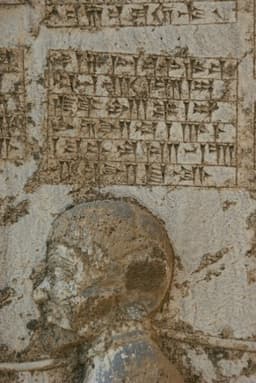
Nebuchadnezzar I
Emperor · Ancient
56.3Total

Tutankhamun
Emperor · Ancient
54.4Total
Basic Information
Born
-1125
-1332
Died
-1104
-1323
Era
Ancient
Ancient
Nationality
Babylon
Egypt
Occupation
Emperor
Emperor
Civilization
Middle Eastern
Middle Eastern
Score Comparison
Military (10%)
70.0
44.6
Political (20%)
68.0
35.0
Influence (20%)
52.5
68.0
Legacy (20%)
42.5
65.0
Leadership (15%)
64.0
39.0
Strategy (15%)
57.5
55.4
TOTAL
56.3
54.4
Nebuchadnezzar I — Complete Timeline
1115 BC
Recovery of the Marduk Statue from ElamWar
Nebuchadnezzar I led a military campaign into Elam and successfully retrieved the statue of the god Marduk, which had been taken by the Elamites centuries earlier. This act restored the central religious symbol of Babylon and legitimized his rule.
Religious RestorationMilitary CampaignElam
Impact: regionalconstructive
1110 BC
Restoration of Babylonian PowerPolitical Action◆ Major
Following the recovery of the Marduk statue, Nebuchadnezzar I consolidated Babylonian control over Mesopotamia. He reasserted Babylonian dominance over rival states and re-established the kingdom as a major regional power after a period of weakness.
Political ConsolidationRegional PowerMesopotamia
Impact: regionalconstructive
Tutankhamun — Complete Timeline
1332 BC
Restoration of Traditional ReligionReform
Tutankhamun reversed the religious reforms of Akhenaten, restoring the worship of Amun and the traditional Egyptian pantheon. He reopened temples, reinstated priests, and moved the capital back to Thebes, ending the Amarna period.
ReligionRestorationAmun
Impact: nationalconstructive
1330 BC
Military Campaigns in Nubia and SyriaWar
Tutankhamun conducted military campaigns in Nubia and Syria to reassert Egyptian control after the Amarna period. Inscriptions record his victories, though the campaigns were limited in scope and did not fully restore Egypt's former influence.
MilitaryNubiaSyria
Impact: regional
1323 BC
Discovery of His Intact Tomb (KV62)Cultural
Tutankhamun's tomb in the Valley of the Kings was discovered nearly intact by Howard Carter in 1922. The tomb contained a wealth of artifacts, including the famous golden death mask, providing unprecedented insight into New Kingdom burial practices and art.
ArchaeologyTombDiscovery
Impact: globalconstructive
Expert Analysis
Origins
Nebuchadnezzar I (c. 1125–1104 BCE) was the fourth king of the Second Dynasty of Isin, ruling Babylon during a period of decline. His father, Ninurta-nadin-shumi, had struggled against Assyrian and Elamite incursions. Nebuchadnezzar I inherited a weakened kingdom but was determined to restore Babylonian prestige. His early life is poorly documented, but he likely received military training and religious education, preparing him to defend and revive Babylonian traditions.
Tutankhamun (c. 1341–1323 BCE) was born as Tutankhaten during the Amarna period, son of Akhenaten and possibly his sister Nefertiti. His early life was shaped by the radical religious revolution of his father, who suppressed the worship of Amun and promoted the Aten. Tutankhamun was a child when he ascended the throne around age nine, likely under the regency of Ay and the general Horemheb. His upbringing was in the new capital Akhetaten, isolated from traditional power centers.
Rise to Power
Nebuchadnezzar I's rise was not dramatic; he inherited the throne through dynastic succession. His defining moment came when he launched a campaign against Elam, which had captured the statue of Marduk, Babylon's chief god, centuries earlier. In a decisive battle at the Ulai River (c. 1120 BCE), Nebuchadnezzar I defeated the Elamites and recovered the statue, a feat that legitimized his rule and rallied Babylonian nationalism. This event marked his turning point, elevating him from a typical king to a restorer of divine order.
Tutankhamun became pharaoh as a child after the death of his father Akhenaten and the brief reign of Smenkhkare. His early rule was controlled by powerful advisors. The key turning point was his decision to reverse Akhenaten's religious reforms. In his third regnal year, he moved the capital back to Thebes, restored the priesthood of Amun, and changed his name from Tutankhaten to Tutankhamun. This restoration of traditional religion secured the support of the elite and stabilized Egypt after the Amarna upheaval.
Leadership & Governance
Nebuchadnezzar I's leadership was military-focused. He scored 64.0 in leadership and 57.5 in strategy. He personally led campaigns to secure borders and reassert Babylonian dominance over Assyria and Elam. His governance was centered on restoring temples and cults, particularly the Esagila temple in Babylon. He issued kudurrus (land grants) to loyalists, strengthening the feudal system. However, his reign lacked major administrative reforms; his power rested on military success and religious patronage.
Tutankhamun, scoring 39.0 in leadership and 35.0 in political, was a figurehead. His governance was largely conducted by Ay and Horemheb. He reopened temples and restored endowments, but these were likely directed by his advisors. His military campaigns in Nubia and Syria (scoring 44.6 in military) were modest attempts to reassert Egyptian control, but they lacked the scale of earlier pharaohs. His rule was essentially a restoration of pre-Amarna norms, not innovative governance.
Triumph & Tragedy
Nebuchadnezzar I's greatest triumph was the recovery of the Marduk statue, which had immense symbolic value. He also defeated the Elamites and expanded Babylonian influence. However, his reign saw no lasting territorial gains; Assyria remained a threat. His failure to secure a stable succession led to decline after his death. His legacy score of 42.5 reflects that his achievements were soon overshadowed by later Neo-Babylonian kings.
Tutankhamun's triumph was the religious restoration, which reestablished stability. His intact tomb, discovered in 1922, became a global phenomenon, giving him a legacy score of 65.0. However, his tragedy was his early death at 18 or 19, likely from illness or injury. His tomb's small size suggests a hasty burial. His reign was brief and his personal achievements minimal; his fame is largely due to the tomb's discovery, not his actions as ruler.
Character & Destiny
Nebuchadnezzar I was a determined, religiously motivated king. His decision to retrieve the Marduk statue shows strategic acumen and piety. He was a capable military commander, but his character was typical of Mesopotamian kings: focused on conquest and temple building. His destiny was to be a restorer, but his dynasty did not endure, and his accomplishments were surpassed by later Babylonians.
Tutankhamun's character is harder to assess due to his youth. He appears as a transitional figure, a puppet whose name was used to legitimize the counter-reformation. His destiny was to be a footnote until his tomb's discovery made him the most famous pharaoh. Ironically, his lack of major achievements allowed his tomb to remain intact, while more significant pharaohs were looted.
Legacy
Nebuchadnezzar I's legacy is primarily as a restorer of Babylonian power and religion. He set a precedent for later kings, like Nebuchadnezzar II, who would emulate his piety and military successes. His recovery of the Marduk statue became a symbol of Babylonian resilience. However, his direct impact was limited; his empire did not survive long-term, and his name is less known than his Neo-Babylonian namesake.
Tutankhamun's legacy is overwhelmingly tied to his tomb. The artifacts have provided unparalleled insight into New Kingdom Egypt. His religious restoration undid Akhenaten's heresy, but it was completed by Horemheb and later pharaohs. Politically, his reign was a brief interlude. His influence score of 68.0 and legacy of 65.0 are inflated by modern fame, not ancient impact.
Conclusion
Nebuchadnezzar I scored higher overall (56.3 vs 54.4), but the difference is small. However, Nebuchadnezzar I's impact on his own time was greater: he actively restored Babylonian power and religion through military and political action. Tutankhamun was a passive figure whose main contribution was reversing his father's policies, a decision likely made by others. While Tutankhamun's tomb has immense archaeological value, Nebuchadnezzar I's achievements directly shaped Mesopotamian history. Thus, Nebuchadnezzar I had a greater historical impact as a ruler, despite Tutankhamun's modern fame.
Rankings
🥇
Nebuchadnezzar ILeader
Mil: 70.0Pol: 68.0Inf: 52.5
56.3
🥈
Tutankhamun
Mil: 44.6Pol: 35.0Inf: 68.0
54.4
+1.9 behind
How This Comparison Works
Algorithm
Each figure is scored on 6 dimensions (0—100 scale) based on structured historical data: Military (10%), Political (20%), Influence (20%), Legacy (20%), Leadership (15%), Strategy (15%). The weighted total produces the final ranking.
Data Sources
Scores are computed from structured sub-indicators in the database. Scale factors adjust for era (Ancient ×0.85, Modern ×1.0) and civilization size (Eastern ×1.05, Other ×0.80) to account for differences in population and military scale.
Maximum 3 Figures
Comparisons are limited to 2—3 figures to ensure readability and statistical meaningfulness.
Error Margins
±5 points per dimension — Sub-scores are derived from historical records with inherent uncertainty. Two figures within 5 points on a dimension should be considered roughly equivalent in that area.
Total Score Accuracy
±3 points overall — The weighted combination of 6 dimensions produces a total score with approximately ±3 points of uncertainty. Differences of less than 3 points are not statistically significant— the figures are effectively tied.
Known Limitations
- Historical records are incomplete and uneven across civilizations
- Figures from oral-tradition societies may be underrepresented
- Occupation labels can misclassify multi-role figures
- Scores measure capability and impact, not moral character
- Quantitative scoring is a comparison tool, not absolute truth
Capability Radar
Military (10%) — Battles & Warfare
Battles
55
40
Win Rate
60
41
Expansion
50
46
Political (20%) — Governance & Reform
Reform
50
5
Diplomacy
55
5
Economy
45
5
Influence (20%) — Cultural & Global Reach
Cultural
40
85
Global
35
80
Legacy (20%) — Historical Impact
Historical
45
90
Longevity
30
95
Leadership (15%) — Power & Stability
Tenure
45
10
Stability
50
15
Strategy (15%) — Tactics & Innovation
Strategy
55
48
Tactics
50
49
Reform
40
52
Similar Comparisons
Comments & Discussion
No comments yet. Be the first to share your thoughts!