Loading...
Muhan Qaghan vs Stephen of Blois
Muhan Qaghan leads by 23.0 pts · 2 figures compared
…
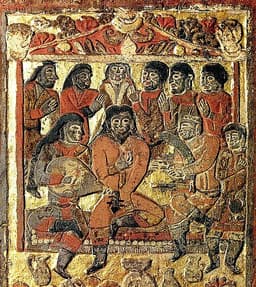
Muhan Qaghan
Emperor · Medieval
64.9Total
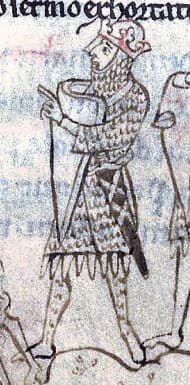
Stephen of Blois
Emperor · Medieval
41.9Total
Basic Information
Born
540
1096
Died
572
1154
Era
Medieval
Medieval
Nationality
Gokturk Khaganate
England
Occupation
Emperor
Emperor
Civilization
Eastern
Western
Score Comparison
Military (10%)
74.0
50.0
Political (20%)
72.0
26.4
Influence (20%)
58.3
51.0
Legacy (20%)
54.0
41.7
Leadership (15%)
79.8
41.5
Strategy (15%)
66.3
35.7
TOTAL
64.9
41.9
Muhan Qaghan — Complete Timeline
557 AD
Conquest of the Hephthalite EmpireWar◆ Major
Muhan Qaghan allied with the Sassanid Persian Empire to defeat the Hephthalite Empire in Central Asia. The Hephthalites were crushed, and their territory was divided between the Turks and Persians, with the Turks gaining the eastern regions.
ConquestHephthalites
Impact: regionaldestructive
560 AD
Expansion of the Turkic Khaganate to its greatest extentWar◆ Major
Muhan Qaghan led campaigns that expanded the Turkic Khaganate to its maximum territorial extent, stretching from the Caspian Sea to the borders of China. He conquered the Hephthalites in Central Asia and subjugated many tribes, making the khaganate a dominant power.
ExpansionTurkic Empire
Impact: regionalconstructive
565 AD
Suppression of internal revoltsWar
Muhan Qaghan faced revolts from subject tribes, including the Tiele and other steppe peoples. He brutally suppressed these uprisings, executing many leaders and forcibly relocating populations to maintain control over the vast khaganate.
Revolt SuppressionInternal Conflict
Impact: regionaldestructive
568 AD
Diplomatic relations with the Byzantine EmpirePolitical Action◆ Major
Muhan Qaghan sent an embassy to the Byzantine Empire, establishing diplomatic and trade relations. This alliance was aimed against the Sassanid Persians, and it opened the Silk Road to Turkic merchants, increasing the khaganate's wealth and influence.
DiplomacyByzantine-Turkic Alliance
Impact: globalconstructive
Stephen of Blois — Complete Timeline
1135 AD
Coronation of StephenPolitical Action◆ Major
Stephen was crowned king of England on December 22, 1135, after the death of Henry I. He seized the throne despite Henry's designation of his daughter Matilda as heir.
CoronationUsurpationSuccession Crisis
Impact: national
1141 AD
Battle of LincolnWar◆ Major
Stephen was captured by forces loyal to Matilda at the Battle of Lincoln on February 2, 1141. He was imprisoned, and Matilda briefly ruled as Lady of the English.
BattleCaptureCivil War
Impact: nationaldestructive
Release and RestorationPolitical Action◆ Major
Stephen was released in exchange for Matilda's half-brother Robert of Gloucester, who had been captured. Stephen was restored as king, and the civil war continued.
ReleaseRestorationCivil War
Impact: national
1153 AD
Treaty of WallingfordPolitical Action◆ Major
Stephen and Matilda's son Henry Plantagenet signed the Treaty of Wallingford. Stephen recognized Henry as his heir, ending the Anarchy civil war.
TreatyPeaceSuccession
Impact: nationalconstructive
1154 AD
Death of StephenPolitical Action◆ Major
Stephen died on October 25, 1154, at Dover. His death allowed Henry Plantagenet to become king as Henry II, founding the Plantagenet dynasty.
DeathEnd of AnarchyPlantagenet
Impact: nationaltragic
Expert Analysis
Origins
Muhan Qaghan (c. 554–572 CE) was born into the Ashina clan, the ruling family of the Gokturk Khaganate. His father, Bumin Qaghan, founded the khaganate in 552 CE after rebelling against the Rouran Khaganate. Little is known of Muhan's early life, but he likely received training in steppe warfare and governance. His uncle, Istemi Yabgu, ruled the western wing and was a key ally. Muhan became qaghan after his brother, Issik Qaghan, died in 553 CE.
Stephen of Blois (c. 1092–1154) was born in Blois, France, to Stephen II, Count of Blois, and Adela of Normandy, daughter of William the Conqueror. He was raised in the Anglo-Norman aristocracy and inherited the County of Boulogne through his wife, Matilda of Boulogne. Stephen was a nephew of King Henry I of England and was favored by the king, receiving extensive lands and titles. He was described as affable but lacking in decisiveness.
Rise to Power
Muhan Qaghan ascended to the throne in 553 CE after his brother's death. He quickly consolidated power by suppressing revolts among subject tribes, notably the Tiele and other steppe peoples, whom he brutally crushed. To expand the khaganate, he formed a strategic alliance with the Sassanid Persian Empire against the Hephthalite Empire. In 557–558 CE, the Gokturks and Sassanids jointly attacked the Hephthalites, defeating them and dividing their territory. This campaign extended Gokturk control from the Caspian Sea to the borders of China. Muhan also sent an embassy to the Byzantine Empire in 568 CE, establishing diplomatic and trade relations aimed against Sassanid Persia. By the end of his reign, the khaganate was at its maximum territorial extent.
Stephen of Blois rose to power after the death of King Henry I in 1135. Henry had designated his daughter, Empress Matilda, as his heir, but Stephen, with the support of many barons and the Church, rushed to London and was crowned king on December 22, 1135. He secured recognition from Pope Innocent II and initially maintained control. However, his rule was challenged by Matilda and her half-brother Robert of Gloucester, leading to the Anarchy, a civil war that lasted from 1135 to 1153. Stephen's seizure of the throne was a key turning point that plunged England into chaos.
Leadership & Governance
Muhan Qaghan ruled as an autocratic steppe emperor, maintaining control through military force and strategic alliances. He expanded the khaganate by incorporating conquered peoples into a tributary system, demanding loyalty and tribute. His governance relied on the traditional Turkic military-administrative structure, with regional governors (yabghus) overseeing provinces. Muhan's diplomatic outreach to the Byzantine Empire showed foresight in balancing power against Sassanid Persia. However, his brutal suppression of revolts, such as executing Tiele leaders, created lasting resentment among subject tribes.
Stephen of Blois's leadership was marked by indecision and inconsistency. He failed to establish strong central authority, granting concessions to barons and the Church to secure their support. His governance was reactive, often focusing on immediate military threats rather than long-term stability. Stephen's inability to control his own supporters led to widespread lawlessness and castle-building by barons. The Treaty of Wallingford (1153) ended the civil war by recognizing Henry Plantagenet as his heir, but Stephen's reign is remembered as a period of weak monarchy.
Triumph & Tragedy
Muhan Qaghan's greatest triumph was the expansion of the Gokturk Khaganate to its greatest extent, dominating Central Asia and controlling key Silk Road routes. His alliance with the Byzantine Empire was a diplomatic success, opening trade and strategic cooperation. However, his tragedy was the internal instability that followed his death. The khaganate soon fragmented due to revolts from subject tribes and succession disputes. Muhan's aggressive expansion created a vast but fragile empire that could not be sustained without strong leadership.
Stephen of Blois's triumph was his coronation and initial consolidation of power, but this was overshadowed by the Anarchy. His capture at the Battle of Lincoln in 1141 was a major defeat, leading to his imprisonment and Matilda's brief rule. Stephen's release and restoration did not end the conflict; the civil war dragged on until the Treaty of Wallingford. His death in 1154 allowed Henry II to found the Plantagenet dynasty, which brought strong centralized rule to England. Stephen's failure to secure his dynasty was his tragedy.
Character & Destiny
Muhan Qaghan was a ruthless and ambitious ruler, willing to use military force and diplomatic alliances to achieve his goals. His character was shaped by the steppe tradition of conquest and consolidation. He was decisive in crushing opposition but failed to build institutions that would outlast him. Historical assessments view him as an effective conqueror but not a state-builder. His destiny was to create a vast empire that quickly disintegrated.
Stephen of Blois was affable but weak-willed, often swayed by advisors and barons. He was known for his personal bravery in battle but lacked strategic vision. His indecisiveness prolonged the civil war, and he failed to assert authority over his kingdom. Historians like Henry of Huntingdon criticized his rule as a time of 'anarchy.' Stephen's character led to a reign of chaos, and his destiny was to be remembered as a failed king.
Legacy
Muhan Qaghan's legacy is the expansion of the Gokturk Khaganate, which influenced later Turkic states and the Mongol Empire. The khaganate's control over the Silk Road facilitated cultural and economic exchange between East and West. However, his rule did not lead to lasting institutions, and the khaganate collapsed within decades. His military score of 74.0 reflects his conquests, but his political score of 72.0 shows the limits of his statecraft.
Stephen of Blois's legacy is the Anarchy, which weakened the English monarchy but led to the strong rule of Henry II. The Treaty of Wallingford established a precedent for peaceful succession. Stephen's reign is often studied as a cautionary tale of weak leadership. His overall score of 41.9 is low, but his influence on English constitutional history is notable.
Conclusion
Muhan Qaghan had greater impact than Stephen of Blois. His conquests created the largest steppe empire of his time, influencing the balance of power in Eurasia. Stephen's reign was a failure, marked by civil war and weak governance. While Stephen's reign led to the Plantagenet dynasty, Muhan's expansion had broader geopolitical consequences. The score gap of 23.0 points reflects this disparity. Muhan Qaghan's military and leadership scores (74.0 and 79.8) far exceed Stephen's (50.0 and 41.5). In the comparison of impact, Muhan Qaghan is clearly the more significant historical figure.
Rankings
🥇
Muhan QaghanLeader
Mil: 74.0Pol: 72.0Inf: 58.3
64.9
🥈
Stephen of Blois
Mil: 50.0Pol: 26.4Inf: 51.0
41.9
+23.0 behind
How This Comparison Works
Algorithm
Each figure is scored on 6 dimensions (0—100 scale) based on structured historical data: Military (10%), Political (20%), Influence (20%), Legacy (20%), Leadership (15%), Strategy (15%). The weighted total produces the final ranking.
Data Sources
Scores are computed from structured sub-indicators in the database. Scale factors adjust for era (Ancient ×0.85, Modern ×1.0) and civilization size (Eastern ×1.05, Other ×0.80) to account for differences in population and military scale.
Maximum 3 Figures
Comparisons are limited to 2—3 figures to ensure readability and statistical meaningfulness.
Error Margins
±5 points per dimension — Sub-scores are derived from historical records with inherent uncertainty. Two figures within 5 points on a dimension should be considered roughly equivalent in that area.
Total Score Accuracy
±3 points overall — The weighted combination of 6 dimensions produces a total score with approximately ±3 points of uncertainty. Differences of less than 3 points are not statistically significant— the figures are effectively tied.
Known Limitations
- Historical records are incomplete and uneven across civilizations
- Figures from oral-tradition societies may be underrepresented
- Occupation labels can misclassify multi-role figures
- Scores measure capability and impact, not moral character
- Quantitative scoring is a comparison tool, not absolute truth
Capability Radar
Military (10%) — Battles & Warfare
Battles
75
30
Win Rate
80
25
Expansion
90
10
Political (20%) — Governance & Reform
Reform
65
20
Diplomacy
75
25
Economy
60
15
Influence (20%) — Cultural & Global Reach
Cultural
55
20
Global
55
15
Legacy (20%) — Historical Impact
Historical
65
30
Longevity
50
20
Leadership (15%) — Power & Stability
Tenure
80
40
Stability
70
10
Strategy (15%) — Tactics & Innovation
Strategy
85
15
Tactics
70
20
Reform
60
10
Similar Comparisons
Comments & Discussion
No comments yet. Be the first to share your thoughts!