Loading...
Muawiyah I vs Yamagata Aritomo
Yamagata Aritomo leads by 6.2 pts · 2 figures compared
…
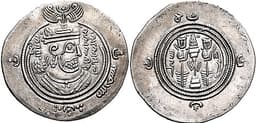
Muawiyah I
Emperor · Medieval
76.3Total
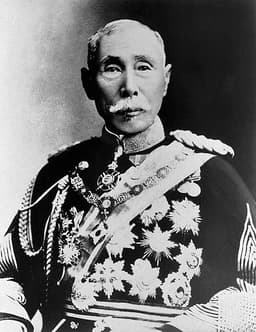
Yamagata Aritomo
General · Modern
82.5Total
Basic Information
Born
602
1838
Died
680
1922
Era
Medieval
Modern
Nationality
Umayyad Caliphate
Japan
Occupation
Emperor
General
Civilization
Middle Eastern
Eastern
Score Comparison
Military (10%)
76.0
78.0
Political (20%)
75.0
82.0
Influence (20%)
75.0
80.0
Legacy (20%)
80.0
90.0
Leadership (15%)
78.0
78.0
Strategy (15%)
70.0
82.0
TOTAL
76.3
82.5
Muawiyah I — Complete Timeline
640 AD
Governorship of SyriaPolitical Action◆ Major
Muawiyah I was appointed governor of Syria by Caliph Umar. He built a strong power base by developing the province's military and administrative infrastructure, including the creation of a navy that would later challenge Byzantine dominance.
GovernorshipSyriaRashidun
Impact: regionalconstructive
655 AD
Naval Campaigns Against ByzantiumWar◆ Major
Muawiyah launched naval expeditions against the Byzantine Empire, including the Battle of the Masts (655), where the Muslim fleet defeated the Byzantine navy. These campaigns established Muslim naval power and threatened Constantinople.
Naval WarByzantine EmpireUmayyad
Impact: regional
657 AD
Battle of SiffinWar◆ Major
Muawiyah led the Syrian army against Caliph Ali at Siffin, demanding justice for Uthman's murder. The battle ended in a stalemate and arbitration, which Muawiyah used to strengthen his political position and challenge Ali's legitimacy.
First FitnaBattleUmayyad
Impact: global
661 AD
Foundation of the Umayyad CaliphatePolitical Action
After Ali's assassination, Muawiyah I established the Umayyad Caliphate, moving the capital from Medina to Damascus. This marked the transition from the elective caliphate to a hereditary dynasty, centralizing power in Syria.
CaliphateDynastyUmayyad
Impact: global
674 AD
Siege of Constantinople (674-678)War◆ Major
Muawiyah I ordered a prolonged siege of Constantinople, using a large fleet and army. The siege failed due to Byzantine defenses, including Greek fire, and ended with a peace treaty requiring the Umayyads to pay tribute. It was a rare setback.
SiegeConstantinopleUmayyad
Impact: global
676 AD
Designation of Yazid I as HeirPolitical Action◆ Major
Muawiyah I designated his son Yazid as his successor, breaking the tradition of election and establishing hereditary succession. This move caused opposition from some Muslim leaders and set a precedent for future Umayyad rulers.
SuccessionHereditaryUmayyad
Impact: global
Yamagata Aritomo — Complete Timeline
1873 AD
Establishment of the Imperial Japanese ArmyReform
Yamagata Aritomo, as War Minister, oversaw the creation of the Imperial Japanese Army based on the Prussian model. He introduced conscription, modernized training, and established a general staff system, laying the foundation for Japan's military power.
Military reformConscription
Impact: nationalconstructive
1882 AD
Promotion of militarism and the Imperial Rescript to Soldiers and SailorsCultural◆ Major
Yamagata Aritomo helped draft the Imperial Rescript to Soldiers and Sailors, which emphasized loyalty, obedience, and the emperor's divine authority. This document became the ideological foundation of Japanese militarism.
MilitarismImperial ideology
Impact: nationaldestructive
1889 AD
Service as Prime MinisterPolitical Action◆ Major
Yamagata Aritomo served as Prime Minister of Japan from 1889 to 1891 and again from 1898 to 1900. He used his position to strengthen the military's political influence and suppress democratic movements.
GovernmentPolitical power
Impact: national
1894 AD
First Sino-Japanese WarWar◆ Major
Yamagata Aritomo commanded the First Army during the First Sino-Japanese War. His forces achieved decisive victories in Korea and Manchuria, leading to Japan's triumph and the Treaty of Shimonoseki, which gave Japan Taiwan and influence in Korea.
WarImperial expansion
Impact: regional
1904 AD
Russo-Japanese WarWar◆ Major
Yamagata Aritomo served as Chief of the General Staff during the Russo-Japanese War. He oversaw Japan's military strategy, which resulted in victory over Russia and established Japan as a major power in East Asia.
WarGreat power
Impact: global
Expert Analysis
Origins
Yamagata Aritomo was born in 1838 in Hagi, a domain in feudal Japan. He emerged from the lower samurai class, a background that fueled his drive for modernization and centralization. Initially a member of the Shinsengumi, he later joined the imperial side in the Boshin War, gaining military experience. Muawiyah I was born in Mecca in 602 AD into the powerful Umayyad clan of the Quraysh tribe. His father, Abu Sufyan, was a prominent leader, and Muawiyah converted to Islam after the conquest of Mecca. His early career included serving as a scribe for the Prophet Muhammad and later as a governor under Caliph Umar.
Rise to Power
Yamagata's rise came through his role in the Meiji Restoration. He studied Western military systems, particularly Prussian models, and became a key architect of the Imperial Japanese Army. His appointment as War Minister in 1873 allowed him to implement conscription and modernize the military. He solidified his power through the Imperial Rescript to Soldiers and Sailors (1882), which instilled loyalty to the emperor. Muawiyah's path to power was through his governorship of Syria, granted by Caliph Uthman. After Uthman's assassination, Muawiyah refused to recognize Ali as caliph, demanding justice for Uthman. The resulting conflict led to the Battle of Siffin (657), which ended in arbitration. When Ali was assassinated in 661, Muawiyah seized the caliphate, founding the Umayyad dynasty and moving the capital to Damascus.
Leadership & Governance
Yamagata served as Prime Minister twice (1889-1891, 1898-1900) and held other high offices. He was a staunch conservative who promoted militarism, nationalism, and an authoritarian state. He established the Imperial Japanese Army's general staff system and ensured military independence from civilian control. His policies prioritized military expansion and colonial ambitions, leading to Japan's victories in the First Sino-Japanese War (1894-1895) and the Russo-Japanese War (1904-1905). Muawiyah was a shrewd administrator who stabilized the Islamic empire after civil war. He decentralized governance, appointed capable governors, and built a strong navy to challenge Byzantium. He also established the hereditary succession of his son Yazid, setting a precedent for dynastic rule. His reign saw administrative reforms, including the introduction of Arabic as the official language and the establishment of the barid (postal system).
Triumph & Tragedy
Yamagata's greatest triumph was the modernization of Japan's military, which enabled Japan to become a major world power. His leadership in the Sino-Japanese and Russo-Japanese Wars secured territorial gains and international recognition. However, his promotion of militarism and ultranationalism contributed to Japan's descent into fascism and eventual defeat in World War II. The tragedy of his legacy is that his system led to catastrophic consequences. Muawiyah's triumph was founding the Umayyad dynasty and expanding the Islamic empire, including successful naval campaigns against Byzantium and the first Arab siege of Constantinople (674-678). However, his decision to appoint his son Yazid led to the tragic Battle of Karbala (680) and the martyrdom of Husayn ibn Ali, creating a permanent schism between Sunni and Shia Islam. His dynasty faced revolts and internal strife, culminating in its overthrow by the Abbasids.
Character & Destiny
Yamagata was known as the "father of Japanese militarism" and was a cold, calculating strategist. He was deeply influenced by Prussian military philosophy and believed in the supremacy of the military in state affairs. His personal motto was "Fukoku Kyohei" (Enrich the Country, Strengthen the Army). His destiny was to shape Japan's imperial path, but his rigid ideology ultimately led to national ruin. Muawiyah was a pragmatic and patient politician, known for his clemency and diplomatic skill. He was called "the clement one" for his ability to forgive enemies. His destiny was to transform the caliphate into a hereditary monarchy, but his actions sowed the seeds of sectarian conflict that persist today.
Legacy
Yamagata's legacy is mixed: he is revered in Japan as a founding father of the modern state but also reviled for his role in militarism and war. His institutional reforms shaped Japan's military until 1945. Muawiyah's legacy is similarly complex: he is credited with expanding and stabilizing the Islamic empire but criticized for corrupting the caliphate's early principles. He is a revered figure among Sunnis but reviled by Shias. Both men exemplify how strong leaders can build lasting institutions while also creating divisions that outlast them.
Conclusion
Comparing Yamagata Aritomo and Muawiyah I reveals two master builders of military and political systems. Yamagata (overall score: 82) edges out Muawiyah (overall score: 76) by 6.2 points, reflecting his greater impact on modern military organization and state-building. However, Muawiyah's influence on Islamic civilization is equally profound. Yamagata's vision of a centralized, militarized state succeeded in the short term but led to disaster, while Muawiyah's dynasty created a golden age but also permanent sectarian strife. Both leaders demonstrate the double-edged nature of power: the same qualities that enable rise to greatness can also precipitate downfall. Ultimately, Yamagata's higher score reflects his more comprehensive transformation of a nation's military and political structure, but Muawiyah's legacy as a founder of a dynasty that lasted nearly a century is equally remarkable.
Rankings
🥇
Yamagata AritomoLeader
Mil: 78.0Pol: 82.0Inf: 80.0
82.5
🥈
Muawiyah I
Mil: 76.0Pol: 75.0Inf: 75.0
76.3
+6.2 behind
How This Comparison Works
Algorithm
Each figure is scored on 6 dimensions (0—100 scale) based on structured historical data: Military (10%), Political (20%), Influence (20%), Legacy (20%), Leadership (15%), Strategy (15%). The weighted total produces the final ranking.
Data Sources
Scores are computed from structured sub-indicators in the database. Scale factors adjust for era (Ancient ×0.85, Modern ×1.0) and civilization size (Eastern ×1.05, Other ×0.80) to account for differences in population and military scale.
Maximum 3 Figures
Comparisons are limited to 2—3 figures to ensure readability and statistical meaningfulness.
Error Margins
±5 points per dimension — Sub-scores are derived from historical records with inherent uncertainty. Two figures within 5 points on a dimension should be considered roughly equivalent in that area.
Total Score Accuracy
±3 points overall — The weighted combination of 6 dimensions produces a total score with approximately ±3 points of uncertainty. Differences of less than 3 points are not statistically significant— the figures are effectively tied.
Known Limitations
- Historical records are incomplete and uneven across civilizations
- Figures from oral-tradition societies may be underrepresented
- Occupation labels can misclassify multi-role figures
- Scores measure capability and impact, not moral character
- Quantitative scoring is a comparison tool, not absolute truth
Capability Radar
Military (10%) — Battles & Warfare
Battles
75
75
Win Rate
80
70
Expansion
85
80
Political (20%) — Governance & Reform
Reform
90
90
Diplomacy
95
75
Economy
85
70
Influence (20%) — Cultural & Global Reach
Cultural
75
80
Global
75
70
Legacy (20%) — Historical Impact
Historical
85
85
Longevity
80
75
Leadership (15%) — Power & Stability
Tenure
85
85
Stability
80
65
Strategy (15%) — Tactics & Innovation
Strategy
85
85
Tactics
70
80
Reform
80
95
Similar Comparisons
Comments & Discussion
No comments yet. Be the first to share your thoughts!