Loading...
Ivan I Kalita vs Muawiyah I
Muawiyah I leads by 23.7 pts · 2 figures compared
…
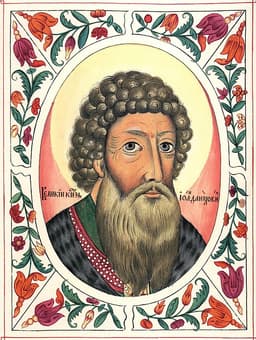
Ivan I Kalita
Emperor · Medieval
52.6Total
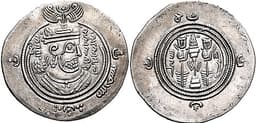
Muawiyah I
Emperor · Medieval
76.3Total
Basic Information
Born
1288
602
Died
1341
680
Era
Medieval
Medieval
Nationality
Muscovy
Umayyad Caliphate
Occupation
Emperor
Emperor
Civilization
Western
Middle Eastern
Score Comparison
Military (10%)
25.9
76.0
Political (20%)
72.0
75.0
Influence (20%)
51.8
75.0
Legacy (20%)
48.3
80.0
Leadership (15%)
68.0
78.0
Strategy (15%)
39.6
70.0
TOTAL
52.6
76.3
Ivan I Kalita — Complete Timeline
1325 AD
Appointed as Grand Prince of MoscowPolitical Action◆ Major
Ivan I became Grand Prince of Moscow after his brother Yuri's death. He secured the title by cooperating with the Mongol Golden Horde, using his position to collect tribute from other Russian principalities on behalf of the Khan.
MoscowGolden HordeTribute
Impact: regional
1326 AD
Moved the Metropolitan See to MoscowPolitical Action◆ Major
Ivan I persuaded Metropolitan Peter to move his residence from Vladimir to Moscow. This made Moscow the ecclesiastical center of the Russian Orthodox Church, greatly enhancing its political and religious authority.
MoscowOrthodox ChurchMetropolitan
Impact: regionalconstructive
1327 AD
Suppressed the Tver UprisingWar◆ Major
When Tver rebelled against Mongol tax collectors, Ivan I led a Mongol-Muscovite army to crush the uprising. The destruction of Tver eliminated Moscow's main rival for supremacy in northeastern Russia.
TverGolden HordeUprising
Impact: regionaldestructive
1328 AD
Acquired the title of Grand Prince of VladimirPolitical Action◆ Major
Ivan I obtained the yarlyk (patent) for the Grand Principality of Vladimir from the Mongol Khan Uzbek. This made Moscow the primary collector of tribute for the Horde and the most powerful Russian principality.
MoscowGolden HordeVladimir
Impact: regional
Muawiyah I — Complete Timeline
640 AD
Governorship of SyriaPolitical Action◆ Major
Muawiyah I was appointed governor of Syria by Caliph Umar. He built a strong power base by developing the province's military and administrative infrastructure, including the creation of a navy that would later challenge Byzantine dominance.
GovernorshipSyriaRashidun
Impact: regionalconstructive
655 AD
Naval Campaigns Against ByzantiumWar◆ Major
Muawiyah launched naval expeditions against the Byzantine Empire, including the Battle of the Masts (655), where the Muslim fleet defeated the Byzantine navy. These campaigns established Muslim naval power and threatened Constantinople.
Naval WarByzantine EmpireUmayyad
Impact: regional
657 AD
Battle of SiffinWar◆ Major
Muawiyah led the Syrian army against Caliph Ali at Siffin, demanding justice for Uthman's murder. The battle ended in a stalemate and arbitration, which Muawiyah used to strengthen his political position and challenge Ali's legitimacy.
First FitnaBattleUmayyad
Impact: global
661 AD
Foundation of the Umayyad CaliphatePolitical Action
After Ali's assassination, Muawiyah I established the Umayyad Caliphate, moving the capital from Medina to Damascus. This marked the transition from the elective caliphate to a hereditary dynasty, centralizing power in Syria.
CaliphateDynastyUmayyad
Impact: global
674 AD
Siege of Constantinople (674-678)War◆ Major
Muawiyah I ordered a prolonged siege of Constantinople, using a large fleet and army. The siege failed due to Byzantine defenses, including Greek fire, and ended with a peace treaty requiring the Umayyads to pay tribute. It was a rare setback.
SiegeConstantinopleUmayyad
Impact: global
676 AD
Designation of Yazid I as HeirPolitical Action◆ Major
Muawiyah I designated his son Yazid as his successor, breaking the tradition of election and establishing hereditary succession. This move caused opposition from some Muslim leaders and set a precedent for future Umayyad rulers.
SuccessionHereditaryUmayyad
Impact: global
Expert Analysis
Origins
Ivan I Kalita was born around 1288 into the Daniilovich branch of the Rurik dynasty, the son of Prince Daniil of Moscow. Little is known of his early life, but he inherited a small, forested principality. His brother Yuri was the first Moscow prince to obtain the yarlyk for Vladimir, but after Yuri's death in 1325, Ivan took over.
Muawiyah I was born in 602 in Mecca into the powerful Umayyad clan of the Quraysh tribe. His father Abu Sufyan led opposition to Muhammad until the conquest of Mecca. Muawiyah embraced Islam in 630 and was appointed a scribe for Quranic revelations. He gained administrative experience under Caliph Umar.
Rise to Power
Ivan I's rise came through cooperation with the Mongol Golden Horde. In 1327, Tver rebelled against Mongol tax collectors. Ivan led a Mongol-Muscovite army to crush the uprising, destroying Tver. As reward, Khan Uzbek granted him the yarlyk for Vladimir in 1328, making Moscow the primary tribute collector. Ivan's total score of 52.6 reflects his political skill (72.0) over military (25.9).
Muawiyah's rise began as governor of Syria under Caliph Umar in 639. He built a strong army and navy, expanded administrative systems, and fostered loyalty among Syrian tribes. After Caliph Uthman's assassination in 656, Muawiyah demanded justice and refused to recognize Ali. The Battle of Siffin in 657 ended in arbitration; Ali's assassination in 661 left Muawiyah as caliph. He scored 76.0 in military and 75.0 in political.
Leadership & Governance
Ivan I governed Moscow with a focus on stability and tax collection. He used his position as tribute collector to enrich Moscow, buying villages and expanding territory. He moved the Metropolitan See from Vladimir to Moscow in 1325, making the city the religious center. His leadership score of 68.0 reflects cautious, incremental growth.
Muawiyah founded the Umayyad Caliphate, moving the capital from Medina to Damascus. He centralized power, created a hereditary succession (appointing his son Yazid), and developed a professional army and navy. He launched naval campaigns against Byzantium, including the Battle of the Masts in 655 and the siege of Constantinople (674-678). His strategy score of 70.0 shows his methodical approach.
Triumph & Tragedy
Ivan I's greatest success was securing Moscow's primacy among Russian principalities, collecting tribute efficiently and avoiding Mongol wrath. His greatest failure was his subservience to the Horde; he never challenged Mongol rule, and his policies reinforced the tribute system. His influence score of 51.8 is modest.
Muawiyah's triumphs include establishing a stable dynasty and expanding the caliphate's borders. He conquered Cyprus, Rhodes, and parts of Anatolia. His tragedy was the controversial succession of Yazid, which led to the Battle of Karbala and the Shia-Sunni split. His legacy score of 80.0 reflects his enduring impact.
Character & Destiny
Ivan I was pragmatic and cautious, known as "Kalita" (moneybag) for his wealth. He avoided conflict, preferring negotiation and payment. His character suited the era of Mongol domination, but it limited his ambition. His total score of 52.6 is low due to military weakness.
Muawiyah was a skilled politician and strategist, patient and calculating. He used diplomacy and force to consolidate power. His character enabled him to found a dynasty, but his decisions deepened sectarian divisions. His total score of 76.3 is high across all categories.
Legacy
Ivan I's legacy is mixed. He laid the foundation for Moscow's rise, but his methods were subservient. The Metropolitan's move made Moscow the religious center, which later supported independence. His score of 48.3 in legacy reflects his indirect influence.
Muawiyah's legacy is profound. The Umayyad Caliphate became the largest empire of its time, and his administrative reforms shaped Islamic governance. The Arabization of administration and the use of Damascus as capital had lasting effects. His legacy score of 80.0 is among the highest.
Conclusion
Muawiyah I had greater impact. His total score of 76.3 vs Ivan's 52.6 reflects his superior military, political, and strategic abilities. While Ivan consolidated Moscow, Muawiyah founded a dynasty that ruled for a century and transformed the Islamic world. Ivan's influence was regional and temporary; Muawiyah's was imperial and enduring. Muawiyah's legacy in governance, military, and religion outweighs Ivan's cautious consolidation.
Rankings
🥇
Muawiyah ILeader
Mil: 76.0Pol: 75.0Inf: 75.0
76.3
🥈
Ivan I Kalita
Mil: 25.9Pol: 72.0Inf: 51.8
52.6
+23.7 behind
How This Comparison Works
Algorithm
Each figure is scored on 6 dimensions (0—100 scale) based on structured historical data: Military (10%), Political (20%), Influence (20%), Legacy (20%), Leadership (15%), Strategy (15%). The weighted total produces the final ranking.
Data Sources
Scores are computed from structured sub-indicators in the database. Scale factors adjust for era (Ancient ×0.85, Modern ×1.0) and civilization size (Eastern ×1.05, Other ×0.80) to account for differences in population and military scale.
Maximum 3 Figures
Comparisons are limited to 2—3 figures to ensure readability and statistical meaningfulness.
Error Margins
±5 points per dimension — Sub-scores are derived from historical records with inherent uncertainty. Two figures within 5 points on a dimension should be considered roughly equivalent in that area.
Total Score Accuracy
±3 points overall — The weighted combination of 6 dimensions produces a total score with approximately ±3 points of uncertainty. Differences of less than 3 points are not statistically significant— the figures are effectively tied.
Known Limitations
- Historical records are incomplete and uneven across civilizations
- Figures from oral-tradition societies may be underrepresented
- Occupation labels can misclassify multi-role figures
- Scores measure capability and impact, not moral character
- Quantitative scoring is a comparison tool, not absolute truth
Capability Radar
Military (10%) — Battles & Warfare
Battles
10
75
Win Rate
10
80
Expansion
20
85
Political (20%) — Governance & Reform
Reform
55
90
Diplomacy
70
95
Economy
75
85
Influence (20%) — Cultural & Global Reach
Cultural
30
75
Global
20
75
Legacy (20%) — Historical Impact
Historical
50
85
Longevity
40
80
Leadership (15%) — Power & Stability
Tenure
60
85
Stability
65
80
Strategy (15%) — Tactics & Innovation
Strategy
15
85
Tactics
5
70
Reform
5
80
Similar Comparisons
Comments & Discussion
No comments yet. Be the first to share your thoughts!