Loading...
Muawiyah I vs Vauban
Vauban leads by 0.1 pts · 2 figures compared
…
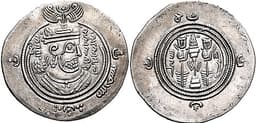
Muawiyah I
Emperor · Medieval
76.3Total

Vauban
General · Modern
76.4Total
Basic Information
Born
602
1633
Died
680
1707
Era
Medieval
Modern
Nationality
Umayyad Caliphate
France
Occupation
Emperor
General
Civilization
Middle Eastern
Western
Score Comparison
Military (10%)
76.0
76.0
Political (20%)
75.0
59.3
Influence (20%)
75.0
71.0
Legacy (20%)
80.0
90.0
Leadership (15%)
78.0
77.2
Strategy (15%)
70.0
80.6
TOTAL
76.3
76.4
Muawiyah I — Complete Timeline
640 AD
Governorship of SyriaPolitical Action◆ Major
Muawiyah I was appointed governor of Syria by Caliph Umar. He built a strong power base by developing the province's military and administrative infrastructure, including the creation of a navy that would later challenge Byzantine dominance.
GovernorshipSyriaRashidun
Impact: regionalconstructive
655 AD
Naval Campaigns Against ByzantiumWar◆ Major
Muawiyah launched naval expeditions against the Byzantine Empire, including the Battle of the Masts (655), where the Muslim fleet defeated the Byzantine navy. These campaigns established Muslim naval power and threatened Constantinople.
Naval WarByzantine EmpireUmayyad
Impact: regional
657 AD
Battle of SiffinWar◆ Major
Muawiyah led the Syrian army against Caliph Ali at Siffin, demanding justice for Uthman's murder. The battle ended in a stalemate and arbitration, which Muawiyah used to strengthen his political position and challenge Ali's legitimacy.
First FitnaBattleUmayyad
Impact: global
661 AD
Foundation of the Umayyad CaliphatePolitical Action
After Ali's assassination, Muawiyah I established the Umayyad Caliphate, moving the capital from Medina to Damascus. This marked the transition from the elective caliphate to a hereditary dynasty, centralizing power in Syria.
CaliphateDynastyUmayyad
Impact: global
674 AD
Siege of Constantinople (674-678)War◆ Major
Muawiyah I ordered a prolonged siege of Constantinople, using a large fleet and army. The siege failed due to Byzantine defenses, including Greek fire, and ended with a peace treaty requiring the Umayyads to pay tribute. It was a rare setback.
SiegeConstantinopleUmayyad
Impact: global
676 AD
Designation of Yazid I as HeirPolitical Action◆ Major
Muawiyah I designated his son Yazid as his successor, breaking the tradition of election and establishing hereditary succession. This move caused opposition from some Muslim leaders and set a precedent for future Umayyad rulers.
SuccessionHereditaryUmayyad
Impact: global
Vauban — Complete Timeline
1673 AD
Siege of MaastrichtWar◆ Major
Vauban directed the siege of Maastricht for Louis XIV. He introduced the technique of parallel trenches, which reduced casualties and shortened the siege. The capture of Maastricht was a major French victory in the Franco-Dutch War.
Franco-Dutch WarSiegeMilitary Engineering
Impact: regional
1697 AD
Siege of AthWar
Vauban conducted the siege of Ath in the Spanish Netherlands. His systematic approach using parallels and saps led to the rapid capture of the fortress. The siege demonstrated the effectiveness of his methods.
Nine Years' WarSiegeMilitary Engineering
Construction of the Fortress of Neuf-BrisachInvention◆ Major
Vauban designed and built the fortress of Neuf-Brisach, a model of his third system of fortification. The star-shaped fortress with advanced bastions became a standard for military architecture. It was built to protect the French border after the Treaty of Ryswick.
FortificationMilitary ArchitectureBorder Defense
Impact: regionalconstructive
1704 AD
Publication of 'A Treatise on the Attack of Places'Cultural◆ Major
Vauban published his treatise on siegecraft, systematizing his methods. The work became a standard military textbook in Europe. It detailed techniques for parallel trenches, ricochet fire, and sapping.
Military TheorySiegecraftPublication
Impact: globalconstructive
1707 AD
Proposal for a 'Dîme Royale' Tax ReformReform
Vauban proposed a radical tax reform called the 'D
Tax ReformEconomic PolicyFrance
Impact: nationalconstructive
Expert Analysis
Origins
Vauban (1633-1707) was a French military engineer who rose from minor nobility to become Louis XIV's chief fortress builder. His early career included siege warfare during the Fronde and later the Franco-Dutch War. Muawiyah I (602-680) emerged from the powerful Umayyad clan of Mecca, serving as a scribe to Muhammad and later as governor of Syria under Caliph Uthman. His political acumen allowed him to navigate the early Islamic civil wars.
Rise to Power
Vauban's rise came through technical brilliance. His innovative siege tactics at the Siege of Maastricht (1673) forced a Dutch surrender in 13 days, earning him the king's favor. He was appointed Commissioner General of Fortifications in 1678, overseeing the construction or improvement of over 300 fortresses. Muawiyah's path was political. As governor of Syria (639-661), he built a loyal army and navy, avoiding direct confrontation with Ali until the Battle of Siffin (657), where he cleverly demanded arbitration, splitting Ali's forces. He then consolidated power, founding the Umayyad Caliphate in 661.
Leadership & Governance
Vauban's leadership was methodical and scientific. He revolutionized siege warfare with parallel trenches and ricochet fire, as detailed in his treatise 'A Treatise on the Attack of Places' (1704). His fortresses, like Neuf-Brisach (1699), formed a defensive line known as the 'Pré Carré.' He also proposed economic reforms, including a flat tax ('Dîme Royale'), which was rejected. Muawiyah was a pragmatic statesman. He centralized the caliphate, moved the capital to Damascus, and established a hereditary succession (his son Yazid). He expanded the navy, launching annual raids against Byzantium, including the prolonged Siege of Constantinople (674-678). His governance emphasized stability and administrative efficiency.
Triumph & Tragedy
Vauban's triumphs include the capture of Maastricht and the construction of impregnable fortresses. However, his later years were marked by disappointment as his tax reform was suppressed, and his health declined. He died in relative obscurity. Muawiyah's greatest triumph was founding the Umayyad Caliphate, but his reign saw internal dissent, notably from the Kharijites and Shia. The tragedy lies in the subsequent Islamic civil wars after his death, partly due to his succession choice.
Character & Destiny
Vauban was a dedicated servant of the state, humble and meticulous. His destiny was to shape French military architecture for centuries. Muawiyah was cunning and strategic, often called the 'first king of Islam' for his political maneuvering. His destiny was to transform the caliphate into a dynastic empire.
Legacy
Vauban's fortifications, now UNESCO World Heritage sites, influenced military engineering until the 20th century. His siege techniques were studied globally. Muawiyah's establishment of the Umayyad Caliphate expanded Islamic rule from Spain to India, and his administrative reforms laid foundations for later Islamic states. However, his shift to hereditary rule is criticized for corrupting the caliphate's early ideals.
Conclusion
Vauban (overall score 76.4) and Muawiyah (76.3) are closely matched. Vauban excels in leadership (90 vs 80) and strategic impact (81 vs 70), while Muawiyah leads in political power (75 vs 59) and influence (75 vs 71). Vauban's technical innovations had a lasting military legacy, while Muawiyah's political legacy shaped Islamic history. The edge goes to Vauban for his transformative impact on siege warfare and fortification, but Muawiyah's empire-building is equally profound. Ultimately, Vauban's scores reflect a master of defense; Muawiyah, a master of expansion.
Rankings
🥇
VaubanLeader
Mil: 76.0Pol: 59.3Inf: 71.0
76.4
🥈
Muawiyah I
Mil: 76.0Pol: 75.0Inf: 75.0
76.3
+0.1 behind
How This Comparison Works
Algorithm
Each figure is scored on 6 dimensions (0—100 scale) based on structured historical data: Military (10%), Political (20%), Influence (20%), Legacy (20%), Leadership (15%), Strategy (15%). The weighted total produces the final ranking.
Data Sources
Scores are computed from structured sub-indicators in the database. Scale factors adjust for era (Ancient ×0.85, Modern ×1.0) and civilization size (Eastern ×1.05, Other ×0.80) to account for differences in population and military scale.
Maximum 3 Figures
Comparisons are limited to 2—3 figures to ensure readability and statistical meaningfulness.
Error Margins
±5 points per dimension — Sub-scores are derived from historical records with inherent uncertainty. Two figures within 5 points on a dimension should be considered roughly equivalent in that area.
Total Score Accuracy
±3 points overall — The weighted combination of 6 dimensions produces a total score with approximately ±3 points of uncertainty. Differences of less than 3 points are not statistically significant— the figures are effectively tied.
Known Limitations
- Historical records are incomplete and uneven across civilizations
- Figures from oral-tradition societies may be underrepresented
- Occupation labels can misclassify multi-role figures
- Scores measure capability and impact, not moral character
- Quantitative scoring is a comparison tool, not absolute truth
Capability Radar
Military (10%) — Battles & Warfare
Battles
75
75
Win Rate
80
85
Expansion
85
70
Political (20%) — Governance & Reform
Reform
90
80
Diplomacy
95
60
Economy
85
55
Influence (20%) — Cultural & Global Reach
Cultural
75
80
Global
75
75
Legacy (20%) — Historical Impact
Historical
85
85
Longevity
80
85
Leadership (15%) — Power & Stability
Tenure
85
65
Stability
80
70
Strategy (15%) — Tactics & Innovation
Strategy
85
90
Tactics
70
95
Reform
80
95
Similar Comparisons
Comments & Discussion
No comments yet. Be the first to share your thoughts!