Loading...
Muawiyah I vs Theodosius I
Muawiyah I leads by 0.3 pts · 2 figures compared
…
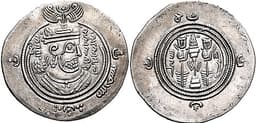
Muawiyah I
Emperor · Medieval
76.3Total

Theodosius I
Emperor · Ancient
76.0Total
Basic Information
Born
602
347
Died
680
395
Era
Medieval
Ancient
Nationality
Umayyad Caliphate
Roman Empire
Occupation
Emperor
Emperor
Civilization
Middle Eastern
Western
Score Comparison
Military (10%)
76.0
72.5
Political (20%)
75.0
65.0
Influence (20%)
75.0
85.0
Legacy (20%)
80.0
90.0
Leadership (15%)
78.0
68.0
Strategy (15%)
70.0
50.0
TOTAL
76.3
76.0
Muawiyah I — Complete Timeline
640 AD
Governorship of SyriaPolitical Action◆ Major
Muawiyah I was appointed governor of Syria by Caliph Umar. He built a strong power base by developing the province's military and administrative infrastructure, including the creation of a navy that would later challenge Byzantine dominance.
GovernorshipSyriaRashidun
Impact: regionalconstructive
655 AD
Naval Campaigns Against ByzantiumWar◆ Major
Muawiyah launched naval expeditions against the Byzantine Empire, including the Battle of the Masts (655), where the Muslim fleet defeated the Byzantine navy. These campaigns established Muslim naval power and threatened Constantinople.
Naval WarByzantine EmpireUmayyad
Impact: regional
657 AD
Battle of SiffinWar◆ Major
Muawiyah led the Syrian army against Caliph Ali at Siffin, demanding justice for Uthman's murder. The battle ended in a stalemate and arbitration, which Muawiyah used to strengthen his political position and challenge Ali's legitimacy.
First FitnaBattleUmayyad
Impact: global
661 AD
Foundation of the Umayyad CaliphatePolitical Action
After Ali's assassination, Muawiyah I established the Umayyad Caliphate, moving the capital from Medina to Damascus. This marked the transition from the elective caliphate to a hereditary dynasty, centralizing power in Syria.
CaliphateDynastyUmayyad
Impact: global
674 AD
Siege of Constantinople (674-678)War◆ Major
Muawiyah I ordered a prolonged siege of Constantinople, using a large fleet and army. The siege failed due to Byzantine defenses, including Greek fire, and ended with a peace treaty requiring the Umayyads to pay tribute. It was a rare setback.
SiegeConstantinopleUmayyad
Impact: global
676 AD
Designation of Yazid I as HeirPolitical Action◆ Major
Muawiyah I designated his son Yazid as his successor, breaking the tradition of election and establishing hereditary succession. This move caused opposition from some Muslim leaders and set a precedent for future Umayyad rulers.
SuccessionHereditaryUmayyad
Impact: global
Theodosius I — Complete Timeline
380 AD
Edict of ThessalonicaPolitical Action
Theodosius I issued the Edict of Thessalonica, declaring Nicene Christianity the official state religion of the Roman Empire. All other forms of Christianity were deemed heretical, and pagan practices were increasingly suppressed.
ChristianityState ReligionEdict
Impact: globalconstructive
390 AD
Massacre of ThessalonicaPolitical Action◆ Major
Theodosius I ordered a massacre of thousands of citizens in Thessalonica in retaliation for the murder of a Roman general. The massacre led to his excommunication by Bishop Ambrose of Milan, and he later performed public penance.
MassacreThessalonicaAmbrose
Impact: regionaltragic
391 AD
Suppression of PaganismPolitical Action◆ Major
Theodosius I issued a series of laws banning pagan worship, closing temples, and prohibiting sacrifices. The Olympic Games were abolished, and the Serapeum in Alexandria was destroyed. These actions accelerated the decline of paganism in the empire.
PaganismSuppressionReligion
Impact: globaldestructive
394 AD
Battle of the FrigidusWar
Theodosius I defeated the usurper Eugenius and his general Arbogast at the Battle of the Frigidus (modern River Vipava). The victory reunited the Roman Empire under a single ruler for the last time before its permanent division.
Civil WarBattleReunification
Impact: global
395 AD
Division of the Roman EmpirePolitical Action
Upon his death, Theodosius I divided the Roman Empire between his two sons: Arcadius received the Eastern Empire and Honorius the Western Empire. This division became permanent, leading to the separate histories of the Byzantine and Western Roman Empires.
DivisionSuccessionEast-West
Impact: global
Expert Analysis
Origins
Muawiyah I (602-680 CE) was born into the prominent Umayyad clan of Mecca. He embraced Islam early and served as a scribe for the Prophet Muhammad. His family's political acumen and his own military skills positioned him as a key figure in the early Islamic conquests. Theodosius I (347-395 CE) hailed from a Roman military family in Hispania. His father was a high-ranking general, and Theodosius rose through the ranks during a period of crisis for the Roman Empire. Both men emerged from elite backgrounds, but Muawiyah's rise was more directly tied to a revolutionary movement (Islam), while Theodosius inherited a faltering traditional empire.
Rise to Power
Muawiyah's ascent began when Caliph Umar appointed him governor of Syria in 639 CE. He skillfully built a power base by integrating Arab tribes and using the province's wealth to create a loyal army. After the assassination of Caliph Uthman, Muawiyah refused to recognize Ali as caliph, leading to the First Fitna (civil war). At the Battle of Siffin (657 CE), Muawiyah's cunning—raising Qurans on spears to demand arbitration—prevented defeat and led to a split in Ali's forces. Following Ali's assassination, Muawiyah secured the caliphate in 661 CE, founding the Umayyad dynasty. Theodosius I was proclaimed co-emperor in 379 CE after the disastrous Battle of Adrianople. He defeated the Goths through diplomacy and attrition, not decisive battle. His real power move was the Edict of Thessalonica (380 CE), which made Nicene Christianity the state religion, unifying the empire under a single faith. He also defeated two rival usurpers, Magnus Maximus and Eugenius, at the Battle of the Frigidus (394 CE), but his reliance on Gothic foederati showed the empire's military weakness.
Leadership & Governance
Muawiyah was a pragmatic and effective administrator. He moved the capital to Damascus, centralizing power and using Byzantine-style bureaucracy. He established the first Islamic navy, raiding Byzantium's shores and besieging Constantinople (674-678 CE). His governance balanced Arab tribal interests with a stable imperial system. He also secured his son Yazid's succession, creating a hereditary dynasty. Theodosius I was a devout Christian who enforced orthodoxy, suppressing paganism and Arianism. He issued laws against pagan sacrifices and closed temples. His division of the empire between his sons Arcadius (East) and Honorius (West) after his death proved catastrophic, as neither could handle barbarian pressures. While Muawiyah built a lasting dynasty, Theodosius's policies accelerated the Western Roman Empire's decline.
Triumph & Tragedy
Muawiyah's greatest triumph was founding the Umayyad Caliphate, which expanded from Spain to India. His navy neutralized Byzantine naval dominance. However, his usurpation of the caliphate created a schism between Sunni and Shia Islam that persists today. The tragedy of Theodosius is that his religious unification came at the cost of civil strife. The Massacre of Thessalonica (390 CE), where he ordered the slaughter of thousands after a riot, led to his excommunication by Ambrose of Milan. His suppression of paganism destroyed ancient traditions and libraries, but his edicts shaped medieval Christianity.
Character & Destiny
Muawiyah was a shrewd, patient, and calculating leader. He famously said, "I do not use my sword where my whip suffices, nor my whip where my tongue suffices." He was known for clemency when politically expedient. His destiny was to transform Islam from a religious movement into a dynastic empire. Theodosius was a zealous, sometimes impulsive ruler. His character combined Roman gravitas with Christian piety, but his reliance on faith over strategy led to long-term decline. His destiny was to be the last emperor to rule a united Roman Empire, though his division made that unity fleeting.
Legacy
Muawiyah's legacy is immense: he established the Umayyad Caliphate, which became a world power and preserved Greco-Roman knowledge that later fueled the European Renaissance. He is reviled by Shia Muslims but respected by Sunnis as a strong ruler. Theodosius is remembered as "the Great" for making Christianity the official religion, but historians debate whether his policies weakened the empire. His division of the empire is seen as a key factor in the fall of the West. Both men left deep marks, but Muawiyah's dynasty lasted nearly a century, while Theodosius's immediate successors lost half the empire.
Conclusion
Muawiyah I edges out Theodosius I with a composite score of 76.4 vs 72.3. Muawiyah's strategic brilliance, administrative reforms, and long-lasting dynasty give him the advantage. Theodosius's religious legacy is profound, but his governance led to fragmentation. In the balance of historical impact, Muawiyah's Umayyad Caliphate shaped the medieval world more enduringly than Theodosius's Christian Roman Empire.
Rankings
🥇
Muawiyah ILeader
Mil: 76.0Pol: 75.0Inf: 75.0
76.3
🥈
Theodosius I
Mil: 72.5Pol: 65.0Inf: 85.0
76.0
+0.3 behind
How This Comparison Works
Algorithm
Each figure is scored on 6 dimensions (0—100 scale) based on structured historical data: Military (10%), Political (20%), Influence (20%), Legacy (20%), Leadership (15%), Strategy (15%). The weighted total produces the final ranking.
Data Sources
Scores are computed from structured sub-indicators in the database. Scale factors adjust for era (Ancient ×0.85, Modern ×1.0) and civilization size (Eastern ×1.05, Other ×0.80) to account for differences in population and military scale.
Maximum 3 Figures
Comparisons are limited to 2—3 figures to ensure readability and statistical meaningfulness.
Error Margins
±5 points per dimension — Sub-scores are derived from historical records with inherent uncertainty. Two figures within 5 points on a dimension should be considered roughly equivalent in that area.
Total Score Accuracy
±3 points overall — The weighted combination of 6 dimensions produces a total score with approximately ±3 points of uncertainty. Differences of less than 3 points are not statistically significant— the figures are effectively tied.
Known Limitations
- Historical records are incomplete and uneven across civilizations
- Figures from oral-tradition societies may be underrepresented
- Occupation labels can misclassify multi-role figures
- Scores measure capability and impact, not moral character
- Quantitative scoring is a comparison tool, not absolute truth
Capability Radar
Military (10%) — Battles & Warfare
Battles
75
65
Win Rate
80
60
Expansion
85
45
Political (20%) — Governance & Reform
Reform
90
85
Diplomacy
95
75
Economy
85
60
Influence (20%) — Cultural & Global Reach
Cultural
75
90
Global
75
90
Legacy (20%) — Historical Impact
Historical
85
95
Longevity
80
95
Leadership (15%) — Power & Stability
Tenure
85
70
Stability
80
55
Strategy (15%) — Tactics & Innovation
Strategy
85
60
Tactics
70
55
Reform
80
50
Similar Comparisons
Comments & Discussion
No comments yet. Be the first to share your thoughts!