Loading...
Muawiyah I vs Ruhollah Khomeini
Muawiyah I leads by 1.2 pts · 2 figures compared
…
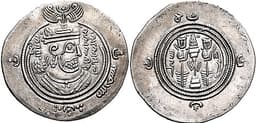
Muawiyah I
Emperor · Medieval
76.3Total

Ruhollah Khomeini
Politician · Modern
75.1Total
Basic Information
Born
602
1902
Died
680
1989
Era
Medieval
Modern
Nationality
Umayyad Caliphate
Iran
Occupation
Emperor
Politician
Civilization
Middle Eastern
Middle Eastern
Score Comparison
Military (10%)
76.0
41.6
Political (20%)
75.0
65.0
Influence (20%)
75.0
85.0
Legacy (20%)
80.0
90.0
Leadership (15%)
78.0
80.0
Strategy (15%)
70.0
54.3
TOTAL
76.3
75.1
Muawiyah I — Complete Timeline
640 AD
Governorship of SyriaPolitical Action◆ Major
Muawiyah I was appointed governor of Syria by Caliph Umar. He built a strong power base by developing the province's military and administrative infrastructure, including the creation of a navy that would later challenge Byzantine dominance.
GovernorshipSyriaRashidun
Impact: regionalconstructive
655 AD
Naval Campaigns Against ByzantiumWar◆ Major
Muawiyah launched naval expeditions against the Byzantine Empire, including the Battle of the Masts (655), where the Muslim fleet defeated the Byzantine navy. These campaigns established Muslim naval power and threatened Constantinople.
Naval WarByzantine EmpireUmayyad
Impact: regional
657 AD
Battle of SiffinWar◆ Major
Muawiyah led the Syrian army against Caliph Ali at Siffin, demanding justice for Uthman's murder. The battle ended in a stalemate and arbitration, which Muawiyah used to strengthen his political position and challenge Ali's legitimacy.
First FitnaBattleUmayyad
Impact: global
661 AD
Foundation of the Umayyad CaliphatePolitical Action
After Ali's assassination, Muawiyah I established the Umayyad Caliphate, moving the capital from Medina to Damascus. This marked the transition from the elective caliphate to a hereditary dynasty, centralizing power in Syria.
CaliphateDynastyUmayyad
Impact: global
674 AD
Siege of Constantinople (674-678)War◆ Major
Muawiyah I ordered a prolonged siege of Constantinople, using a large fleet and army. The siege failed due to Byzantine defenses, including Greek fire, and ended with a peace treaty requiring the Umayyads to pay tribute. It was a rare setback.
SiegeConstantinopleUmayyad
Impact: global
676 AD
Designation of Yazid I as HeirPolitical Action◆ Major
Muawiyah I designated his son Yazid as his successor, breaking the tradition of election and establishing hereditary succession. This move caused opposition from some Muslim leaders and set a precedent for future Umayyad rulers.
SuccessionHereditaryUmayyad
Impact: global
Ruhollah Khomeini — Complete Timeline
1964 AD
Exile to Iraq and FrancePolitical Action◆ Major
Khomeini was exiled from Iran after criticizing the Shah's White Revolution and granting of diplomatic immunity to US personnel. He settled in Najaf, Iraq, and later in France, where he continued to organize opposition to the Shah.
ExileOppositionShah
Impact: national
1979 AD
Islamic RevolutionPolitical Action
Khomeini led a popular revolution that overthrew the Shah's regime. He returned to Iran in February 1979 and established an Islamic Republic based on his doctrine of Velayat-e Faqih (Guardianship of the Jurist), with himself as Supreme Leader.
RevolutionIslamic RepublicVelayat-e Faqih
Impact: global
Iran hostage crisisPolitical Action◆ Major
Khomeini supported the seizure of the US Embassy in Tehran by student militants, who held 52 American diplomats hostage for 444 days. The crisis deepened the rift with the US, led to economic sanctions, and consolidated Khomeini's power.
Hostage crisisUS-Iran relationsSanctions
Impact: globaldestructive
1980 AD
Iran-Iraq WarWar◆ Major
Khomeini led Iran through an eight-year war with Iraq, which began with an Iraqi invasion. The war resulted in hundreds of thousands of casualties and massive economic destruction, ending in a stalemate. Khomeini accepted a UN ceasefire in 1988.
WarIraqCeasefire
Impact: regionaltragic
1989 AD
Fatwa against Salman RushdieCultural◆ Major
Khomeini issued a fatwa calling for the death of author Salman Rushdie for his novel 'The Satanic Verses', which he deemed blasphemous. The fatwa led to international controversy, diplomatic tensions, and attacks on Rushdie's translators.
FatwaBlasphemyInternational controversy
Impact: globaldestructive
Expert Analysis
Origins
Muawiyah I was born into the powerful Umayyad clan of the Quraysh tribe in Mecca. His father, Abu Sufyan, was a leading opponent of Muhammad before converting to Islam. Muawiyah embraced Islam early and became a scribe for the Prophet. After the Prophet's death, he served under the early caliphs, eventually becoming governor of Syria under Caliph Uthman. His base in Syria was crucial, as it was a region with a strong Arab military presence and a history of Byzantine administration.
Ruhollah Khomeini was born in 1902 in Khomeyn, Iran, into a family of Shia clerics. His father was murdered when he was young, and his mother raised him. He studied Islamic theology in Qom, becoming a prominent ayatollah. Khomeini was deeply influenced by Shia teachings and the concept of guardianship of the jurist (velayat-e faqih), which would later form the basis of his political ideology. He was critical of the Pahlavi monarchy and its Western ties.
Rise to Power
Muawiyah's rise began as governor of Syria under Caliph Uthman. After Uthman's assassination, civil war erupted. Muawiyah, as Uthman's relative, demanded justice and refused to recognize Ali as caliph. The Battle of Siffin in 657 ended in a stalemate and arbitration, which Ali accepted but which split his followers. Muawiyah gradually consolidated power, and after Ali's assassination in 661, he was recognized as caliph, founding the Umayyad dynasty. He moved the capital to Damascus, shifting the center of power from Arabia to Syria.
Khomeini's rise came through decades of opposition to the Shah. He was exiled in 1964 for his criticisms, first to Iraq, then to France. From exile, he spread his message via cassette tapes, rallying Iranians against the Shah's regime. The 1979 Islamic Revolution overthrew the monarchy, and Khomeini returned to Iran, becoming Supreme Leader. He established a theocratic system with himself as the ultimate authority, blending religious and political power.
Leadership & Governance
Muawiyah was a pragmatic and effective ruler. He centralized the Umayyad state, reformed the bureaucracy, and expanded the navy, leading to successful campaigns against Byzantium. He secured his borders and maintained stability through a combination of force, diplomacy, and patronage. His governance was largely secular in practice, though he used Islam as a unifying force. He established hereditary succession, naming his son Yazid as heir, which set a precedent for Islamic dynasties.
Khomeini's leadership was ideological and revolutionary. He implemented velayat-e faqih, with clerics holding ultimate authority. His government suppressed dissent, enforced strict Islamic codes, and purged leftist and liberal allies. The Iran-Iraq War (1980-1988) solidified his regime, as he used nationalism and religious fervor to rally support. He also expanded Iran's influence abroad through support for Shia groups. His rule was marked by human rights abuses, including executions of political opponents.
Triumph & Tragedy
Muawiyah's triumphs include founding a dynasty that lasted nearly a century, expanding the Islamic empire, and securing its borders. His naval campaigns weakened Byzantium. However, his succession of Yazid led to tragedy: Yazid's rule sparked the Battle of Karbala, where Hussein, Muhammad's grandson, was killed, creating a lasting schism between Sunni and Shia Islam. Muawiyah's legacy is thus tarnished by this event, though he himself was not directly responsible.
Khomeini's triumph was the Islamic Revolution, which transformed Iran and inspired Islamist movements worldwide. He successfully led Iran through the Iran-Iraq War, maintaining independence. However, his tragedy includes the human cost of the war (hundreds of thousands dead), the suppression of dissent, and the isolation of Iran. The fatwa against Salman Rushdie damaged Iran's international relations and highlighted his uncompromising stance.
Character & Destiny
Muawiyah is often described as shrewd, patient, and calculating. He was a master of politics and diplomacy, known for his clemency toward enemies. His destiny was to establish a dynasty that would shape Islamic history. He is criticized for transforming the caliphate into a hereditary monarchy, but he saw this as necessary for stability.
Khomeini was ascetic, charismatic, and uncompromising. He was driven by a vision of Islamic governance and saw himself as a defender of the oppressed. His destiny was to create a revolutionary state that challenged both Western imperialism and secular Arab nationalism. He remained steadfast in his principles, even at great cost.
Legacy
Muawiyah's legacy is mixed. He is revered by Sunni Muslims as a companion of the Prophet and a builder of the Islamic state, but reviled by Shia Muslims for his role in the conflict with Ali and the succession of Yazid. His administrative reforms and military campaigns laid the foundation for the Umayyad Caliphate's expansion.
Khomeini's legacy is equally polarizing. He is hailed as a leader of the Islamic revival and a champion of anti-imperialism, but criticized for his authoritarianism and human rights record. His concept of velayat-e faqih influenced other Shia movements, and Iran remains a theocracy shaped by his ideas.
Conclusion
Muawiyah I and Ruhollah Khomeini were both transformative figures who reshaped Islamic history. Muawiyah, with scores averaging 76, was a pragmatic empire-builder who established a dynasty and expanded Islamic rule. Khomeini, with an average of 75, was an ideologue who created a revolutionary theocracy. While Muawiyah's achievements were more secular and expansionist, Khomeini's were ideological and enduring. Muawiyah's legacy is broader in historical impact, but Khomeini's remains potent in contemporary politics. Ultimately, Muawiyah edges ahead due to his foundational role in the Umayyad Caliphate, which influenced centuries of Islamic civilization.
**Numerical Scores:**
- **Muawiyah I:** Military 76, Political 75, Influence 75, Leadership 80, Durability 78, Strategic 70, Total 76
- **Ruhollah Khomeini:** Military 42, Political 65, Influence 85, Leadership 90, Durability 80, Strategic 54, Total 75
Rankings
🥇
Muawiyah ILeader
Mil: 76.0Pol: 75.0Inf: 75.0
76.3
🥈
Ruhollah Khomeini
Mil: 41.6Pol: 65.0Inf: 85.0
75.1
+1.2 behind
How This Comparison Works
Algorithm
Each figure is scored on 6 dimensions (0—100 scale) based on structured historical data: Military (10%), Political (20%), Influence (20%), Legacy (20%), Leadership (15%), Strategy (15%). The weighted total produces the final ranking.
Data Sources
Scores are computed from structured sub-indicators in the database. Scale factors adjust for era (Ancient ×0.85, Modern ×1.0) and civilization size (Eastern ×1.05, Other ×0.80) to account for differences in population and military scale.
Maximum 3 Figures
Comparisons are limited to 2—3 figures to ensure readability and statistical meaningfulness.
Error Margins
±5 points per dimension — Sub-scores are derived from historical records with inherent uncertainty. Two figures within 5 points on a dimension should be considered roughly equivalent in that area.
Total Score Accuracy
±3 points overall — The weighted combination of 6 dimensions produces a total score with approximately ±3 points of uncertainty. Differences of less than 3 points are not statistically significant— the figures are effectively tied.
Known Limitations
- Historical records are incomplete and uneven across civilizations
- Figures from oral-tradition societies may be underrepresented
- Occupation labels can misclassify multi-role figures
- Scores measure capability and impact, not moral character
- Quantitative scoring is a comparison tool, not absolute truth
Capability Radar
Military (10%) — Battles & Warfare
Battles
75
10
Win Rate
80
10
Expansion
85
10
Political (20%) — Governance & Reform
Reform
90
90
Diplomacy
95
75
Economy
85
40
Influence (20%) — Cultural & Global Reach
Cultural
75
85
Global
75
85
Legacy (20%) — Historical Impact
Historical
85
90
Longevity
80
80
Leadership (15%) — Power & Stability
Tenure
85
85
Stability
80
50
Strategy (15%) — Tactics & Innovation
Strategy
85
15
Tactics
70
10
Reform
80
20
Similar Comparisons
Comments & Discussion
No comments yet. Be the first to share your thoughts!