Loading...
Mongke Khan vs Taejo of Joseon
Taejo of Joseon leads by 0.9 pts · 2 figures compared
…
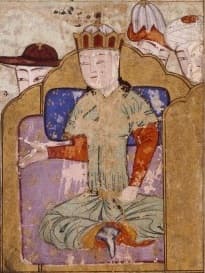
Mongke Khan
Emperor · Medieval
69.5Total
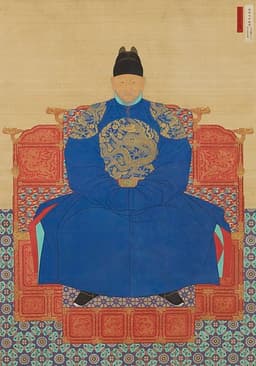
Taejo of Joseon
Emperor · Medieval
70.4Total
Basic Information
Born
1209
1335
Died
1259
1408
Era
Medieval
Medieval
Nationality
Mongol Empire
Korea
Occupation
Emperor
Emperor
Civilization
Eastern
Eastern
Score Comparison
Military (10%)
85.0
74.7
Political (20%)
59.3
65.0
Influence (20%)
68.0
65.0
Legacy (20%)
72.0
80.0
Leadership (15%)
68.0
72.0
Strategy (15%)
69.1
61.2
TOTAL
69.5
70.4
Mongke Khan — Complete Timeline
1251 AD
Election as Great KhanPolitical Action
Möngke was elected as the fourth Great Khan of the Mongol Empire with the support of Batu and his family, ending a period of regency after Güyük's death. His election was contested by the Ögedeid and Chagataid families, leading to purges.
SuccessionMongol EmpirePurge
Impact: global
1252 AD
Conquest of the Song Dynasty (Southern China)War◆ Major
Möngke launched a massive campaign against the Southern Song dynasty, personally leading the western army while his brother Kublai attacked from the north. The campaign stalled at Diaoyu Fortress, where Möngke died, but it set the stage for Kublai's later conquest.
Mongol ConquestSong DynastyChina
Impact: global
Purge of the Ögedeid and Chagataid FamiliesPolitical Action◆ Major
Möngke ordered a systematic purge of the Ögedeid and Chagataid princes and their supporters, accusing them of plotting against him. Hundreds of nobles were executed, consolidating Möngke's power and centralizing the empire under the Toluid line.
PurgeMongol EmpireToluid Consolidation
Impact: globaldestructive
1253 AD
Invasion of the Middle East (Hulagu's Campaign)War◆ Major
Möngke ordered his brother Hulagu to lead a massive Mongol army into the Middle East to conquer the Abbasid Caliphate and the Ismaili fortresses. This campaign resulted in the destruction of Baghdad in 1258 and the establishment of the Ilkhanate.
Mongol ConquestMiddle EastBaghdad
Impact: globaldestructive
1259 AD
Death at Diaoyu FortressWar
Möngke died during the siege of Diaoyu Fortress in Sichuan, possibly from dysentery or a battle wound. His death triggered a succession crisis that led to the division of the Mongol Empire into four khanates.
DeathMongol EmpireSuccession Crisis
Impact: globaltragic
Taejo of Joseon — Complete Timeline
1380 AD
Battle of HwangsanWar
General Yi Seong-gye defeated a Japanese pirate (wokou) force at Hwangsan. This victory enhanced his military reputation and demonstrated his capability as a commander.
WokouGoryeo Military
1388 AD
Wihwado RetreatPolitical Action
General Yi Seong-gye, ordered to invade the Ming dynasty's Liaodong region, turned his army back at Wihwado Island. This act of defiance against the Goryeo court led to a coup that eventually brought him to power.
CoupGoryeo-Ming RelationsPower Shift
Impact: national
1391 AD
Land Reform and the Gwajeon LawReform◆ Major
Taejo implemented the Gwajeon Law, a land reform that redistributed land from the old Goryeo aristocracy to his supporters and the state. This weakened the old elite and strengthened the new Joseon ruling class.
Land ReformSocial ChangeJoseon
Impact: nationalconstructive
1392 AD
Founding of the Joseon DynastyPolitical Action
Yi Seong-gye deposed the last Goryeo king and founded the Joseon dynasty, with its capital at Hanyang (modern Seoul). He established a new ruling class based on Confucian ideology, replacing the Buddhist-influenced Goryeo system.
Joseon DynastyConfucianismKorean History
Impact: regionalconstructive
1394 AD
Promulgation of the Gyeongguk DaejeonReform◆ Major
Taejo of Joseon ordered the compilation of the Gyeongguk Daejeon, a comprehensive legal code that established the administrative and social structure of the Joseon dynasty. This code remained in effect for centuries.
Legal CodeGovernanceConfucianism
Impact: nationalconstructive
Expert Analysis
Origins
Mongke Khan was born in 1209 as the son of Tolui, the youngest son of Genghis Khan, and Sorghaghtani Beki, a Nestorian Christian princess. He grew up in the heart of the Mongol Empire, learning warfare and governance from his father and mother. His education included traditional Mongolian shamanism and exposure to diverse cultures through the empire's conquests. In contrast, Taejo of Joseon, born Yi Seong-gye in 1335, came from a minor aristocratic family in the Goryeo dynasty. His father, Yi Ja-chun, was a Mongol-appointed official, and Yi Seong-gye grew up in a turbulent period of Mongol domination and Japanese pirate raids. He received a military education and early experience in border conflicts.
Rise to Power
Mongke's rise began after the death of his uncle Ögedei and the brief reign of Güyük. With the support of Batu, the powerful khan of the Golden Horde, Mongke was elected Great Khan in 1251, ending a regency. He then purged the Ögedeid and Chagataid families, executing hundreds of nobles to consolidate power. Taejo's rise was through military prowess. He gained fame by defeating Japanese pirates at Hwangsan in 1380 and later repelling Mongol incursions. In 1388, ordered to invade Ming China, he turned his army back at Wihwado Island, a decisive act that allowed him to seize power. He deposed the last Goryeo king in 1392 and founded the Joseon dynasty.
Leadership & Governance
Mongke Khan ruled as an autocratic conqueror. He centralized the empire, standardized tax collection, and launched massive campaigns against the Song Dynasty and the Abbasid Caliphate. His governance score of 59.3 reflects his reliance on military force over administrative innovation. Taejo, with a political score of 65.0, implemented the Gwajeon Law to redistribute land from the old aristocracy to his supporters, weakening the Goryeo elite. He also commissioned the Gyeongguk Daejeon, a legal code that structured Joseon's bureaucracy. His leadership score of 72.0 indicates a more balanced approach.
Triumph & Tragedy
Mongke's greatest triumph was expanding the Mongol Empire to its largest contiguous extent, with military campaigns that conquered the Abbasid Caliphate (1258) and pushed into the Song Dynasty. His tragedy was his death at Diaoyu Fortress in 1259, possibly from dysentery, which triggered a succession crisis that fractured the empire. Taejo's triumph was founding the Joseon dynasty, which lasted 500 years, and establishing a Confucian state. His tragedy was internal strife; he abdicated in 1398 after his sons fought for succession, leading to the death of his favored successor.
Character & Destiny
Mongke was described as stern, pragmatic, and ruthless. His purge of rival families shows a paranoid but calculated leader. His death at a relatively young age (50) cut short his conquests. Taejo was more cautious and diplomatic, using Confucian ideology to legitimize his rule. His decision to retreat at Wihwado shows strategic restraint. However, his inability to manage succession led to personal tragedy.
Legacy
Mongke's legacy is as a unifier and expander of the Mongol Empire, but his death led to its fragmentation. His campaigns enabled the later Yuan Dynasty under Kublai. Taejo's legacy is profound: the Joseon dynasty shaped Korean identity, language, and culture for centuries. His legal code and land reforms created a stable Confucian state. Legacy scores: Mongke 72.0, Taejo 80.0.
Conclusion
While Mongke Khan scored higher militarily (85.0 vs 74.7), Taejo's overall impact was greater. His total score of 70.4 edges Mongke's 69.5. Taejo founded a dynasty that endured five centuries, while Mongke's empire fragmented shortly after his death. Taejo's political and legacy scores are higher, reflecting a more lasting contribution to civilization. Therefore, Taejo of Joseon had greater historical impact.
Rankings
🥇
Taejo of JoseonLeader
Mil: 74.7Pol: 65.0Inf: 65.0
70.4
🥈
Mongke Khan
Mil: 85.0Pol: 59.3Inf: 68.0
69.5
+0.9 behind
How This Comparison Works
Algorithm
Each figure is scored on 6 dimensions (0—100 scale) based on structured historical data: Military (10%), Political (20%), Influence (20%), Legacy (20%), Leadership (15%), Strategy (15%). The weighted total produces the final ranking.
Data Sources
Scores are computed from structured sub-indicators in the database. Scale factors adjust for era (Ancient ×0.85, Modern ×1.0) and civilization size (Eastern ×1.05, Other ×0.80) to account for differences in population and military scale.
Maximum 3 Figures
Comparisons are limited to 2—3 figures to ensure readability and statistical meaningfulness.
Error Margins
±5 points per dimension — Sub-scores are derived from historical records with inherent uncertainty. Two figures within 5 points on a dimension should be considered roughly equivalent in that area.
Total Score Accuracy
±3 points overall — The weighted combination of 6 dimensions produces a total score with approximately ±3 points of uncertainty. Differences of less than 3 points are not statistically significant— the figures are effectively tied.
Known Limitations
- Historical records are incomplete and uneven across civilizations
- Figures from oral-tradition societies may be underrepresented
- Occupation labels can misclassify multi-role figures
- Scores measure capability and impact, not moral character
- Quantitative scoring is a comparison tool, not absolute truth
Capability Radar
Military (10%) — Battles & Warfare
Battles
85
75
Win Rate
80
80
Expansion
90
65
Political (20%) — Governance & Reform
Reform
75
85
Diplomacy
70
70
Economy
80
65
Influence (20%) — Cultural & Global Reach
Cultural
60
80
Global
80
60
Legacy (20%) — Historical Impact
Historical
75
85
Longevity
65
80
Leadership (15%) — Power & Stability
Tenure
60
70
Stability
65
75
Strategy (15%) — Tactics & Innovation
Strategy
85
75
Tactics
75
70
Reform
70
60
Similar Comparisons
Comments & Discussion
No comments yet. Be the first to share your thoughts!