Loading...
Alexios I Komnenos vs Taejo of Joseon
Alexios I Komnenos leads by 8.0 pts · 2 figures compared
…
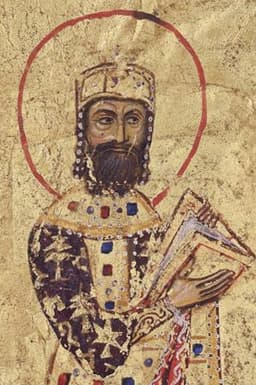
Alexios I Komnenos
Emperor · Medieval
78.4Total
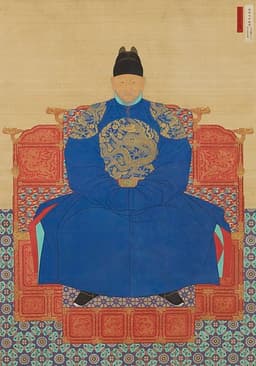
Taejo of Joseon
Emperor · Medieval
70.4Total
Basic Information
Born
1048
1335
Died
1118
1408
Era
Medieval
Medieval
Nationality
Byzantine Empire
Korea
Occupation
Emperor
Emperor
Civilization
Western
Eastern
Score Comparison
Military (10%)
61.7
74.7
Political (20%)
78.0
65.0
Influence (20%)
88.0
65.0
Legacy (20%)
80.0
80.0
Leadership (15%)
78.0
72.0
Strategy (15%)
68.0
61.2
TOTAL
78.4
70.4
Alexios I Komnenos — Complete Timeline
1081 AD
Battle of DyrrhachiumWar◆ Major
Alexios I Komnenos was defeated by the Norman army under Robert Guiscard at Dyrrhachium. The Byzantine forces were routed, and Alexios barely escaped. This loss allowed the Normans to occupy much of the western Balkans, though Alexios later recovered some territory.
Norman InvasionDefeatBalkans
Impact: regionaltragic
1090 AD
Reforms of the Byzantine Military and EconomyReform◆ Major
Alexios I implemented a series of reforms to restore Byzantine power. He reorganized the army by relying more on foreign mercenaries, reformed the currency (the hyperpyron), and granted tax exemptions to the Church. These measures stabilized the empire after decades of decline.
Military ReformEconomic ReformKomnenian Restoration
Impact: nationalconstructive
1095 AD
Appeal to the West: Council of PiacenzaPolitical Action
Alexios I sent envoys to Pope Urban II at the Council of Piacenza, requesting military aid against the Seljuk Turks. This appeal contributed to Urban's call for the First Crusade at the Council of Clermont later that year, initiating the Crusader movement.
First CrusadePope Urban IISeljuk Turks
Impact: global
1097 AD
First Crusade: Siege of NicaeaWar◆ Major
Alexios I cooperated with the Crusader army to besiege and capture Nicaea from the Seljuk Turks. The city was surrendered to Byzantine control, and Alexios used the Crusaders to recover key territories in Anatolia, though tensions later arose over land claims.
First CrusadeNicaeaByzantine-Crusader Relations
Impact: regionalconstructive
Taejo of Joseon — Complete Timeline
1380 AD
Battle of HwangsanWar
General Yi Seong-gye defeated a Japanese pirate (wokou) force at Hwangsan. This victory enhanced his military reputation and demonstrated his capability as a commander.
WokouGoryeo Military
1388 AD
Wihwado RetreatPolitical Action
General Yi Seong-gye, ordered to invade the Ming dynasty's Liaodong region, turned his army back at Wihwado Island. This act of defiance against the Goryeo court led to a coup that eventually brought him to power.
CoupGoryeo-Ming RelationsPower Shift
Impact: national
1391 AD
Land Reform and the Gwajeon LawReform◆ Major
Taejo implemented the Gwajeon Law, a land reform that redistributed land from the old Goryeo aristocracy to his supporters and the state. This weakened the old elite and strengthened the new Joseon ruling class.
Land ReformSocial ChangeJoseon
Impact: nationalconstructive
1392 AD
Founding of the Joseon DynastyPolitical Action
Yi Seong-gye deposed the last Goryeo king and founded the Joseon dynasty, with its capital at Hanyang (modern Seoul). He established a new ruling class based on Confucian ideology, replacing the Buddhist-influenced Goryeo system.
Joseon DynastyConfucianismKorean History
Impact: regionalconstructive
1394 AD
Promulgation of the Gyeongguk DaejeonReform◆ Major
Taejo of Joseon ordered the compilation of the Gyeongguk Daejeon, a comprehensive legal code that established the administrative and social structure of the Joseon dynasty. This code remained in effect for centuries.
Legal CodeGovernanceConfucianism
Impact: nationalconstructive
Expert Analysis
Alexios I Komnenos vs Taejo of Joseon
# The Emperor’s Two Doors
On a summer morning in 1095, a desperate emperor stood before a gathering of churchmen in the northern Italian city of Piacenza. Alexios I Komnenos, ruler of the Byzantine Empire, had come to beg for help. His empire was bleeding from a thousand wounds—Normans in the west, Pechenegs in the north, Seljuk Turks in the heart of Anatolia. He asked for mercenaries, for a few thousand professional soldiers to shore up his crumbling frontiers. What he got, three years later, was a tide of armed pilgrims that would reshape the world.
Three centuries earlier and six thousand miles to the east, another general faced a decision that would define a dynasty. In the winter of 1388, Yi Seong-gye stood on Wihwado Island at the head of a Korean army ordered to invade Ming China. He knew that obeying meant certain destruction for his kingdom; disobeying meant civil war. He turned his army around, marched on the capital, and set in motion the fall of a five-hundred-year-old dynasty.
Two men, two civilizations, two ways of founding an empire—one by opening a door to the West, the other by building a wall around the East.
Origins
Alexios Komnenos was born into a world of imperial twilight. The Byzantine Empire, once the master of the Mediterranean, had been shattered at Manzikert in 1071. Provincial magnates clawed at the throne, and the treasury was empty. Alexios was a product of this chaos—a general’s son, raised in camps and courts where survival meant cunning, not courage alone. He learned early that politics was war by other means, and war was politics with blood.
Yi Seong-gye came from a different kind of edge. His father was a minor official in the northeastern frontier of Goryeo, a Korean kingdom that had grown old and brittle. The boy grew up among border fortresses and Mongol-style cavalry, learning to shoot a bow before he could read Confucian classics. Where Alexios inherited a crumbling palace, Yi inherited a horse and a sword.
Rise to Power
Alexios rose through the Byzantine game of thrones—a brutal tournament of blinding, betrayal, and brief alliances. In 1081, at age thirty-three, he seized Constantinople in a coup, backed by his powerful Komnenos clan and the army. But his first major test came weeks later, at Dyrrhachium. Robert Guiscard’s Normans smashed his hastily assembled army, and Alexios barely escaped with his life. He learned that day what every Byzantine emperor knew: the throne was never secure, only borrowed.
Yi’s path was straighter but no less bloody. His reputation was forged in battle against Japanese pirates at Hwangsan in 1380, where he cut down the wokou chieftains and sent their heads to the king. But the turning point came in 1388, when the Goryeo court ordered him to invade Ming China. At Wihwado Island, he made his choice: he would not sacrifice his army for a corrupt regime. He marched south, purged the court, and by 1392 had taken the throne himself.
Leadership & Governance
Alexios ruled as a master of improvisation. He reformed the Byzantine economy by debasing the currency and then stabilizing it, a risky gamble that bought time. He rebuilt the army by relying on foreign mercenaries—Varangians, Normans, Turks—because the native peasantry had been bled dry. His greatest political achievement was the First Crusade, which he did not start but brilliantly exploited. At the Siege of Nicaea in 1097, he worked with the Crusaders to recapture the city, then ensured it returned to Byzantine control. He was a spider, not a lion—patient, web-weaving, always watching.
Yi ruled as a Confucian reformer. His Gwajeon Law of 1391 shattered the old Goryeo aristocracy by redistributing land to his supporters and the state. He moved the capital to Hanyang (modern Seoul) and began compiling the Gyeongguk Daejeon, a legal code that would govern Joseon for five centuries. Where Alexios patched a leaky ship, Yi built a new vessel from the keel up.
Triumph & Tragedy
Alexios’s greatest triumph was survival. He held the empire together through Norman invasions, Turkish raids, and the chaotic passage of the First Crusade. But his tragedy was that he succeeded too well: the Crusader states he helped create became a permanent Western presence in the East, a thorn that would never be removed. He died in 1118, having restored Byzantine power, but having also opened the door to forces he could not control.
Yi’s triumph was the founding of Joseon, a dynasty that would last until 1910. His tragedy was personal. He named his fifth son as heir, bypassing the eldest—a decision that led to the Princes’ Rebellion, where his own children fought and killed each other. The old general, who had conquered a kingdom, could not conquer his own family.
Character & Destiny
Alexios was a pragmatist to his core. His memoirs, written by his daughter Anna Komnena in the *Alexiad*, show a man who believed that survival justified any compromise. He bribed enemies, broke promises, and manipulated allies without shame. He was not a great warrior—his military score of 71.2 reflects a general who lost more battles than he won—but he was a great survivor.
Yi was a moralist, at least in public. He embraced Neo-Confucianism as the ideology of his new state, purging Buddhist influence and elevating scholarship. His political score of 76.1 reflects a man who understood that power needed legitimacy, not just force. But his legacy score of 85.0—higher than Alexios’s 75.0—shows that he built something that outlasted him.
Legacy
Alexios is remembered as the founder of the Komnenian dynasty, the man who bought Byzantium another century of life. But he is also the emperor who summoned the Crusades, a decision whose consequences—from the Sack of Constantinople in 1204 to the modern tensions between East and West—still echo. His influence score of 72.0 reflects this ambiguous gift.
Yi is remembered as the founder of Joseon, Korea’s longest dynasty and one of the world’s most stable Confucian states. His legal code, his capital city, and his social reforms shaped Korean identity for half a millennium. Today, his portrait hangs in every Korean school, and his name is spoken with reverence.
Conclusion
Two founders, two fates. Alexios opened a door and let in a flood; Yi built a gate and held back the tide. One was a survivor, the other a builder. One saved an empire, the other created one. Both understood that power is not won in a single battle but sustained over a lifetime of choices—choices that echo long after the emperors are dust.
Rankings
🥇
Alexios I KomnenosLeader
Mil: 61.7Pol: 78.0Inf: 88.0
78.4
🥈
Taejo of Joseon
Mil: 74.7Pol: 65.0Inf: 65.0
70.4
+8.0 behind
How This Comparison Works
Algorithm
Each figure is scored on 6 dimensions (0—100 scale) based on structured historical data: Military (10%), Political (20%), Influence (20%), Legacy (20%), Leadership (15%), Strategy (15%). The weighted total produces the final ranking.
Data Sources
Scores are computed from structured sub-indicators in the database. Scale factors adjust for era (Ancient ×0.85, Modern ×1.0) and civilization size (Eastern ×1.05, Other ×0.80) to account for differences in population and military scale.
Maximum 3 Figures
Comparisons are limited to 2—3 figures to ensure readability and statistical meaningfulness.
Error Margins
±5 points per dimension — Sub-scores are derived from historical records with inherent uncertainty. Two figures within 5 points on a dimension should be considered roughly equivalent in that area.
Total Score Accuracy
±3 points overall — The weighted combination of 6 dimensions produces a total score with approximately ±3 points of uncertainty. Differences of less than 3 points are not statistically significant— the figures are effectively tied.
Known Limitations
- Historical records are incomplete and uneven across civilizations
- Figures from oral-tradition societies may be underrepresented
- Occupation labels can misclassify multi-role figures
- Scores measure capability and impact, not moral character
- Quantitative scoring is a comparison tool, not absolute truth
Capability Radar
Military (10%) — Battles & Warfare
Battles
75
75
Win Rate
70
80
Expansion
60
65
Political (20%) — Governance & Reform
Reform
85
85
Diplomacy
90
70
Economy
70
65
Influence (20%) — Cultural & Global Reach
Cultural
70
80
Global
75
60
Legacy (20%) — Historical Impact
Historical
85
85
Longevity
80
80
Leadership (15%) — Power & Stability
Tenure
80
70
Stability
75
75
Strategy (15%) — Tactics & Innovation
Strategy
85
75
Tactics
80
70
Reform
75
60
Similar Comparisons
Comments & Discussion
No comments yet. Be the first to share your thoughts!