Loading...
Mohammad Mosaddegh vs Nguyen Van Linh
Mohammad Mosaddegh leads by 7.0 pts · 2 figures compared
…

Mohammad Mosaddegh
Politician · Modern
68.1Total
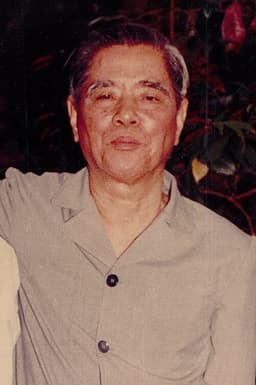
Nguyen Van Linh
Politician · Modern
61.1Total
Basic Information
Born
1882
1915
Died
1967
1998
Era
Modern
Modern
Nationality
Iran
Vietnam
Occupation
Politician
Politician
Civilization
Middle Eastern
Eastern
Score Comparison
Military (10%)
43.3
47.6
Political (20%)
78.0
82.0
Influence (20%)
82.0
59.0
Legacy (20%)
72.0
56.0
Leadership (15%)
64.0
72.0
Strategy (15%)
39.6
45.3
TOTAL
68.1
61.1
Mohammad Mosaddegh — Complete Timeline
1951 AD
Nationalization of the Anglo-Iranian Oil CompanyPolitical Action
Mosaddegh's government nationalized the Anglo-Iranian Oil Company, taking control of Iran's oil industry from British ownership. The move was popular in Iran but led to a British-led boycott and severe economic pressure.
OilNationalismDecolonization
Impact: globalconstructive
Elected Prime Minister of IranPolitical Action◆ Major
Mosaddegh was elected Prime Minister by the Majlis (parliament) after leading the campaign for oil nationalization. He became a symbol of Iranian nationalism and anti-imperialism, but his policies created conflict with the Shah and Western powers.
DemocracyNationalismElection
Impact: nationalconstructive
1953 AD
1953 Iranian coup d'étatPolitical Action
The CIA and MI6 orchestrated a coup (Operation Ajax) that overthrew Mosaddegh's government. He was arrested after days of street fighting, and the Shah returned to power. The coup ended Iranian democracy and led to 25 years of autocratic rule.
CoupCIACold War
Impact: globaldestructive
1967 AD
House arrest and deathOther◆ Major
After the coup, Mosaddegh was tried for treason and sentenced to three years in prison, then placed under house arrest in his village of Ahmadabad until his death. He remained a symbol of resistance against foreign intervention.
House ArrestPolitical PrisonerSymbol
Impact: nationaltragic
Nguyen Van Linh — Complete Timeline
1986 AD
Launched Doi Moi ReformsReform
Linh launched the Doi Moi reforms at the 6th National Party Congress, introducing market mechanisms, private enterprise, and foreign investment while maintaining communist party control. The reforms spurred economic growth, reduced poverty, and integrated Vietnam into the global economy.
Doi MoiEconomic ReformVietnam
Impact: globalconstructive
Appointed General Secretary of the Communist Party of VietnamPolitical Action
Nguyen Van Linh was appointed General Secretary of the Communist Party of Vietnam in December 1986, succeeding Truong Chinh. He became the leading reformer, initiating the Doi Moi (Renovation) policy to transition Vietnam from a centrally planned economy to a socialist-oriented market economy.
General SecretaryDoi MoiReform
Impact: globalconstructive
1989 AD
Oversaw Withdrawal from CambodiaPolitical Action◆ Major
Under Linh's leadership, Vietnam completed the withdrawal of its troops from Cambodia in September 1989, ending a decade-long occupation. The move improved Vietnam's international relations and facilitated normalization with China and ASEAN countries.
CambodiaWithdrawalForeign Policy
Impact: regionalconstructive
1991 AD
Normalized Relations with ChinaPolitical Action◆ Major
Linh's government normalized diplomatic relations with China in November 1991, ending a decade of hostility following the Sino-Vietnamese War. The normalization opened trade and reduced tensions, though border disputes remained unresolved.
ChinaNormalizationDiplomacy
Impact: regionalconstructive
Expert Analysis
Origins
Mohammad Mosaddegh was born in 1882 into a wealthy Persian aristocratic family; his father was a finance minister and his mother a Qajar princess. He studied law and political science in France and Switzerland, earning a doctorate in law from the University of Neuchâtel. Returning to Iran, he entered politics, serving as governor, minister, and parliamentarian, becoming known for his opposition to foreign domination.
Nguyen Van Linh was born in 1915 in Hanoi, then part of French Indochina, into a poor family. He joined the Communist Party of Vietnam at age 14 and spent years in French colonial prisons. He rose through party ranks in the south during the Vietnam War, earning a reputation as a pragmatic organizer.
Rise to Power
Mosaddegh's rise culminated in his election as Prime Minister in April 1951, after leading the campaign to nationalize the Anglo-Iranian Oil Company (AIOC). His popular support forced the Shah to appoint him. He quickly enacted the nationalization law, sparking the Abadan Crisis. Despite British embargo and international pressure, Mosaddegh consolidated power, even forcing the Shah into temporary exile in 1953.
Nguyen Van Linh rose within the Communist Party of Vietnam, serving as party secretary for Saigon after the war. His pragmatic approach to economic management caught the attention of reformers. In December 1986, at the 6th National Party Congress, he was appointed General Secretary, succeeding the conservative Truong Chinh. Linh immediately launched the Doi Moi (Renovation) reforms, marking a turning point for Vietnam.
Leadership & Governance
Mosaddegh governed as a democratically elected leader, but his style was confrontational and uncompromising. He dissolved the Senate, purged opponents, and relied on popular support rather than coalition-building. His nationalization of oil was a direct challenge to British imperialism, but he failed to negotiate effectively with the West, leading to economic isolation. His political score of 78.0 reflects his ability to mobilize masses but not sustain governance.
Nguyen Van Linh governed as a communist reformer, balancing party control with economic liberalization. He introduced market mechanisms, allowed private enterprise, and opened Vietnam to foreign investment while maintaining the Communist Party's political monopoly. His leadership score of 72.0 indicates effective management of transition. Linh's strategy was gradual and pragmatic, avoiding the shock therapy that plagued other socialist economies.
Triumph & Tragedy
Mosaddegh's greatest triumph was the nationalization of Iran's oil industry, a bold act of sovereignty that inspired anti-colonial movements worldwide. However, his greatest failure was his inability to sustain power: the 1953 coup (Operation Ajax) orchestrated by the CIA and MI6 overthrew him after days of street fighting. He was arrested, tried for treason, and spent the rest of his life under house arrest. His legacy score of 72.0 acknowledges the lasting symbolic power of his actions despite the tragic outcome.
Nguyen Van Linh's triumph was the successful launch of Doi Moi, which transformed Vietnam from a war-torn, centrally planned economy into one of Asia's fastest-growing economies. He oversaw the withdrawal from Cambodia in 1989 and normalized relations with China in 1991. However, his reforms were limited: political repression continued, and inequality rose. His legacy score of 56.0 reflects that while economic reforms succeeded, political freedoms did not follow.
Character & Destiny
Mosaddegh was principled, charismatic, but inflexible. He believed in constitutional democracy and Iranian nationalism, but his refusal to compromise with the West and domestic opponents led to his downfall. His character, while admirable, made him a target. As historian Ervand Abrahamian notes, Mosaddegh's fate was sealed by his determination to challenge imperial powers without a strong military or reliable allies. His military score of 43.3 reflects his lack of armed force to resist the coup.
Nguyen Van Linh was pragmatic, patient, and a master of party politics. He understood that economic reform was necessary for the party's survival. His cautious approach allowed him to push through market reforms without triggering a conservative backlash. He retired in 1991 but remained an influential figure. His strategic score of 45.3 indicates a methodical, incremental style rather than bold gambits.
Legacy
Mosaddegh's legacy is that of a martyr for Iranian nationalism and anti-imperialism. His nationalization of oil set a precedent for resource sovereignty, but the coup installed the Shah's dictatorship, leading to the 1979 revolution. He is remembered as a symbol of resistance, but his immediate impact was reversed. His influence score of 82.0 reflects his enduring inspiration for movements across the Middle East.
Nguyen Van Linh's legacy is the transformation of Vietnam's economy. Doi Moi lifted millions out of poverty and integrated Vietnam into global trade. However, the political system remains unchanged, with the Communist Party retaining absolute control. His influence score of 59.0 indicates that while his policies were transformative, they did not create a lasting ideological shift.
Conclusion
While Mosaddegh scored higher overall (68.1 vs. 61.1), Nguyen Van Linh had greater tangible impact on his nation's development. Mosaddegh's bold stand against imperialism failed to secure lasting change; his government was overthrown, and Iran's oil remained under foreign control for another two decades. Linh's Doi Moi reforms, however, permanently altered Vietnam's trajectory, creating sustained economic growth and improved living standards. Mosaddegh's political score (78.0) and influence (82.0) reflect his symbolic power, but Linh's leadership (72.0) and strategy (45.3) produced concrete results. In terms of measurable, enduring change, Nguyen Van Linh had a greater impact on his country.
Rankings
🥇
Mohammad MosaddeghLeader
Mil: 43.3Pol: 78.0Inf: 82.0
68.1
🥈
Nguyen Van Linh
Mil: 47.6Pol: 82.0Inf: 59.0
61.1
+7.0 behind
How This Comparison Works
Algorithm
Each figure is scored on 6 dimensions (0—100 scale) based on structured historical data: Military (10%), Political (20%), Influence (20%), Legacy (20%), Leadership (15%), Strategy (15%). The weighted total produces the final ranking.
Data Sources
Scores are computed from structured sub-indicators in the database. Scale factors adjust for era (Ancient ×0.85, Modern ×1.0) and civilization size (Eastern ×1.05, Other ×0.80) to account for differences in population and military scale.
Maximum 3 Figures
Comparisons are limited to 2—3 figures to ensure readability and statistical meaningfulness.
Error Margins
±5 points per dimension — Sub-scores are derived from historical records with inherent uncertainty. Two figures within 5 points on a dimension should be considered roughly equivalent in that area.
Total Score Accuracy
±3 points overall — The weighted combination of 6 dimensions produces a total score with approximately ±3 points of uncertainty. Differences of less than 3 points are not statistically significant— the figures are effectively tied.
Known Limitations
- Historical records are incomplete and uneven across civilizations
- Figures from oral-tradition societies may be underrepresented
- Occupation labels can misclassify multi-role figures
- Scores measure capability and impact, not moral character
- Quantitative scoring is a comparison tool, not absolute truth
Capability Radar
Military (10%) — Battles & Warfare
Battles
19
33
Win Rate
25
36
Expansion
30
41
Political (20%) — Governance & Reform
Reform
85
85
Diplomacy
70
70
Economy
75
80
Influence (20%) — Cultural & Global Reach
Cultural
60
40
Global
70
55
Legacy (20%) — Historical Impact
Historical
75
65
Longevity
65
55
Leadership (15%) — Power & Stability
Tenure
55
60
Stability
20
65
Strategy (15%) — Tactics & Innovation
Strategy
33
42
Tactics
35
44
Reform
36
49
Similar Comparisons
Comments & Discussion
No comments yet. Be the first to share your thoughts!