Loading...
Mark Carney vs Mohammad Mosaddegh
Mohammad Mosaddegh leads by 22.6 pts · 2 figures compared
…
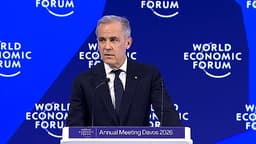
Mark Carney
Politician · Modern
45.5Total

Mohammad Mosaddegh
Politician · Modern
68.1Total
Basic Information
Born
1965
1882
Died
—
1967
Era
Modern
Modern
Nationality
Canada
Iran
Occupation
Politician
Politician
Civilization
Western
Middle Eastern
Score Comparison
Military (10%)
50.0
43.3
Political (20%)
48.0
78.0
Influence (20%)
50.2
82.0
Legacy (20%)
36.7
72.0
Leadership (15%)
48.4
64.0
Strategy (15%)
42.9
39.6
TOTAL
45.5
68.1
Mark Carney — Complete Timeline
2008 AD
Appointed Governor of the Bank of CanadaPolitical Action◆ Major
Carney was appointed as the 8th Governor of the Bank of Canada, taking office during the global financial crisis. He led the bank's response, including cutting interest rates to historic lows and implementing unconventional monetary policies to stabilize the Canadian economy.
Canadian PoliticsMonetary PolicyFinancial Crisis
Impact: nationalconstructive
2013 AD
Appointed Governor of the Bank of EnglandPolitical Action◆ Major
Carney became the 120th Governor of the Bank of England, the first non-British citizen to hold the post. He oversaw the bank's response to the aftermath of the financial crisis and the Brexit referendum, including forward guidance and quantitative easing.
UK PoliticsMonetary PolicyFinancial Crisis
Impact: globalconstructive
2016 AD
Led the Bank of England's Response to BrexitPolitical Action◆ Major
Following the Brexit referendum, Carney led the Bank of England's immediate response, cutting interest rates and launching a new round of quantitative easing to support the UK economy. His actions were credited with preventing a financial panic.
UK PoliticsMonetary PolicyBrexit
Impact: globalconstructive
2019 AD
Appointed UN Special Envoy for Climate Action and FinancePolitical Action◆ Major
Carney was appointed as the UN Special Envoy for Climate Action and Finance, focusing on mobilizing private finance for the transition to a net-zero economy. He advocated for climate-related financial disclosures and green investment.
Climate ChangeFinanceUN
Impact: globalconstructive
2025 AD
Elected Leader of the Liberal Party of CanadaPolitical Action◆ Major
Carney was elected as the leader of the Liberal Party of Canada, succeeding Justin Trudeau. His election marked a shift from central banking to political leadership, with a focus on economic and climate policy.
Canadian PoliticsLeadershipElection
Impact: nationalconstructive
Mohammad Mosaddegh — Complete Timeline
1951 AD
Nationalization of the Anglo-Iranian Oil CompanyPolitical Action
Mosaddegh's government nationalized the Anglo-Iranian Oil Company, taking control of Iran's oil industry from British ownership. The move was popular in Iran but led to a British-led boycott and severe economic pressure.
OilNationalismDecolonization
Impact: globalconstructive
Elected Prime Minister of IranPolitical Action◆ Major
Mosaddegh was elected Prime Minister by the Majlis (parliament) after leading the campaign for oil nationalization. He became a symbol of Iranian nationalism and anti-imperialism, but his policies created conflict with the Shah and Western powers.
DemocracyNationalismElection
Impact: nationalconstructive
1953 AD
1953 Iranian coup d'étatPolitical Action
The CIA and MI6 orchestrated a coup (Operation Ajax) that overthrew Mosaddegh's government. He was arrested after days of street fighting, and the Shah returned to power. The coup ended Iranian democracy and led to 25 years of autocratic rule.
CoupCIACold War
Impact: globaldestructive
1967 AD
House arrest and deathOther◆ Major
After the coup, Mosaddegh was tried for treason and sentenced to three years in prison, then placed under house arrest in his village of Ahmadabad until his death. He remained a symbol of resistance against foreign intervention.
House ArrestPolitical PrisonerSymbol
Impact: nationaltragic
Expert Analysis
Origins
Mark Carney was born on March 16, 1965, in Fort Smith, Northwest Territories, Canada. His father was a high school principal, and his mother was a teacher. Carney earned a bachelor's degree in economics from Harvard University and a master's and doctorate in economics from Oxford University. He worked at Goldman Sachs before joining the Canadian civil service.
Mohammad Mosaddegh was born on June 16, 1882, in Tehran, Iran, into a wealthy aristocratic family. His father was a finance minister under the Qajar dynasty, and his mother was a princess. Mosaddegh studied law and political science in Paris and Switzerland, earning a doctorate. He returned to Iran and entered politics as a reformist.
Rise to Power
Carney's rise was through technocratic excellence. He was appointed Deputy Governor of the Bank of Canada in 2003, then Governor in 2008 during the global financial crisis. His handling of the crisis gained international acclaim. In 2013, he became Governor of the Bank of England, the first non-British citizen to hold the post. He led the bank's response to Brexit in 2016. In 2025, he was elected leader of the Liberal Party of Canada and became Prime Minister.
Mosaddegh rose through democratic politics. He was elected to the Majlis (parliament) in 1923 and became a leading opponent of foreign influence. In 1951, he led the movement to nationalize the Anglo-Iranian Oil Company, which controlled Iran's oil. He was elected Prime Minister in April 1951 with overwhelming popular support. His nationalization law passed unanimously.
Leadership & Governance
Carney's leadership style was technocratic and data-driven. As central banker, he used monetary policy tools like interest rate cuts and quantitative easing to stabilize economies. He was known for clear communication and forward guidance. As Prime Minister, his governance focused on climate finance and economic management. His political score is 48.0, reflecting limited electoral experience.
Mosaddegh was a democratic nationalist. He pursued oil nationalization despite British opposition, believing in Iranian sovereignty. He governed through parliamentary support and popular mobilization. However, his leadership was strained by internal divisions and external pressure. He refused to compromise with the British, leading to a boycott of Iranian oil and economic crisis. His political score is 78.0, reflecting his strong mandate and popular appeal.
Triumph & Tragedy
Carney's greatest success was guiding the Bank of England through the Brexit aftermath, preventing financial panic. He also played a key role in coordinating global climate finance as UN Special Envoy. His tragedy is his limited political legacy; he became PM late and faced immediate challenges. His influence score is 50.2.
Mosaddegh's triumph was nationalizing Iran's oil, a bold assertion of sovereignty that inspired anti-colonial movements worldwide. His tragedy was the 1953 CIA-MI6 coup that overthrew him, leading to 25 years of authoritarian rule under the Shah. He spent the rest of his life under house arrest. His legacy score is 72.0.
Character & Destiny
Carney is cautious and analytical, a consensus-builder in central banking. His character suited the technocratic world but less so the rough-and-tumble of politics. His destiny was to be a crisis manager, not a transformative leader.
Mosaddegh was principled and stubborn, unwilling to compromise on oil sovereignty. His character inspired devotion but also made enemies. His destiny was to be a martyr for Iranian nationalism, overthrown by foreign powers. His leadership score is 64.0.
Legacy
Carney's legacy is in central banking: his crisis management set precedents for future governors. As PM, his impact is still unfolding. He scored 36.7 in legacy.
Mosaddegh's legacy is immense: he remains a symbol of resistance to imperialism in Iran and the Global South. His nationalization inspired later oil-producing countries. The coup's exposure damaged US credibility. His legacy score is 72.0.
Conclusion
Mohammad Mosaddegh had greater impact. His total score of 68.1 far exceeds Carney's 45.5. Mosaddegh's actions reshaped Iran's history and global oil politics, while Carney's impact is largely within institutional frameworks. Mosaddegh's legacy of anti-colonial nationalism continues to resonate, whereas Carney's central banking achievements are more incremental. The score gap of 22.6 points reflects Mosaddegh's transformative, albeit tragic, role in history.
Rankings
🥇
Mohammad MosaddeghLeader
Mil: 43.3Pol: 78.0Inf: 82.0
68.1
🥈
Mark Carney
Mil: 50.0Pol: 48.0Inf: 50.2
45.5
+22.6 behind
How This Comparison Works
Algorithm
Each figure is scored on 6 dimensions (0—100 scale) based on structured historical data: Military (10%), Political (20%), Influence (20%), Legacy (20%), Leadership (15%), Strategy (15%). The weighted total produces the final ranking.
Data Sources
Scores are computed from structured sub-indicators in the database. Scale factors adjust for era (Ancient ×0.85, Modern ×1.0) and civilization size (Eastern ×1.05, Other ×0.80) to account for differences in population and military scale.
Maximum 3 Figures
Comparisons are limited to 2—3 figures to ensure readability and statistical meaningfulness.
Error Margins
±5 points per dimension — Sub-scores are derived from historical records with inherent uncertainty. Two figures within 5 points on a dimension should be considered roughly equivalent in that area.
Total Score Accuracy
±3 points overall — The weighted combination of 6 dimensions produces a total score with approximately ±3 points of uncertainty. Differences of less than 3 points are not statistically significant— the figures are effectively tied.
Known Limitations
- Historical records are incomplete and uneven across civilizations
- Figures from oral-tradition societies may be underrepresented
- Occupation labels can misclassify multi-role figures
- Scores measure capability and impact, not moral character
- Quantitative scoring is a comparison tool, not absolute truth
Capability Radar
Military (10%) — Battles & Warfare
Battles
29
19
Win Rate
31
25
Expansion
35
30
Political (20%) — Governance & Reform
Reform
20
85
Diplomacy
30
70
Economy
70
75
Influence (20%) — Cultural & Global Reach
Cultural
10
60
Global
30
70
Legacy (20%) — Historical Impact
Historical
10
75
Longevity
10
65
Leadership (15%) — Power & Stability
Tenure
10
55
Stability
30
20
Strategy (15%) — Tactics & Innovation
Strategy
40
33
Tactics
43
35
Reform
41
36
Similar Comparisons
Comments & Discussion
No comments yet. Be the first to share your thoughts!