Loading...
This comparison has not been analyzed yet.
One-time AI generation (~1 minute). Scores and timeline are already available below.
Mohammad Ali Shah vs Nyungu ya Mawe
Nyungu ya Mawe leads by 8.5 pts · 2 figures compared
…
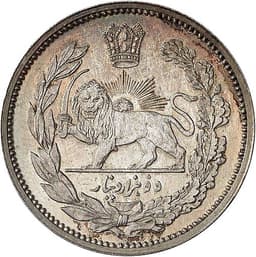
Mohammad Ali Shah
Emperor · Modern
40.0Total

Nyungu ya Mawe
Emperor · Modern
48.5Total
Basic Information
Born
1872
1840
Died
1925
1884
Era
Modern
Modern
Nationality
Persia
Tanzania
Occupation
Emperor
Emperor
Civilization
Middle Eastern
Other
Score Comparison
Military (10%)
43.3
45.0
Political (20%)
30.7
54.7
Influence (20%)
45.5
48.6
Legacy (20%)
34.2
40.0
Leadership (15%)
38.1
62.0
Strategy (15%)
54.3
43.3
TOTAL
40.0
48.5
Mohammad Ali Shah — Complete Timeline
1908 AD
Bombarded the Parliament (Majlis)Political Action
Mohammad Ali Shah ordered the Russian-led Cossack Brigade to bombard the Iranian parliament (Majlis) in Tehran, killing many constitutionalists and suspending the constitution. This coup d'
CoupConstitutional RevolutionRepression
Impact: nationaldestructive
1909 AD
Forced to AbdicatePolitical Action◆ Major
After the bombardment of the Majlis, constitutionalist forces from Tabriz and Isfahan marched on Tehran, forcing Mohammad Ali Shah to abdicate in favor of his son Ahmad Shah. He fled to Russia, ending his attempt to restore autocracy and allowing the constitution to be reinstated.
AbdicationConstitutional RestorationExile
Impact: nationaltragic
1911 AD
Attempted to Regain the ThroneWar
Mohammad Ali Shah, with Russian support, attempted to invade Persia and regain the throne. He landed at Astarabad but was defeated by constitutionalist forces. This failed attempt further weakened the Qajar dynasty and increased Russian influence in northern Persia.
Invasion AttemptRussian SupportConstitutionalist Victory
Impact: nationaldestructive
Nyungu ya Mawe — Complete Timeline
1865 AD
Establishment of the Nyungu statePolitical Action◆ Major
Nyungu ya Mawe unified Kimbu chiefdoms and established the Nyungu state in central Tanzania. He created a centralized political system with a capital at Kipembawe, organizing the state around control of trade routes and tribute collection.
State FormationTanzaniaCentralization
Impact: regional
1870 AD
Conquest of the Ugogo regionWar◆ Major
Nyungu ya Mawe led military campaigns to conquer parts of the Ugogo region, expanding his state's territory. These conquests secured control over important caravan routes linking the coast to the interior, boosting trade revenues.
Territorial ExpansionTanzaniaConquest
Impact: regional
1875 AD
Implementation of the tribute systemReform
Nyungu ya Mawe institutionalized a tribute system requiring conquered chiefdoms to pay taxes in ivory, grain, and labor. This system funded the state's administration and military, but also created dependencies and resentment among subject peoples.
Economic SystemTanzaniaTribute
Impact: regional
This comparison has not been analyzed yet.
One-time AI generation (~1 minute). Scores and timeline are already available below.
Rankings
🥇
Nyungu ya MaweLeader
Mil: 45.0Pol: 54.7Inf: 48.6
48.5
🥈
Mohammad Ali Shah
Mil: 43.3Pol: 30.7Inf: 45.5
40.0
+8.5 behind
How This Comparison Works
Algorithm
Each figure is scored on 6 dimensions (0—100 scale) based on structured historical data: Military (10%), Political (20%), Influence (20%), Legacy (20%), Leadership (15%), Strategy (15%). The weighted total produces the final ranking.
Data Sources
Scores are computed from structured sub-indicators in the database. Scale factors adjust for era (Ancient ×0.85, Modern ×1.0) and civilization size (Eastern ×1.05, Other ×0.80) to account for differences in population and military scale.
Maximum 3 Figures
Comparisons are limited to 2—3 figures to ensure readability and statistical meaningfulness.
Error Margins
±5 points per dimension — Sub-scores are derived from historical records with inherent uncertainty. Two figures within 5 points on a dimension should be considered roughly equivalent in that area.
Total Score Accuracy
±3 points overall — The weighted combination of 6 dimensions produces a total score with approximately ±3 points of uncertainty. Differences of less than 3 points are not statistically significant— the figures are effectively tied.
Known Limitations
- Historical records are incomplete and uneven across civilizations
- Figures from oral-tradition societies may be underrepresented
- Occupation labels can misclassify multi-role figures
- Scores measure capability and impact, not moral character
- Quantitative scoring is a comparison tool, not absolute truth
Capability Radar
Military (10%) — Battles & Warfare
Battles
5
45
Win Rate
5
50
Expansion
5
55
Political (20%) — Governance & Reform
Reform
5
30
Diplomacy
10
35
Economy
5
30
Influence (20%) — Cultural & Global Reach
Cultural
5
20
Global
5
10
Legacy (20%) — Historical Impact
Historical
10
25
Longevity
5
15
Leadership (15%) — Power & Stability
Tenure
20
40
Stability
5
25
Strategy (15%) — Tactics & Innovation
Strategy
5
45
Tactics
5
40
Reform
5
35
Similar Comparisons
Comments & Discussion
No comments yet. Be the first to share your thoughts!