Loading...
This comparison has not been analyzed yet.
One-time AI generation (~1 minute). Scores and timeline are already available below.
Anna of Russia vs Mohammad Ali Shah
Anna of Russia leads by 3.6 pts · 2 figures compared
…

Anna of Russia
Emperor · Modern
43.6Total
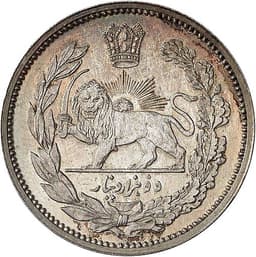
Mohammad Ali Shah
Emperor · Modern
40.0Total
Basic Information
Born
1693
1872
Died
1740
1925
Era
Modern
Modern
Nationality
Russia
Persia
Occupation
Emperor
Emperor
Civilization
Western
Middle Eastern
Score Comparison
Military (10%)
14.9
43.3
Political (20%)
33.6
30.7
Influence (20%)
47.9
45.5
Legacy (20%)
38.3
34.2
Leadership (15%)
67.0
38.1
Strategy (15%)
54.6
54.3
TOTAL
43.6
40.0
Anna of Russia — Complete Timeline
1730 AD
Accession as Empress of RussiaPolitical Action◆ Major
Anna was invited to become empress by the Supreme Privy Council, which imposed conditions limiting her power. She accepted but soon tore up the conditions, dissolved the council, and established autocratic rule. Her accession marked a return to absolute monarchy after Peter II's death.
SuccessionAutocracySupreme Privy Council
Impact: national
Dissolution of the Supreme Privy CouncilPolitical Action◆ Major
Anna, with support from the nobility and guards, revoked the conditions of her accession and dissolved the Supreme Privy Council. She replaced it with a cabinet of ministers loyal to her, consolidating her autocratic power and ending the experiment with constitutional limits.
Government ReformAutocracyNobility
Impact: nationalconstructive
Dominance of German Favorites (Bironovshchina)Political Action◆ Major
Anna's reign was dominated by her German favorite, Ernst Johann von Biron, who became de facto ruler. Biron and other Baltic Germans filled key government posts, leading to widespread resentment among the Russian nobility. This period, known as Bironovshchina, was marked by corruption and repression.
FavoritismGerman InfluenceCorruption
Impact: nationaldestructive
1732 AD
Construction of the Winter PalaceCultural
Anna commissioned the construction of the first Winter Palace in Saint Petersburg, designed by Francesco Bartolomeo Rastrelli. The palace became the official residence of the Russian monarchs and a symbol of imperial power. It was later expanded and rebuilt by subsequent rulers.
ArchitectureWinter PalaceSaint Petersburg
Impact: nationalconstructive
1735 AD
Russo-Turkish War (1735–1739)War◆ Major
Anna's government waged war against the Ottoman Empire, seeking access to the Black Sea. Russian forces captured the fortress of Azov and invaded the Crimea, but the war ended with the Treaty of Belgrade (1739), which returned most gains to the Ottomans. The war was costly and inconclusive.
Russo-Turkish WarAzovTreaty of Belgrade
Impact: regional
Mohammad Ali Shah — Complete Timeline
1908 AD
Bombarded the Parliament (Majlis)Political Action
Mohammad Ali Shah ordered the Russian-led Cossack Brigade to bombard the Iranian parliament (Majlis) in Tehran, killing many constitutionalists and suspending the constitution. This coup d'
CoupConstitutional RevolutionRepression
Impact: nationaldestructive
1909 AD
Forced to AbdicatePolitical Action◆ Major
After the bombardment of the Majlis, constitutionalist forces from Tabriz and Isfahan marched on Tehran, forcing Mohammad Ali Shah to abdicate in favor of his son Ahmad Shah. He fled to Russia, ending his attempt to restore autocracy and allowing the constitution to be reinstated.
AbdicationConstitutional RestorationExile
Impact: nationaltragic
1911 AD
Attempted to Regain the ThroneWar
Mohammad Ali Shah, with Russian support, attempted to invade Persia and regain the throne. He landed at Astarabad but was defeated by constitutionalist forces. This failed attempt further weakened the Qajar dynasty and increased Russian influence in northern Persia.
Invasion AttemptRussian SupportConstitutionalist Victory
Impact: nationaldestructive
This comparison has not been analyzed yet.
One-time AI generation (~1 minute). Scores and timeline are already available below.
Rankings
🥇
Anna of RussiaLeader
Mil: 14.9Pol: 33.6Inf: 47.9
43.6
🥈
Mohammad Ali Shah
Mil: 43.3Pol: 30.7Inf: 45.5
40.0
+3.6 behind
How This Comparison Works
Algorithm
Each figure is scored on 6 dimensions (0—100 scale) based on structured historical data: Military (10%), Political (20%), Influence (20%), Legacy (20%), Leadership (15%), Strategy (15%). The weighted total produces the final ranking.
Data Sources
Scores are computed from structured sub-indicators in the database. Scale factors adjust for era (Ancient ×0.85, Modern ×1.0) and civilization size (Eastern ×1.05, Other ×0.80) to account for differences in population and military scale.
Maximum 3 Figures
Comparisons are limited to 2—3 figures to ensure readability and statistical meaningfulness.
Error Margins
±5 points per dimension — Sub-scores are derived from historical records with inherent uncertainty. Two figures within 5 points on a dimension should be considered roughly equivalent in that area.
Total Score Accuracy
±3 points overall — The weighted combination of 6 dimensions produces a total score with approximately ±3 points of uncertainty. Differences of less than 3 points are not statistically significant— the figures are effectively tied.
Known Limitations
- Historical records are incomplete and uneven across civilizations
- Figures from oral-tradition societies may be underrepresented
- Occupation labels can misclassify multi-role figures
- Scores measure capability and impact, not moral character
- Quantitative scoring is a comparison tool, not absolute truth
Capability Radar
Military (10%) — Battles & Warfare
Battles
10
5
Win Rate
10
5
Expansion
10
5
Political (20%) — Governance & Reform
Reform
20
5
Diplomacy
30
10
Economy
20
5
Influence (20%) — Cultural & Global Reach
Cultural
15
5
Global
10
5
Legacy (20%) — Historical Impact
Historical
20
10
Longevity
10
5
Leadership (15%) — Power & Stability
Tenure
50
20
Stability
20
5
Strategy (15%) — Tactics & Innovation
Strategy
5
5
Tactics
5
5
Reform
10
5
Similar Comparisons
Comments & Discussion
No comments yet. Be the first to share your thoughts!