Loading...
Mohamed Bouazizi vs Qin Shi Huang
Qin Shi Huang leads by 32.5 pts · 2 figures compared
…

Mohamed Bouazizi
Revolutionary · Modern
52.7Total
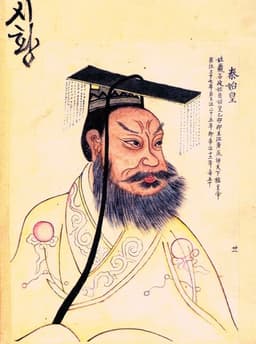
Qin Shi Huang
Emperor · Ancient
85.2Total
Basic Information
Born
1984
-259
Died
—
-210
Era
Modern
Ancient
Nationality
Tunisia
China
Occupation
Revolutionary
Emperor
Civilization
Middle Eastern
Eastern
Score Comparison
Military (10%)
42.7
80.0
Political (20%)
68.0
90.0
Influence (20%)
54.1
85.0
Legacy (20%)
45.8
90.0
Leadership (15%)
48.3
78.0
Strategy (15%)
60.0
82.0
TOTAL
52.7
85.2
Mohamed Bouazizi — Complete Timeline
2010 AD
Self-immolation in Sidi BouzidPolitical Action
Mohamed Bouazizi, a fruit vendor in Sidi Bouzid, set himself on fire on December 17, 2010, after police confiscated his cart and humiliated him. His act of protest against corruption and unemployment sparked mass demonstrations across Tunisia.
Arab SpringProtestSelf-immolation
Impact: globaltragic
2011 AD
Death from burnsOther◆ Major
Bouazizi died on January 4, 2011, from severe burns sustained in his self-immolation. His death intensified the Tunisian protests, which escalated into a full-scale revolution that ousted President Zine El Abidine Ben Ali on January 14, 2011.
Arab SpringTunisian RevolutionMartyrdom
Impact: globaltragic
Qin Shi Huang — Complete Timeline
246 BC
Construction of the Mausoleum and Terracotta ArmyOther◆ Major
Qin Shi Huang commissioned a vast mausoleum complex near Xi'an, guarded by thousands of life-sized terracotta soldiers, horses, and chariots. The project employed hundreds of thousands of workers and reflected his obsession with immortality and imperial power.
Impact: global
230 BC
Conquest of the Six Warring StatesWar
From 230 to 221 BCE, Ying Zheng led the Qin state in a series of campaigns that conquered the Han, Zhao, Wei, Chu, Yan, and Qi states. This unified China under a single ruler for the first time, ending the Warring States period.
Impact: global
221 BC
Standardization of Writing, Currency, and MeasurementsReform◆ Major
Qin Shi Huang ordered the standardization of Chinese script, currency, and weights and measures across the unified empire. This facilitated administration, trade, and cultural integration, laying a foundation for future dynasties.
Impact: globalconstructive
Proclamation of the Qin DynastyPolitical Action
After conquering the last independent state, Ying Zheng declared himself Shi Huangdi (First Emperor), founding the Qin Dynasty. He adopted a new title to signify his supreme authority and initiated centralized imperial rule.
Impact: global
214 BC
Initiation of the Great Wall ConstructionOther◆ Major
Qin Shi Huang ordered the connection and extension of existing northern fortifications to create a unified defensive wall against nomadic Xiongnu raids. This project involved massive conscripted labor and became the precursor to the later Great Wall.
Impact: regional
213 BC
Burning of Books and Burying of ScholarsPolitical Action◆ Major
On the advice of Li Si, Qin Shi Huang ordered the burning of historical records and philosophical texts not aligned with Legalist doctrine. He also had 460 Confucian scholars buried alive to suppress dissent and consolidate ideological control.
Impact: nationaldestructive
Expert Analysis
mohamed-bouazizi-vs-qin-shi-huang
# The Emperor and the Vendor: Two Men Who Changed the World
On a December morning in 2010, a fruit vendor in the dusty Tunisian town of Sidi Bouzid doused himself in paint thinner and struck a match. Within weeks, his desperate act had toppled a dictator and ignited uprisings across the Arab world. Two thousand two hundred years earlier, a young king in the Chinese state of Qin began a campaign of conquest that would forge the world's most enduring empire. Mohamed Bouazizi and Qin Shi Huang could not have been more different—one a penniless street seller, the other an absolute monarch commanding armies of hundreds of thousands. Yet both men, in their own way, became architects of revolution. The question is not who was greater, but what their stories reveal about how history is made.
Origins
Qin Shi Huang was born Ying Zheng in 259 BC, the product of a royal court steeped in intrigue. His father was a prince held hostage in another state; his mother was a former concubine. The boy grew up surrounded by spies, assassins, and the brutal logic of the Warring States period—an era when seven Chinese kingdoms fought ceaselessly for supremacy. By age thirteen, he had inherited a throne and a state already honed by Legalist philosophy into a machine of war.
Mohamed Bouazizi was born in 1984 in Sidi Bouzid, a provincial town in central Tunisia. His father died when he was three, and his mother remarried. The family was poor, and Bouazizi dropped out of school to work. He sold fruit from a cart, supporting his mother and siblings on earnings of about $10 a day. Unlike Qin Shi Huang, he had no army, no treasury, no advisors—only a wooden cart and the daily humiliation of a police state.
Their worlds could not have been more different. Qin Shi Huang lived in an age of iron swords and chariots, when power meant conquest and control. Bouazizi lived in an age of smartphones and satellite television, when power meant the ability to broadcast suffering. Yet both men emerged from societies where ordinary people had no voice—and both found a way to speak.
Rise to Power
Ying Zheng’s path was clear: he was born to rule. But ruling was not the same as conquering. At age twenty-two, in 230 BC, he launched a series of campaigns that would, over nine years, destroy the six other warring states. His generals used a combination of military force, bribery, and psychological warfare. When the last independent king surrendered in 221 BC, Ying Zheng declared himself Shi Huangdi—the First Emperor—and founded the Qin Dynasty.
Bouazizi’s rise was instantaneous and tragic. On December 17, 2010, police confiscated his fruit cart and scales, demanding a bribe he could not pay. When he tried to complain to local authorities, they refused to see him. In a moment of despair, he set himself on fire. The act was not planned; it was not strategic. It was the final, desperate gesture of a man who had been stripped of everything.
Yet within days, protests erupted in Sidi Bouzid. Within weeks, they had spread across Tunisia. Bouazizi died on January 4, 2011, from his burns—but by then, his name had become a rallying cry. He had not conquered a kingdom. He had ignited a revolution.
Leadership & Governance
Qin Shi Huang ruled with an iron fist and a Legalist philosophy that valued order above all. He standardized writing, currency, and measurements across his empire, creating a unified administrative system that would outlast his dynasty. He ordered the construction of the Great Wall, connecting existing fortifications into a defensive barrier against northern nomads. He also ordered the burning of books and the burying of scholars who disagreed with his policies.
His governance was efficient, ruthless, and centralized. He abolished the feudal system, divided the empire into commanderies, and imposed a single legal code. He was a builder and a destroyer—a man who believed that unity required uniformity.
Bouazizi never governed. He never led an army or issued a decree. His leadership was purely symbolic—a martyr’s example that inspired others to act. But that example was powerful enough to topple President Zine El Abidine Ben Ali, who fled Tunisia on January 14, 2011, just weeks after Bouazizi’s death. The fruit vendor had done what decades of opposition movements could not.
Triumph & Tragedy
Qin Shi Huang’s greatest triumph was unification. He created the template for imperial China—a civilization that would endure for two millennia. His greatest tragedy was the cost: forced labor, mass executions, and the suppression of intellectual dissent. The Qin Dynasty collapsed just four years after his death in 210 BC, destroyed by rebellion and the very brutality that had built it.
Bouazizi’s triumph was his death. He became the face of the Arab Spring, a symbol of resistance that inspired millions across Egypt, Libya, Syria, and beyond. His tragedy was that the revolution he sparked did not deliver the dignity he sought. Tunisia transitioned to democracy, but other uprisings descended into civil war. The fruit vendor’s sacrifice was both heroic and heartbreakingly incomplete.
Character & Destiny
Qin Shi Huang was paranoid and obsessed with immortality. He sent expeditions to find the elixir of life, built a vast mausoleum guarded by the Terracotta Army, and surrounded himself with alchemists and sycophants. His character—ambitious, ruthless, and deeply insecure—drove him to conquer and control. His destiny was to become the father of a nation, but also a cautionary tale about the price of power.
Bouazizi was ordinary—and that was his power. He was not a politician, not a soldier, not an intellectual. He was a poor man with a cart, and his act of desperation resonated because it was so human. His character was shaped by poverty and humiliation; his destiny was to become a symbol of hope for millions who had never heard his name before that December morning.
Legacy
Qin Shi Huang’s legacy is monumental. The Great Wall, the Terracotta Army, the standardized script—these endure as symbols of Chinese civilization. His political model—centralized bureaucracy, unified law, and a single emperor—became the blueprint for imperial China. He is remembered as both a unifier and a tyrant, a figure of awe and horror.
Bouazizi’s legacy is more fragile. In Tunisia, he is a national hero, with streets and squares named after him. But the Arab Spring he sparked has faded into chaos and repression. His name appears in history books, but his story is often told as a tragedy, not a triumph. He changed the world—but the world he changed is still struggling to find its way.
Conclusion
Two men, two worlds, two revolutions. Qin Shi Huang built an empire through conquest and control; Mohamed Bouazizi ignited a movement through despair and sacrifice. One commanded armies; the other commanded nothing but a cart. Yet both understood something fundamental about power: that it is not merely about strength, but about the will to act—and the willingness to suffer.
The First Emperor died surrounded by his treasures, his tomb sealed with rivers of mercury and traps for grave robbers. The fruit vendor died in a hospital bed, his body burned beyond recognition. One left a dynasty; the other left a spark. History does not choose between them. It simply remembers that both, in their own way, changed everything.
Rankings
🥇
Qin Shi HuangLeader
Mil: 80.0Pol: 90.0Inf: 85.0
85.2
🥈
Mohamed Bouazizi
Mil: 42.7Pol: 68.0Inf: 54.1
52.7
+32.5 behind
How This Comparison Works
Algorithm
Each figure is scored on 6 dimensions (0—100 scale) based on structured historical data: Military (10%), Political (20%), Influence (20%), Legacy (20%), Leadership (15%), Strategy (15%). The weighted total produces the final ranking.
Data Sources
Scores are computed from structured sub-indicators in the database. Scale factors adjust for era (Ancient ×0.85, Modern ×1.0) and civilization size (Eastern ×1.05, Other ×0.80) to account for differences in population and military scale.
Maximum 3 Figures
Comparisons are limited to 2—3 figures to ensure readability and statistical meaningfulness.
Error Margins
±5 points per dimension — Sub-scores are derived from historical records with inherent uncertainty. Two figures within 5 points on a dimension should be considered roughly equivalent in that area.
Total Score Accuracy
±3 points overall — The weighted combination of 6 dimensions produces a total score with approximately ±3 points of uncertainty. Differences of less than 3 points are not statistically significant— the figures are effectively tied.
Known Limitations
- Historical records are incomplete and uneven across civilizations
- Figures from oral-tradition societies may be underrepresented
- Occupation labels can misclassify multi-role figures
- Scores measure capability and impact, not moral character
- Quantitative scoring is a comparison tool, not absolute truth
Capability Radar
Military (10%) — Battles & Warfare
Battles
41
85
Win Rate
41
90
Expansion
47
90
Political (20%) — Governance & Reform
Reform
57
95
Diplomacy
61
75
Economy
68
90
Influence (20%) — Cultural & Global Reach
Cultural
30
95
Global
55
85
Legacy (20%) — Historical Impact
Historical
55
95
Longevity
40
95
Leadership (15%) — Power & Stability
Tenure
59
70
Stability
66
65
Strategy (15%) — Tactics & Innovation
Strategy
51
85
Tactics
53
80
Reform
56
95
Similar Comparisons
Comments & Discussion
Emperor's Shadow6/17/2026
Comparing Bouazizi to Qin Shi Huang is like comparing a pebble to a mountain. Bouazizi's act was a spark, but kings and generals shaped the fire. Qin Shi Huang didn't just revolt—he built the Terracotta Army, standardized script, and linked China's first Great Wall. One man’s suicide ended a regime; the other's vision created a civilization. Bouazizi is tragedy; Qin is transformation. Give me the emperor every time.
火花骑士6/17/2026
Bouazizi,一个卖水果的小贩,他的死点燃了阿拉伯之春,但那个火苗烧了多久?看看今天的突尼斯,失业率依然高,民主摇摇欲坠。秦始皇呢?他统一文字度量衡,修长城,虽然手段残酷,但他给中华文明留下的是根基。革命必须转化为制度才强大,否则不过是烟火。Bouazizi的悲剧是个人,秦始皇的改变是帝国。我站边始皇。
Dusty History Guy6/17/2026
I think this misses the point. Bouazizi wasn't trying to be an emperor—he was a voice for the voiceless. When the Arab Spring crumbled, yes, but his image still haunts every corrupt leader. Qin Shi Huang burned books and buried scholars alive; he created order through terror. One man’s desperation sparked hope; the other’s ambition crushed dissent. Which history do you want to live under? Hope, even fragile, beats tyranny every damn time.
独眼史官6/17/2026
数据不说谎:Bouazizi的死直接关联到2011年突尼斯GDP暴跌8%,而秦始皇统一后,秦朝水利工程使粮食产量增长30%以上。但你们忽略了一点:Bouazizi用肉身引爆了社交媒体时代的革命,全球实时关注;秦始皇靠的是竹简和驿站,信息延迟。变革的维度完全不同。我惊讶于有些人还在崇拜老皇帝,却看不清数字时代个人火种的威力。
Silk Road Critic6/17/2026
Let’s get real—Qin Shi Huang wasn’t even popular in his own time. He unified by killing more people than any other figure before him: estimates say over a million during his campaigns. Bouazizi didn’t kill anyone; he died. His self-immolation was a desperate plea, not conquest. And the Arab Spring? It may falter, but it inspired the world—from Occupy to Myanmar. Qin’s empire collapsed 15 years after his death. Bouazizi’s spark still flickers.