Loading...
This comparison has not been analyzed yet.
One-time AI generation (~1 minute). Scores and timeline are already available below.
Mithridates VI vs Ptolemy III Euergetes
Mithridates VI leads by 3.2 pts · 2 figures compared
…

Mithridates VI
Emperor · Ancient
64.8Total
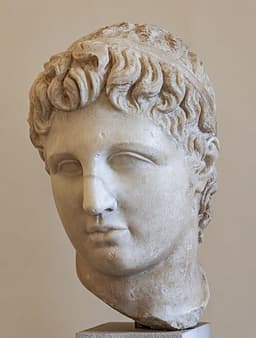
Ptolemy III Euergetes
Emperor · Ancient
61.6Total
Basic Information
Born
-135
-280
Died
-63
-222
Era
Ancient
Ancient
Nationality
Pontus
Ptolemaic Kingdom
Occupation
Emperor
Emperor
Civilization
Middle Eastern
Middle Eastern
Score Comparison
Military (10%)
78.0
80.0
Political (20%)
70.0
72.0
Influence (20%)
61.0
58.0
Legacy (20%)
52.0
45.8
Leadership (15%)
72.0
68.0
Strategy (15%)
75.0
66.3
TOTAL
64.8
61.6
Mithridates VI — Complete Timeline
89 BC
First Mithridatic WarWar◆ Major
Mithridates VI invaded the Roman province of Asia, conquering much of Anatolia. He ordered the massacre of an estimated 80,000 Roman and Italian residents in the Asiatic Vespers, provoking a Roman response under Sulla. The war ended with the Treaty of Dardanos in 85 BC.
Mithridatic WarsRoman RepublicMassacre
Impact: regionaldestructive
83 BC
Second Mithridatic WarWar
Mithridates VI fought the Roman general Lucius Licinius Murena, who had invaded Pontus without authorization. Mithridates defeated Murena and forced a return to the status quo, but the war weakened his position and allowed Rome to regroup.
Mithridatic WarsRoman RepublicPontus
Impact: regional
73 BC
Third Mithridatic WarWar◆ Major
Mithridates VI launched a major war against Rome, initially achieving successes. However, the Roman general Lucullus defeated him at the Battle of Cabira in 72 BC, forcing Mithridates to flee to Armenia. The war continued under Pompey, who finally defeated Mithridates in 66 BC.
Mithridatic WarsRoman RepublicPontus
Impact: regional
72 BC
Battle of CabiraWar◆ Major
Mithridates VI was decisively defeated by the Roman general Lucullus at Cabira in Pontus. Mithridates fled to Armenia, losing his kingdom and much of his army. This battle marked the turning point of the Third Mithridatic War.
Mithridatic WarsBattlePontus
Impact: regionaltragic
63 BC
Death by suicidePolitical Action◆ Major
After being betrayed by his son Pharnaces II and besieged by Roman forces, Mithridates VI attempted suicide by poison. Having built immunity to poisons, he ordered a bodyguard to kill him with a sword. His death ended the Mithridatic Wars and the Kingdom of Pontus.
DeathPontusMithridatic Wars
Impact: regionaltragic
Ptolemy III Euergetes — Complete Timeline
246 BC
Third Syrian WarWar◆ Major
Ptolemy III launched a campaign against the Seleucid Empire following the murder of his sister Berenice. He conquered large parts of Syria, Anatolia, and Mesopotamia, reaching Babylon. The war ended with a peace treaty in 241 BC, securing Ptolemaic control over Seleucid territories.
Seleucid WarExpansionConquest
Impact: regional
245 BC
Donations of the Conquered TerritoriesPolitical Action◆ Major
Ptolemy III dedicated captured Seleucid territories to the Egyptian gods in a grand ceremony. This act reinforced his legitimacy as a pharaoh and demonstrated the wealth and power of the Ptolemaic Kingdom at its territorial peak.
Religious PolicyPropagandaTerritorial Peak
Impact: regionalconstructive
Reign of the Ptolemaic Kingdom at its PeakPolitical Action
Under Ptolemy III, the Ptolemaic Kingdom reached its greatest territorial extent, controlling Egypt, Cyrenaica, Cyprus, Coele-Syria, and parts of Anatolia and the Aegean. This period marked the height of Ptolemaic power and influence in the Mediterranean.
Territorial PeakGolden AgePtolemaic Empire
Impact: regionalconstructive
240 BC
Construction of the Great Library of AlexandriaCultural◆ Major
Ptolemy III expanded the Library of Alexandria, ordering the translation of Greek and foreign texts. He also decreed that all ships docking in Alexandria must surrender their books for copying, greatly increasing the library's collection.
Library of AlexandriaCultural PatronageScholarship
Impact: globalconstructive
This comparison has not been analyzed yet.
One-time AI generation (~1 minute). Scores and timeline are already available below.
Rankings
🥇
Mithridates VILeader
Mil: 78.0Pol: 70.0Inf: 61.0
64.8
🥈
Ptolemy III Euergetes
Mil: 80.0Pol: 72.0Inf: 58.0
61.6
+3.2 behind
How This Comparison Works
Algorithm
Each figure is scored on 6 dimensions (0—100 scale) based on structured historical data: Military (10%), Political (20%), Influence (20%), Legacy (20%), Leadership (15%), Strategy (15%). The weighted total produces the final ranking.
Data Sources
Scores are computed from structured sub-indicators in the database. Scale factors adjust for era (Ancient ×0.85, Modern ×1.0) and civilization size (Eastern ×1.05, Other ×0.80) to account for differences in population and military scale.
Maximum 3 Figures
Comparisons are limited to 2—3 figures to ensure readability and statistical meaningfulness.
Error Margins
±5 points per dimension — Sub-scores are derived from historical records with inherent uncertainty. Two figures within 5 points on a dimension should be considered roughly equivalent in that area.
Total Score Accuracy
±3 points overall — The weighted combination of 6 dimensions produces a total score with approximately ±3 points of uncertainty. Differences of less than 3 points are not statistically significant— the figures are effectively tied.
Known Limitations
- Historical records are incomplete and uneven across civilizations
- Figures from oral-tradition societies may be underrepresented
- Occupation labels can misclassify multi-role figures
- Scores measure capability and impact, not moral character
- Quantitative scoring is a comparison tool, not absolute truth
Capability Radar
Military (10%) — Battles & Warfare
Battles
85
70
Win Rate
60
75
Expansion
80
75
Political (20%) — Governance & Reform
Reform
75
55
Diplomacy
85
70
Economy
70
80
Influence (20%) — Cultural & Global Reach
Cultural
65
60
Global
60
50
Legacy (20%) — Historical Impact
Historical
75
55
Longevity
70
40
Leadership (15%) — Power & Stability
Tenure
90
60
Stability
50
65
Strategy (15%) — Tactics & Innovation
Strategy
85
70
Tactics
90
65
Reform
70
40
Similar Comparisons
Comments & Discussion
No comments yet. Be the first to share your thoughts!