Loading...
Duke Mu of Qin vs Mithridates VI
Mithridates VI leads by 11.9 pts · 2 figures compared
…
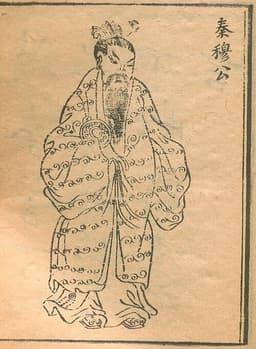
Duke Mu of Qin
Emperor · Ancient
52.9Total

Mithridates VI
Emperor · Ancient
64.8Total
Basic Information
Born
-683
-135
Died
-621
-63
Era
Ancient
Ancient
Nationality
China
Pontus
Occupation
Emperor
Emperor
Civilization
Eastern
Middle Eastern
Score Comparison
Military (10%)
52.5
78.0
Political (20%)
48.0
70.0
Influence (20%)
49.4
61.0
Legacy (20%)
44.2
52.0
Leadership (15%)
74.0
72.0
Strategy (15%)
60.0
75.0
TOTAL
52.9
64.8
Duke Mu of Qin — Complete Timeline
650 BC
Expanded Qin into Western TerritoriesWar◆ Major
Duke Mu of Qin led campaigns against the Rong and Di barbarian tribes to the west, conquering twelve minor states and opening up 1,000 li of territory. This expansion strengthened Qin and secured its western flank.
ExpansionBarbariansQin
Impact: regionalconstructive
645 BC
Allied with Jin StatePolitical Action◆ Major
Duke Mu formed an alliance with the state of Jin, marrying his daughter to Duke Hui of Jin. However, when Jin reneged on promises, Duke Mu attacked and defeated Jin at the Battle of Han, capturing Duke Hui.
AllianceJinBattle of Han
Impact: regional
636 BC
Aided Chong'er to Become Duke Wen of JinPolitical Action◆ Major
Duke Mu supported the exiled prince Chong'er, sending troops to help him return to Jin and become Duke Wen. This act created a powerful ally but also a future rival who would challenge Qin's dominance.
SupportJinDuke Wen
Impact: regionalconstructive
627 BC
Failed to Expand EastwardWar◆ Major
Duke Mu's attempt to expand eastward was thwarted by Jin at the Battle of Yao. Qin forces were ambushed and destroyed in a narrow pass, forcing Duke Mu to abandon eastern ambitions and focus on the west.
DefeatJinBattle of Yao
Impact: regionaldestructive
Mithridates VI — Complete Timeline
89 BC
First Mithridatic WarWar◆ Major
Mithridates VI invaded the Roman province of Asia, conquering much of Anatolia. He ordered the massacre of an estimated 80,000 Roman and Italian residents in the Asiatic Vespers, provoking a Roman response under Sulla. The war ended with the Treaty of Dardanos in 85 BC.
Mithridatic WarsRoman RepublicMassacre
Impact: regionaldestructive
83 BC
Second Mithridatic WarWar
Mithridates VI fought the Roman general Lucius Licinius Murena, who had invaded Pontus without authorization. Mithridates defeated Murena and forced a return to the status quo, but the war weakened his position and allowed Rome to regroup.
Mithridatic WarsRoman RepublicPontus
Impact: regional
73 BC
Third Mithridatic WarWar◆ Major
Mithridates VI launched a major war against Rome, initially achieving successes. However, the Roman general Lucullus defeated him at the Battle of Cabira in 72 BC, forcing Mithridates to flee to Armenia. The war continued under Pompey, who finally defeated Mithridates in 66 BC.
Mithridatic WarsRoman RepublicPontus
Impact: regional
72 BC
Battle of CabiraWar◆ Major
Mithridates VI was decisively defeated by the Roman general Lucullus at Cabira in Pontus. Mithridates fled to Armenia, losing his kingdom and much of his army. This battle marked the turning point of the Third Mithridatic War.
Mithridatic WarsBattlePontus
Impact: regionaltragic
63 BC
Death by suicidePolitical Action◆ Major
After being betrayed by his son Pharnaces II and besieged by Roman forces, Mithridates VI attempted suicide by poison. Having built immunity to poisons, he ordered a bodyguard to kill him with a sword. His death ended the Mithridatic Wars and the Kingdom of Pontus.
DeathPontusMithridatic Wars
Impact: regionaltragic
Expert Analysis
Origins
Duke Mu of Qin (born 682 BCE) was a ruler of the state of Qin during the Spring and Autumn period of ancient China. He inherited a semi-barbarian state on the western frontier, often dismissed by the central Chinese states as uncultured. His father, Duke Cheng of Qin, had laid some groundwork, but Duke Mu faced a realm surrounded by Rong and Di tribes. He was known for his ambition to expand westward and his strategic marriages.
Mithridates VI (born 134 BCE) was the king of Pontus, a Hellenistic kingdom on the Black Sea coast. He claimed descent from Persian royalty and Alexander the Great. His father was assassinated when Mithridates was young, forcing him into hiding. He grew up with a fierce hatred of Rome, which had encroached on Pontus. He was reportedly multilingual and built immunity to poisons through regular small doses.
Rise to Power
Duke Mu ascended the Qin throne in 659 BCE. His early reign focused on consolidating power and building alliances. A key turning point came when he supported the exiled prince Chong'er of Jin, providing troops to help him become Duke Wen of Jin in 636 BCE. This created a powerful ally but also a rival. Duke Mu's westward expansion began in earnest in the 620s BCE, when he launched campaigns against the Rong tribes, conquering twelve minor states and opening 1,000 li of territory.
Mithridates VI became king around 120 BCE after his father's murder. He expanded Pontus by annexing neighboring territories and building a large army. His first major conflict with Rome was the First Mithridatic War (89-85 BCE). He invaded the Roman province of Asia, conquering much of Anatolia. He ordered the massacre of an estimated 80,000 Roman and Italian residents, cementing his reputation as a ruthless enemy of Rome.
Leadership & Governance
Duke Mu ruled Qin with a focus on practical governance and military expansion. He appointed capable ministers like Baili Xi and Jian Shu, who helped reform administration and promote agriculture. His governance was characterized by a blend of Chinese and barbarian customs, which allowed him to integrate conquered tribes. However, his leadership was often reactive: he formed alliances when beneficial but broke them when necessary, as seen in his conflict with Jin.
Mithridates VI was a charismatic and ruthless leader. He centralized power, built a multi-ethnic army, and used propaganda to portray himself as a liberator of Greeks from Roman oppression. He minted coins with his image and promoted Hellenistic culture. His governance was effective in mobilizing resources for war, but his brutality, such as the massacre of Romans, created deep enmity. He scored 72.0 in leadership, slightly below Duke Mu's 74.0, reflecting his ultimate inability to hold his coalition together.
Triumph & Tragedy
Duke Mu's greatest success was expanding Qin's territory westward, securing the rear for future Qin conquests. This expansion provided resources and manpower that later enabled Qin to unify China. His tragedy was the failed eastward expansion: at the Battle of Yao in 627 BCE, his army was ambushed by Jin in a narrow pass, resulting in total defeat. This setback forced him to abandon eastern ambitions and focus west.
Mithridates VI's triumphs include the First Mithridatic War, where he overran Roman Asia and defeated Roman forces. He also won the Second Mithridatic War against an unauthorized Roman invasion. His tragedy was the Third Mithridatic War: after initial successes, he was decisively defeated by Lucullus at the Battle of Cabira in 72 BCE. He fled to Armenia, lost his kingdom, and eventually faced betrayal by his son Pharnaces II. He attempted suicide by poison but had built immunity, so he had to ask a bodyguard to kill him.
Character & Destiny
Duke Mu was pragmatic and patient, willing to accept setbacks and adapt. His decision to support Chong'er showed strategic foresight, but his failure at Yao exposed overconfidence. He died in 621 BCE, leaving a stronger but still secondary state. His character shaped Qin's destiny as a western power that would later conquer China.
Mithridates VI was brilliant but paranoid and vindictive. His hatred of Rome drove him to overreach. He was a master of guerrilla tactics and diplomacy, but his cruelty united his enemies. His immunity to poison symbolized his cunning, but his inability to secure loyalty from his own family led to his downfall. Historians note that his score of 75.0 in strategy is higher than Duke Mu's 60.0, reflecting his tactical brilliance, but his political score of 70.0 versus Duke Mu's 48.0 shows he was more adept at diplomacy, yet ultimately failed.
Legacy
Duke Mu's legacy is foundational for the Qin state. His westward expansion created a secure base and a model for absorbing barbarian peoples. Qin's later unification of China under Qin Shi Huang relied on the territory and military tradition Duke Mu established. He is remembered as one of the Five Hegemons of the Spring and Autumn period, though his influence is often overshadowed by later Qin rulers.
Mithridates VI left a legacy as Rome's most persistent eastern enemy. He delayed Roman expansion into Asia Minor and inspired later rebellions. His wars drained Roman resources and contributed to the Republic's instability. He is remembered in art and literature, but his kingdom did not survive. His total score of 64.8 exceeds Duke Mu's 52.9, but his impact was less enduring: Qin's expansion shaped Chinese history for millennia, while Mithridates' resistance only temporarily challenged Rome.
Conclusion
Duke Mu of Qin had a greater long-term impact. While Mithridates VI scored higher overall (64.8 vs 52.9), Duke Mu's military and political actions directly enabled the Qin unification of China, which shaped world history. Mithridates' wars, though dramatic, were ultimately a footnote in Rome's rise. Duke Mu's score of 52.9 underrepresents his strategic importance because it measures personal achievement rather than historical consequence. He expanded Qin's territory by conquering twelve states, a feat that set the stage for an empire that lasted over 2,000 years. Mithridates, for all his brilliance, failed to preserve his kingdom. Thus, Duke Mu of Qin was the more significant figure.
Rankings
🥇
Mithridates VILeader
Mil: 78.0Pol: 70.0Inf: 61.0
64.8
🥈
Duke Mu of Qin
Mil: 52.5Pol: 48.0Inf: 49.4
52.9
+11.9 behind
How This Comparison Works
Algorithm
Each figure is scored on 6 dimensions (0—100 scale) based on structured historical data: Military (10%), Political (20%), Influence (20%), Legacy (20%), Leadership (15%), Strategy (15%). The weighted total produces the final ranking.
Data Sources
Scores are computed from structured sub-indicators in the database. Scale factors adjust for era (Ancient ×0.85, Modern ×1.0) and civilization size (Eastern ×1.05, Other ×0.80) to account for differences in population and military scale.
Maximum 3 Figures
Comparisons are limited to 2—3 figures to ensure readability and statistical meaningfulness.
Error Margins
±5 points per dimension — Sub-scores are derived from historical records with inherent uncertainty. Two figures within 5 points on a dimension should be considered roughly equivalent in that area.
Total Score Accuracy
±3 points overall — The weighted combination of 6 dimensions produces a total score with approximately ±3 points of uncertainty. Differences of less than 3 points are not statistically significant— the figures are effectively tied.
Known Limitations
- Historical records are incomplete and uneven across civilizations
- Figures from oral-tradition societies may be underrepresented
- Occupation labels can misclassify multi-role figures
- Scores measure capability and impact, not moral character
- Quantitative scoring is a comparison tool, not absolute truth
Capability Radar
Military (10%) — Battles & Warfare
Battles
45
85
Win Rate
50
60
Expansion
60
80
Political (20%) — Governance & Reform
Reform
40
75
Diplomacy
50
85
Economy
45
70
Influence (20%) — Cultural & Global Reach
Cultural
30
65
Global
25
60
Legacy (20%) — Historical Impact
Historical
45
75
Longevity
40
70
Leadership (15%) — Power & Stability
Tenure
55
90
Stability
50
50
Strategy (15%) — Tactics & Innovation
Strategy
55
85
Tactics
40
90
Reform
35
70
Similar Comparisons
Comments & Discussion
No comments yet. Be the first to share your thoughts!