Loading...
Clovis I vs Ptolemy III Euergetes
Ptolemy III Euergetes leads by 4.5 pts · 2 figures compared
…

Clovis I
Emperor · Ancient
57.1Total
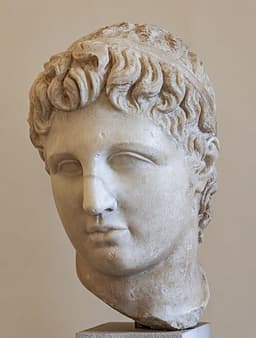
Ptolemy III Euergetes
Emperor · Ancient
61.6Total
Basic Information
Born
466
-280
Died
511
-222
Era
Ancient
Ancient
Nationality
Frankish Empire
Ptolemaic Kingdom
Occupation
Emperor
Emperor
Civilization
Western
Middle Eastern
Score Comparison
Military (10%)
67.3
80.0
Political (20%)
45.0
72.0
Influence (20%)
55.0
58.0
Legacy (20%)
52.0
45.8
Leadership (15%)
72.0
68.0
Strategy (15%)
60.7
66.3
TOTAL
57.1
61.6
Clovis I — Complete Timeline
486 AD
Battle of SoissonsWar
Clovis defeated Syagrius, the last Roman ruler in Gaul, at Soissons. This victory ended Roman control in the region and established Clovis as the dominant power in northern Gaul, laying the foundation for the Frankish kingdom.
Frankish ExpansionRoman GaulSyagrius
Impact: regional
496 AD
Conversion to ChristianityCultural
Clovis converted to Nicene Christianity after the Battle of Tolbiac, following a vow to the Christian God. He was baptized by Bishop Remigius at Reims, becoming the first Germanic king to adopt Catholicism, which aligned him with the Gallo-Roman population and the Church.
ConversionCatholicismReimsChurch
Impact: globalconstructive
507 AD
Issuance of the Salic LawReform◆ Major
Clovis codified the Salic Law, a legal code combining Frankish customary law with Roman influences. It regulated inheritance, property, and criminal penalties, and later influenced medieval European legal systems.
Legal CodeSalic LawInheritance
Impact: regionalconstructive
Ptolemy III Euergetes — Complete Timeline
246 BC
Third Syrian WarWar◆ Major
Ptolemy III launched a campaign against the Seleucid Empire following the murder of his sister Berenice. He conquered large parts of Syria, Anatolia, and Mesopotamia, reaching Babylon. The war ended with a peace treaty in 241 BC, securing Ptolemaic control over Seleucid territories.
Seleucid WarExpansionConquest
Impact: regional
245 BC
Donations of the Conquered TerritoriesPolitical Action◆ Major
Ptolemy III dedicated captured Seleucid territories to the Egyptian gods in a grand ceremony. This act reinforced his legitimacy as a pharaoh and demonstrated the wealth and power of the Ptolemaic Kingdom at its territorial peak.
Religious PolicyPropagandaTerritorial Peak
Impact: regionalconstructive
Reign of the Ptolemaic Kingdom at its PeakPolitical Action
Under Ptolemy III, the Ptolemaic Kingdom reached its greatest territorial extent, controlling Egypt, Cyrenaica, Cyprus, Coele-Syria, and parts of Anatolia and the Aegean. This period marked the height of Ptolemaic power and influence in the Mediterranean.
Territorial PeakGolden AgePtolemaic Empire
Impact: regionalconstructive
240 BC
Construction of the Great Library of AlexandriaCultural◆ Major
Ptolemy III expanded the Library of Alexandria, ordering the translation of Greek and foreign texts. He also decreed that all ships docking in Alexandria must surrender their books for copying, greatly increasing the library's collection.
Library of AlexandriaCultural PatronageScholarship
Impact: globalconstructive
Expert Analysis
Origins
Clovis I (c. 466–511 AD) was born into the Merovingian dynasty, the son of King Childeric I of the Salian Franks and Queen Basina of Thuringia. He inherited a small kingdom around Tournai (modern Belgium) at age 15. Growing up among warring Frankish tribes, he learned military tactics and the politics of shifting alliances. In contrast, Ptolemy III Euergetes (c. 284–222 BC) was born into the Ptolemaic dynasty, the son of Ptolemy II Philadelphus and Arsinoe I (or Arsinoe II). He was raised in the cosmopolitan city of Alexandria, receiving a Greek education steeped in philosophy, science, and administration. While Clovis emerged from a fragmented post-Roman world, Ptolemy inherited a well-established Hellenistic kingdom.
Rise to Power
Clovis became king of the Salian Franks in 481 at age 15. His first major success came in 486 at the Battle of Soissons, where he defeated Syagrius, the last Roman ruler in Gaul. This victory gave him control over northern Gaul and established him as the dominant Frankish leader. He then expanded through a combination of warfare and assassination, eliminating rival Frankish kings like Chararic and Ragnachar. Ptolemy III ascended the throne around 246 BC after the death of his father. His early reign was marked by the Third Syrian War (246–241 BC), triggered by the murder of his sister Berenice and her son in the Seleucid Empire. Ptolemy invaded Syria and Anatolia, conquering territories as far east as Babylon. He returned to Egypt with vast spoils, including statues of Egyptian gods previously taken by the Persians.
Leadership & Governance
Clovis ruled as a warrior-king, personally leading his armies. He converted to Nicene Christianity around 496 after the Battle of Tolbiac, reportedly due to a vow. This conversion aligned him with the Gallo-Roman population and the powerful bishops, giving him legitimacy. He issued the Salic Law, a legal code that combined Frankish custom with Roman law, regulating inheritance and crime. His governance was decentralized, relying on loyal counts. Ptolemy III governed as a Hellenistic monarch, centralizing power in Alexandria. He expanded the Great Library of Alexandria, commissioning translations of texts and ordering that all ships docking in Alexandria surrender their books for copying. He also supported Egyptian temples, donating captured Seleucid territories to the gods in a ceremony that reinforced his role as pharaoh. His administration was bureaucratic, with a complex system of tax collection and land management.
Triumph & Tragedy
Clovis's greatest triumph was uniting the Frankish tribes and conquering most of Gaul, creating a kingdom that would evolve into France. His conversion to Christianity ensured his legacy as the first Christian king of the Franks. However, his methods were brutal: he murdered relatives to consolidate power, leading to a pattern of dynastic violence. His kingdom fractured after his death among his sons. Ptolemy III's triumph was the peak of Ptolemaic expansion; his military score of 80.0 reflects his success in the Third Syrian War. He brought prosperity and cultural flourishing. His tragedy was that his gains were not permanent: his successors lost most of the Asian territories. Also, his focus on foreign wars strained the economy, contributing to later decline. His legacy score of 45.8 is lower than Clovis's 52.0, indicating less enduring impact.
Character & Destiny
Clovis was ambitious, ruthless, and pragmatic. His conversion was politically motivated, but also genuine enough to gain him support. He was a skilled military leader (score 67.3) but less adept politically (45.0). His character shaped his destiny: his aggression built an empire, but his lack of institutional governance led to fragmentation. Ptolemy III was cultured and strategic, with a military score of 80.0 and political score of 72.0. He was a patron of learning and religion. His character led to a flourishing of culture but also overextension. Both leaders faced the challenge of succession: Clovis's kingdom divided; Ptolemy's dynasty continued but weakened.
Legacy
Clovis's legacy is foundational: he established the Merovingian dynasty, which ruled for over 200 years. The Salic Law influenced later French legal systems. His conversion made France a Christian kingdom, and he is revered as a saint in some traditions. His influence score of 55.0 reflects this. Ptolemy III's legacy is tied to the Library of Alexandria, which became a center of learning. His conquests brought wealth and prestige, but his dynasty continued only until Cleopatra VII. His influence score of 58.0 is slightly higher, but his legacy score is lower (45.8 vs 52.0). The difference is that Clovis's political and religious impact endured for centuries, while Ptolemy's achievements were more ephemeral.
Conclusion
Clovis I had a greater long-term impact than Ptolemy III Euergetes. Despite a lower total score (57.1 vs 61.6), Clovis's influence on the political and religious map of Europe is more profound. He created a kingdom that became France, and his conversion set the stage for the medieval Christian order. Ptolemy III's reign was a high point for the Ptolemaic Kingdom, but its achievements did not outlast the dynasty. The score gap of 4.5 points in Ptolemy's favor is misleading because legacy weight should be heavier. Clovis's legacy score of 52.0 versus Ptolemy's 45.8, combined with his foundational role in European history, gives him the edge.
Rankings
🥇
Ptolemy III EuergetesLeader
Mil: 80.0Pol: 72.0Inf: 58.0
61.6
🥈
Clovis I
Mil: 67.3Pol: 45.0Inf: 55.0
57.1
+4.5 behind
How This Comparison Works
Algorithm
Each figure is scored on 6 dimensions (0—100 scale) based on structured historical data: Military (10%), Political (20%), Influence (20%), Legacy (20%), Leadership (15%), Strategy (15%). The weighted total produces the final ranking.
Data Sources
Scores are computed from structured sub-indicators in the database. Scale factors adjust for era (Ancient ×0.85, Modern ×1.0) and civilization size (Eastern ×1.05, Other ×0.80) to account for differences in population and military scale.
Maximum 3 Figures
Comparisons are limited to 2—3 figures to ensure readability and statistical meaningfulness.
Error Margins
±5 points per dimension — Sub-scores are derived from historical records with inherent uncertainty. Two figures within 5 points on a dimension should be considered roughly equivalent in that area.
Total Score Accuracy
±3 points overall — The weighted combination of 6 dimensions produces a total score with approximately ±3 points of uncertainty. Differences of less than 3 points are not statistically significant— the figures are effectively tied.
Known Limitations
- Historical records are incomplete and uneven across civilizations
- Figures from oral-tradition societies may be underrepresented
- Occupation labels can misclassify multi-role figures
- Scores measure capability and impact, not moral character
- Quantitative scoring is a comparison tool, not absolute truth
Capability Radar
Military (10%) — Battles & Warfare
Battles
65
70
Win Rate
70
75
Expansion
70
75
Political (20%) — Governance & Reform
Reform
65
55
Diplomacy
75
70
Economy
55
80
Influence (20%) — Cultural & Global Reach
Cultural
70
60
Global
60
50
Legacy (20%) — Historical Impact
Historical
75
55
Longevity
70
40
Leadership (15%) — Power & Stability
Tenure
70
60
Stability
60
65
Strategy (15%) — Tactics & Innovation
Strategy
65
70
Tactics
60
65
Reform
55
40
Similar Comparisons
Comments & Discussion
No comments yet. Be the first to share your thoughts!