Loading...
Mir Ahmed Ali Khan vs Tipu Sultan
Tipu Sultan leads by 19.6 pts · 2 figures compared
…
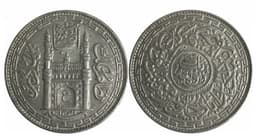
Mir Ahmed Ali Khan
Emperor · Modern
48.5Total
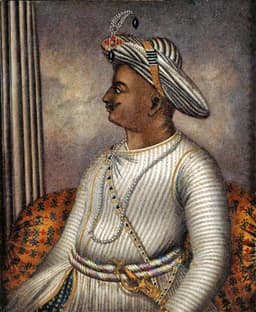
Tipu Sultan
Emperor · Modern
68.1Total
Basic Information
Born
1857
1751
Died
1869
1799
Era
Modern
Modern
Nationality
India
India
Occupation
Emperor
Emperor
Civilization
Indian
Indian
Score Comparison
Military (10%)
20.0
61.7
Political (20%)
68.0
72.0
Influence (20%)
51.0
82.0
Legacy (20%)
40.0
55.0
Leadership (15%)
64.0
66.0
Strategy (15%)
39.6
70.0
TOTAL
48.5
68.1
Mir Ahmed Ali Khan — Complete Timeline
1869 AD
Accession as Nizam of HyderabadPolitical Action◆ Major
Mir Ahmed Ali Khan became the 6th Nizam of Hyderabad at a young age after his father's death. His reign was short and marked by regency.
SuccessionRegency
Impact: regional
Death from IllnessOther◆ Major
Mir Ahmed Ali Khan died from an illness after ruling for only a few months. His death led to his uncle, Mir Mahbub Ali Khan, becoming the next Nizam.
DeathShort Reign
Impact: regionaltragic
Tipu Sultan — Complete Timeline
1780 AD
Battle of PollilurWar◆ Major
Tipu Sultan, commanding Mysore forces, defeated a British East India Company army at Pollilur during the Second Anglo-Mysore War. This was the worst defeat suffered by the British in India at that time, with over 4,000 casualties.
BattleAnglo-Mysore War
Impact: regional
1784 AD
Treaty of MangalorePolitical Action◆ Major
Tipu Sultan signed the Treaty of Mangalore with the British East India Company, ending the Second Anglo-Mysore War. The treaty restored the status quo ante bellum, with both sides returning captured territories, and was a diplomatic victory for Mysore.
TreatyAnglo-Mysore Relations
Impact: regional
1792 AD
Introduction of the Mysorean RocketInvention◆ Major
Tipu Sultan deployed iron-cased rockets in warfare against the British, notably at the Battle of Srirangapatna. These rockets, developed with French assistance, were more advanced than contemporary European designs and influenced later British rocket development.
Military TechnologyInnovation
Impact: global
1798 AD
Alliance with the FrenchPolitical Action
Tipu Sultan sought an alliance with Revolutionary France against the British, sending an embassy to Napoleon Bonaparte. This diplomatic move, though ultimately unsuccessful, alarmed the British and contributed to their decision to attack Mysore.
DiplomacyAnti-British Alliance
Impact: regional
1799 AD
Battle of SeringapatamWar◆ Major
Tipu Sultan was killed defending his capital, Srirangapatna, during the Fourth Anglo-Mysore War. The British, led by General Harris, stormed the fort, ending the Kingdom of Mysore's independence and leading to British control over southern India.
BattleDeathAnglo-Mysore War
Impact: regionaltragic
Expert Analysis
Origins
Tipu Sultan was born in 1751 in Devanahalli, present-day Karnataka, to Hyder Ali, a military commander who seized power in Mysore. His mother, Fatima Fakhr-un-Nisa, was from an aristocratic family. Tipu received a rigorous education in languages, military tactics, and science, and accompanied his father on campaigns from a young age. This hands-on training prepared him for a life of constant warfare.
Mir Ahmed Ali Khan was born in 1831 in Hyderabad, the eldest son of Nasir-ud-Daulah, the fourth Nizam of Hyderabad. He was raised in the opulent court of Hyderabad with a traditional Mughal-style education, focusing on Persian, Arabic, and administration. He ascended the throne at age 27 after his father's death in 1857, but his reign was cut short by illness.
Rise to Power
Tipu Sultan rose through military exploits. He first gained prominence during the First Anglo-Mysore War (1767-1769), where he commanded a cavalry force. His major breakthrough came in 1780 at the Battle of Pollilur during the Second Anglo-Mysore War, where he defeated a British East India Company army, capturing over 2,000 soldiers. This victory cemented his reputation as a formidable commander. After Hyder Ali's death in 1782, Tipu assumed full control of Mysore.
Mir Ahmed Ali Khan's rise was dynastic. He became Nizam on May 16, 1857, after his father's death, but his reign was immediately overshadowed by the Indian Rebellion of 1857. Because of his youth and inexperience, a regency council led by his uncle, Mir Mahbub Ali Khan, effectively governed. His rise was passive, lacking personal initiative.
Leadership & Governance
Tipu Sultan was an active, centralized ruler. He modernized the Mysorean army, introducing iron-cased rockets—the first of their kind—and organized units based on French models. He implemented administrative reforms, including a revenue system that promoted agriculture and trade. He also sought diplomatic alliances with the French, sending an embassy to Napoleon in 1799. His governance was aggressive and expansionist, clashing with neighboring states and the British.
Mir Ahmed Ali Khan ruled for only a few months under regency. His leadership was largely ceremonial. The regency council handled governance, focusing on appeasing the British after the 1857 rebellion. No significant reforms or initiatives were undertaken. His leadership score of 64.0 is inflated due to his position, but actual authority was minimal.
Triumph & Tragedy
Tipu Sultan's greatest triumph was his military resistance against the British. He scored 61.7 in military and 70.0 in strategy. His use of rockets at the Battle of Srirangapatna (1792) and the victory at Pollilur showcased his tactical innovation. However, his greatest tragedy was his death in 1799 at the Siege of Srirangapatna, defending his capital. His alliance with the French failed to materialize, and his aggressive policies united the British and Marathas against him.
Mir Ahmed Ali Khan's triumph was simply ascending to the throne, but his tragedy was his short reign and early death from illness, which prevented any meaningful impact. His death led to his uncle's rule, which lasted for over 50 years.
Character & Destiny
Tipu Sultan was determined, innovative, and fiercely independent. His character drove him to resist British expansion at all costs, but also made him enemies. His decision to execute prisoners after Pollilur and his harsh treatment of conquered peoples, like the Kodavas, alienated potential allies. His destiny was shaped by his refusal to compromise, leading to his downfall.
Mir Ahmed Ali Khan was a figurehead, his character overshadowed by his regency. His early death from illness suggests poor health, but his legacy is defined by his inability to rule independently.
Legacy
Tipu Sultan's legacy is complex. He is remembered as a freedom fighter in India and a symbol of resistance against colonialism. His military innovations, particularly the Mysorean rockets, influenced later rocketry. He scored 55.0 in legacy. His administration left a mark on Mysore's economy, but his policies were reversed after his defeat.
Mir Ahmed Ali Khan's legacy is negligible. He is a footnote in Hyderabad's history, remembered only for his brief reign during a turbulent period. His score of 40.0 in legacy reflects his lack of impact.
Conclusion
Tipu Sultan had a far greater impact, with a total score of 68.1 compared to Mir Ahmed Ali Khan's 48.5. Tipu's military innovations, resistance against the British, and administrative reforms shaped the history of South India. Mir Ahmed Ali Khan, while a legitimate ruler, was a passive figure whose reign was too short and constrained to leave a mark. Tipu Sultan's legacy as a warrior and innovator endures, while Mir Ahmed Ali Khan is largely forgotten.
Rankings
🥇
Tipu SultanLeader
Mil: 61.7Pol: 72.0Inf: 82.0
68.1
🥈
Mir Ahmed Ali Khan
Mil: 20.0Pol: 68.0Inf: 51.0
48.5
+19.6 behind
How This Comparison Works
Algorithm
Each figure is scored on 6 dimensions (0—100 scale) based on structured historical data: Military (10%), Political (20%), Influence (20%), Legacy (20%), Leadership (15%), Strategy (15%). The weighted total produces the final ranking.
Data Sources
Scores are computed from structured sub-indicators in the database. Scale factors adjust for era (Ancient ×0.85, Modern ×1.0) and civilization size (Eastern ×1.05, Other ×0.80) to account for differences in population and military scale.
Maximum 3 Figures
Comparisons are limited to 2—3 figures to ensure readability and statistical meaningfulness.
Error Margins
±5 points per dimension — Sub-scores are derived from historical records with inherent uncertainty. Two figures within 5 points on a dimension should be considered roughly equivalent in that area.
Total Score Accuracy
±3 points overall — The weighted combination of 6 dimensions produces a total score with approximately ±3 points of uncertainty. Differences of less than 3 points are not statistically significant— the figures are effectively tied.
Known Limitations
- Historical records are incomplete and uneven across civilizations
- Figures from oral-tradition societies may be underrepresented
- Occupation labels can misclassify multi-role figures
- Scores measure capability and impact, not moral character
- Quantitative scoring is a comparison tool, not absolute truth
Capability Radar
Military (10%) — Battles & Warfare
Battles
5
75
Win Rate
5
60
Expansion
5
70
Political (20%) — Governance & Reform
Reform
50
80
Diplomacy
45
55
Economy
40
75
Influence (20%) — Cultural & Global Reach
Cultural
30
65
Global
15
55
Legacy (20%) — Historical Impact
Historical
30
70
Longevity
20
60
Leadership (15%) — Power & Stability
Tenure
40
65
Stability
35
50
Strategy (15%) — Tactics & Innovation
Strategy
10
70
Tactics
10
80
Reform
20
85
Similar Comparisons
Comments & Discussion
No comments yet. Be the first to share your thoughts!