Loading...
Tewodros II vs Tipu Sultan
Tipu Sultan leads by 8.6 pts · 2 figures compared
…
Tewodros II
Emperor · Modern
59.5Total
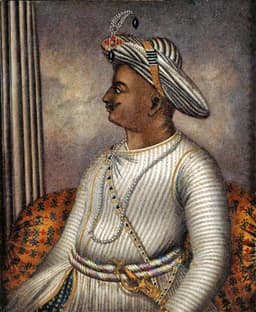
Tipu Sultan
Emperor · Modern
68.1Total
Basic Information
Born
1818
1751
Died
1868
1799
Era
Modern
Modern
Nationality
Ethiopia
India
Occupation
Emperor
Emperor
Civilization
Other
Indian
Score Comparison
Military (10%)
61.7
61.7
Political (20%)
72.0
72.0
Influence (20%)
56.4
82.0
Legacy (20%)
47.5
55.0
Leadership (15%)
74.0
66.0
Strategy (15%)
55.0
70.0
TOTAL
59.5
68.1
Tewodros II — Complete Timeline
1853 AD
Battle of AyshalWar◆ Major
Kassa Hailu (later Tewodros II) defeated the forces of Dejazmach Wube Haile Maryam at the Battle of Ayshal. This victory consolidated his control over northern Ethiopia and paved the way for his coronation as Emperor.
BattleUnificationCivil War
Impact: regional
1855 AD
Coronation as Emperor Tewodros IIPolitical Action◆ Major
Kassa Hailu was crowned Emperor Tewodros II at the church of Derasge Maryam. He began a campaign to unify Ethiopia's fragmented provinces, centralize power, and modernize the military and administration.
CoronationUnificationReform
Impact: regionalconstructive
1864 AD
Imprisoned British MissionariesPolitical Action◆ Major
Emperor Tewodros II imprisoned British missionaries and diplomats, including Consul Charles Duncan Cameron, after failing to receive a response from Queen Victoria to his letter requesting military assistance. This act led to the British Expedition to Abyssinia.
DiplomacyImprisonmentConflict
Impact: globaldestructive
1868 AD
Battle of MagdalaWar
British forces under General Robert Napier stormed the fortress of Magdala, defeating Tewodros II's army. Rather than surrender, Tewodros committed suicide with a pistol given to him by Queen Victoria. His death ended the British Expedition to Abyssinia.
BattleSuicideBritish Expedition
Impact: regionaltragic
Tipu Sultan — Complete Timeline
1780 AD
Battle of PollilurWar◆ Major
Tipu Sultan, commanding Mysore forces, defeated a British East India Company army at Pollilur during the Second Anglo-Mysore War. This was the worst defeat suffered by the British in India at that time, with over 4,000 casualties.
BattleAnglo-Mysore War
Impact: regional
1784 AD
Treaty of MangalorePolitical Action◆ Major
Tipu Sultan signed the Treaty of Mangalore with the British East India Company, ending the Second Anglo-Mysore War. The treaty restored the status quo ante bellum, with both sides returning captured territories, and was a diplomatic victory for Mysore.
TreatyAnglo-Mysore Relations
Impact: regional
1792 AD
Introduction of the Mysorean RocketInvention◆ Major
Tipu Sultan deployed iron-cased rockets in warfare against the British, notably at the Battle of Srirangapatna. These rockets, developed with French assistance, were more advanced than contemporary European designs and influenced later British rocket development.
Military TechnologyInnovation
Impact: global
1798 AD
Alliance with the FrenchPolitical Action
Tipu Sultan sought an alliance with Revolutionary France against the British, sending an embassy to Napoleon Bonaparte. This diplomatic move, though ultimately unsuccessful, alarmed the British and contributed to their decision to attack Mysore.
DiplomacyAnti-British Alliance
Impact: regional
1799 AD
Battle of SeringapatamWar◆ Major
Tipu Sultan was killed defending his capital, Srirangapatna, during the Fourth Anglo-Mysore War. The British, led by General Harris, stormed the fort, ending the Kingdom of Mysore's independence and leading to British control over southern India.
BattleDeathAnglo-Mysore War
Impact: regionaltragic
Expert Analysis
Origins
**Tewodros II** was born as Kassa Haile Giorgis around 1818 in Qwara, a region in the Ethiopian Empire. His father was a minor nobleman, and his mother was of humble origin. After his father's death, his family lost status, and Kassa experienced a difficult childhood. He was educated in a monastery, learning traditional Ethiopian religious and military skills. His early life was marked by the fragmentation of Ethiopia into competing regional lordships, known as the Zemene Mesafint (Era of the Princes).
**Tipu Sultan** was born on November 20, 1751, in Devanahalli, in present-day Karnataka, India. His father, Hyder Ali, was a military commander who later became the de facto ruler of the Kingdom of Mysore. Tipu was educated in Islamic studies, military tactics, and administration. From a young age, he accompanied his father on military campaigns, gaining firsthand experience in warfare. The backdrop of his upbringing was the growing power of the British East India Company, which was expanding its control in India.
Rise to Power
Tewodros II rose from relative obscurity through military prowess. In the 1840s, he began consolidating power in the northwest, defeating rival warlords. A key turning point was the Battle of Ayshal in 1853, where Kassa defeated Dejazmach Wube Haile Maryam, a powerful prince. This victory allowed him to march on Gondar, the traditional capital. On February 11, 1855, he was crowned Emperor Tewodros II at Derasge Maryam church. He immediately launched campaigns to subdue remaining provinces, including Shewa, and attempted to centralize the empire.
Tipu Sultan rose to power alongside his father. During the First Anglo-Mysore War (1767-1769), Tipu commanded a cavalry unit and distinguished himself. When Hyder Ali died in 1782, Tipu inherited the throne. He swiftly consolidated control and continued his father's policies of modernization and resistance against the British. The Second Anglo-Mysore War (1780-1784) saw Tipu achieve a major victory at the Battle of Pollilur in 1780, where he defeated a British force using innovative tactics and rockets. The war ended with the Treaty of Mangalore in 1784, which recognized Tipu's authority.
Leadership & Governance
Tewodros II aimed to unify Ethiopia and modernize its administration. He abolished the system of regional lords and appointed loyal governors, often from low birth, to weaken the nobility. He attempted to reform the church and reduce its political power. He also sought to modernize the military, importing firearms and training soldiers. However, his methods were often harsh, employing brutal punishments. His governance was hampered by resistance from regional elites and his own erratic temperament. For example, he imprisoned British missionaries after a diplomatic slight, which led to a catastrophic confrontation.
Tipu Sultan was an enlightened despot who implemented administrative and economic reforms. He centralized revenue collection, promoted trade, and encouraged the cultivation of cash crops. He invested in technology, particularly the development of iron-cased rockets, which were deployed against the British. He sought alliances with foreign powers, notably sending an embassy to Napoleon Bonaparte in 1798. Militarily, he scored 61.7, matching Tewodros's military score, but his strategic score of 70.0 reflects his innovative use of rockets and fortifications. Politically, he scored 72.0, tied with Tewodros, but his influence score of 82.0 far exceeded Tewodros's 56.4, indicating his greater impact on global anti-colonial narratives.
Triumph & Tragedy
Tewodros II's greatest triumph was unifying a fragmented Ethiopia after centuries of division. He restored a central monarchy and built a sense of national identity. However, his tragic downfall came with the British Expedition of 1868. After imprisoning British envoys, Queen Victoria sent a punitive force under General Robert Napier. At the Battle of Magdala, Tewodros's army was overwhelmed by superior British firepower. Rather than surrender, he committed suicide with a pistol given to him by Queen Victoria. His death left Ethiopia in chaos, undoing much of his unification work.
Tipu Sultan's greatest triumph was his resistance against the British East India Company. His victory at Pollilur was a significant blow to British prestige. He also modernized Mysore's army and economy. However, his tragedy came in the Fourth Anglo-Mysore War (1799). Despite his preparations, internal betrayal and British military superiority led to the fall of Srirangapatna. Tipu was killed in the breach, fighting to the end. His defeat led to the dissolution of Mysore and the strengthening of British control in South India.
Character & Destiny
Tewodros II was proud, ambitious, and temperamental. His determination to modernize Ethiopia was matched by a stubbornness that alienated potential allies. His decision to imprison British diplomats was a miscalculation that sealed his fate. Historians note his charisma but also his cruelty; he once ordered the execution of prisoners after a defeat. His suicide at Magdala was a final act of defiance, reflecting his refusal to accept subjugation. His overall leadership score of 74.0 indicates strong command, but his political score of 72.0 was undermined by poor diplomacy.
Tipu Sultan was courageous, intelligent, and deeply religious. He was known for his tiger emblem and his fierce hatred of the British. He was a capable administrator and innovator, but his alliances with the French and his aggressive expansionism provoked British retaliation. His decision to trust a French alliance that never materialized was a strategic error. His death in battle was heroic, but his kingdom was lost. His legacy score of 55.0 is lower than his influence score, as his achievements were overshadowed by the British victory.
Legacy
Tewodros II's legacy is mixed. He is remembered as a unifier who laid the groundwork for modern Ethiopia, but his immediate impact was reversed. His story became a symbol of Ethiopian resistance and pride. The British expedition left a lasting memory of colonial intervention. Today, he is celebrated as a national hero, but his methods are criticized. His influence score of 56.4 reflects limited global impact, but within Ethiopia, his legacy is profound.
Tipu Sultan's legacy is more contested. In India, he is hailed as a freedom fighter and a pioneer of rocket technology. The Mysorean rockets influenced British rocketry, leading to the Congreve rocket. His resistance against colonialism is celebrated, especially in Karnataka. However, he is also criticized for his treatment of certain subjects, like the forced conversion of Hindus. His influence score of 82.0 is among the highest, reflecting his iconic status in anti-colonial narratives. His legacy score of 55.0 is moderate, as his kingdom did not survive.
Conclusion
While both leaders fought against foreign domination and sought to modernize their realms, Tipu Sultan had the greater overall impact. His total score of 68.1 compared to Tewodros's 59.5 reflects his higher influence and strategic acumen. Tipu's innovations in military technology and his enduring symbol of resistance against colonialism have resonated globally. Tewodros's unification of Ethiopia was significant, but his failure to secure a lasting legacy and his defeat by a smaller British force diminish his comparative impact. Tipu Sultan, the Tiger of Mysore, stands as a more influential figure in world history.
Rankings
🥇
Tipu SultanLeader
Mil: 61.7Pol: 72.0Inf: 82.0
68.1
🥈
Tewodros II
Mil: 61.7Pol: 72.0Inf: 56.4
59.5
+8.6 behind
How This Comparison Works
Algorithm
Each figure is scored on 6 dimensions (0—100 scale) based on structured historical data: Military (10%), Political (20%), Influence (20%), Legacy (20%), Leadership (15%), Strategy (15%). The weighted total produces the final ranking.
Data Sources
Scores are computed from structured sub-indicators in the database. Scale factors adjust for era (Ancient ×0.85, Modern ×1.0) and civilization size (Eastern ×1.05, Other ×0.80) to account for differences in population and military scale.
Maximum 3 Figures
Comparisons are limited to 2—3 figures to ensure readability and statistical meaningfulness.
Error Margins
±5 points per dimension — Sub-scores are derived from historical records with inherent uncertainty. Two figures within 5 points on a dimension should be considered roughly equivalent in that area.
Total Score Accuracy
±3 points overall — The weighted combination of 6 dimensions produces a total score with approximately ±3 points of uncertainty. Differences of less than 3 points are not statistically significant— the figures are effectively tied.
Known Limitations
- Historical records are incomplete and uneven across civilizations
- Figures from oral-tradition societies may be underrepresented
- Occupation labels can misclassify multi-role figures
- Scores measure capability and impact, not moral character
- Quantitative scoring is a comparison tool, not absolute truth
Capability Radar
Military (10%) — Battles & Warfare
Battles
65
75
Win Rate
70
60
Expansion
70
70
Political (20%) — Governance & Reform
Reform
80
80
Diplomacy
40
55
Economy
50
75
Influence (20%) — Cultural & Global Reach
Cultural
45
65
Global
35
55
Legacy (20%) — Historical Impact
Historical
55
70
Longevity
40
60
Leadership (15%) — Power & Stability
Tenure
55
65
Stability
30
50
Strategy (15%) — Tactics & Innovation
Strategy
65
70
Tactics
60
80
Reform
75
85
Similar Comparisons
Comments & Discussion
No comments yet. Be the first to share your thoughts!