Loading...
Charles III of Spain vs Mir Ahmed Ali Khan
Charles III of Spain leads by 16.3 pts · 2 figures compared
…

Charles III of Spain
Emperor · Modern
64.8Total
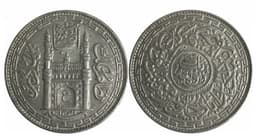
Mir Ahmed Ali Khan
Emperor · Modern
48.5Total
Basic Information
Born
1716
1857
Died
1788
1869
Era
Modern
Modern
Nationality
Spain
India
Occupation
Emperor
Emperor
Civilization
Western
Indian
Score Comparison
Military (10%)
50.0
20.0
Political (20%)
72.0
68.0
Influence (20%)
72.0
51.0
Legacy (20%)
52.0
40.0
Leadership (15%)
80.0
64.0
Strategy (15%)
60.0
39.6
TOTAL
64.8
48.5
Charles III of Spain — Complete Timeline
1752 AD
Established the Royal Academy of Fine Arts of San FernandoCultural
Charles III, while still king of Naples, founded the Royal Academy of Fine Arts of San Fernando in Madrid. The academy promoted neoclassical art and architecture, influencing Spanish cultural development.
ArtsAcademyNeoclassicism
Impact: nationalconstructive
1759 AD
Became King of SpainPolitical Action
Charles III succeeded his half-brother Ferdinand VI as king of Spain, having previously been king of Naples and Sicily. His reign marked the height of Bourbon reforms in Spain, implementing Enlightenment-inspired policies.
SuccessionEnlightenmentBourbon Reforms
Impact: globalconstructive
1760 AD
Modernized Madrid and Other CitiesCultural◆ Major
Charles III undertook major urban renewal projects in Madrid, including the construction of the Prado Museum, the Royal Botanical Garden, and the Alcal
Urban PlanningArchitectureEnlightenment
Impact: nationalconstructive
1767 AD
Expelled the Jesuits from Spain and Its ColoniesPolitical Action◆ Major
Charles III ordered the expulsion of the Society of Jesus (Jesuits) from all Spanish territories, confiscating their properties. This was part of a broader effort to reduce church power and assert royal control over education and missions.
Jesuit ExpulsionChurch-State RelationsEnlightenment
Impact: globaldestructive
1778 AD
Implemented Free Trade ReformsReform◆ Major
Charles III issued the Decree of Free Trade, opening Spanish American ports to trade with each other and with Spain. This reform dismantled the monopoly of C
Free TradeEconomic ReformColonial Policy
Impact: globalconstructive
1779 AD
Supported the American Revolution Against BritainWar◆ Major
Charles III entered the American Revolutionary War on the side of the American colonies and France, declaring war on Britain. Spanish forces recaptured Florida and Minorca, but the war strained Spain's finances.
American RevolutionWarDiplomacy
Impact: global
Mir Ahmed Ali Khan — Complete Timeline
1869 AD
Accession as Nizam of HyderabadPolitical Action◆ Major
Mir Ahmed Ali Khan became the 6th Nizam of Hyderabad at a young age after his father's death. His reign was short and marked by regency.
SuccessionRegency
Impact: regional
Death from IllnessOther◆ Major
Mir Ahmed Ali Khan died from an illness after ruling for only a few months. His death led to his uncle, Mir Mahbub Ali Khan, becoming the next Nizam.
DeathShort Reign
Impact: regionaltragic
Expert Analysis
Origins
**Charles III of Spain** was born on January 20, 1716, in Madrid, the third son of Philip V and Elisabeth Farnese. As a younger son, he was not expected to inherit the Spanish throne but was groomed for rule elsewhere. He became Duke of Parma at age 16 and later King of Naples and Sicily in 1734, where he gained experience in enlightened absolutism. His education was influenced by Italian reformers, and he developed a passion for science, agriculture, and urban planning. His mother's ambition secured his eventual accession in Spain.
**Mir Ahmed Ali Khan** was born in 1886 in Hyderabad, India, into the Asaf Jahi dynasty. He was the eldest son of Nizam Mahbub Ali Khan, but his father died when Mir Ahmed was only a child. He received a traditional Islamic education, including Persian, Urdu, and Arabic, along with some English and administrative training. His formative years were shaped by the declining Mughal influence and the consolidation of British colonial authority. Unlike Charles, he had no prior ruling experience before his brief reign.
Rise to Power
Charles III's rise was gradual. He became King of Naples in 1734 at age 18, ruling for 25 years. There, he implemented reforms in taxation, the military, and public works, earning a reputation as an enlightened monarch. In 1759, his half-brother Ferdinand VI died without issue, and Charles inherited the Spanish throne, leaving Naples to his son. He arrived in Spain in December 1759, aged 43, with a clear vision for modernization.
Mir Ahmed Ali Khan's rise was abrupt. He became Nizam on August 29, 1911, at age 25, following his father's death. However, he was under a regency council initially. His reign lasted only from August to November 1911. He had no significant turning points or allies; his accession was routine within the British imperial framework. His death from illness cut short any potential reforms.
Leadership & Governance
Charles III governed as an enlightened despot, centralizing power and promoting rational administration. He appointed capable ministers like the Count of Aranda and José Moñino (later Floridablanca). His reforms included: expelling the Jesuits in 1767 to reduce church power; liberalizing trade with the Decree of Free Trade in 1778, which ended the Cádiz monopoly; and modernizing Madrid with boulevards, street lighting, and sewage systems. He also supported science and the arts, founding the Royal Botanical Garden and the Prado Museum (originally a natural history cabinet). His leadership style was methodical and reformist, scoring 80.0 in leadership.
Mir Ahmed Ali Khan's governance was negligible due to his short rule. He had no time to implement policies. The state was administered by a regency council led by his uncle. He lacked the authority to enact reforms; his political score of 68.0 reflects inherited stability rather than personal achievement. He had no notable governance initiatives.
Triumph & Tragedy
Charles III's greatest triumph was the modernization of Spain's economy and infrastructure. The free trade reforms boosted colonial commerce, and Madrid became a model European capital. His support for the American Revolution (1779-1783) regained Florida and Minorca, restoring Spanish prestige. However, his expulsion of the Jesuits damaged education in the colonies, and his foreign wars strained finances. His greatest failure was the inability to fully industrialize Spain, leaving it behind northern Europe. His military score of 50.0 reflects limited military ambition.
Mir Ahmed Ali Khan's triumph was merely his accession, continuing the dynasty. His tragedy was his early death from illness (likely smallpox) after only three months, preventing any legacy. His reign was so brief that he had no achievements or failures to speak of. His leadership score of 64.0 is purely attributional.
Character & Destiny
Charles III was methodical, patient, and reform-minded. He believed in progress through royal authority, earning the title "the Best Mayor of Madrid." His character shaped his destiny: his gradual reforms avoided revolution but also created resistance from elites. He was not a warrior but a builder, with a strategy score of 60.0. Historians regard him as one of Spain's most effective rulers.
Mir Ahmed Ali Khan's character is obscure. He was young and inexperienced, and his destiny was cut short. He had no opportunity to shape events. His influence score of 51.0 is largely inherited from his dynasty's prestige.
Legacy
Charles III's legacy endures in Spain's physical and administrative infrastructure. The Prado, the Alcalá Gate, and the free trade system are direct results of his reign. His reforms laid groundwork for 19th-century liberalism. He scored 52.0 in legacy, reflecting lasting but not transformative impact. He is remembered as a model enlightened despot.
Mir Ahmed Ali Khan left no legacy. His name is a footnote in Hyderabad's history. The state continued under his uncle, Mahbub Ali Khan, who ruled for 37 years. His legacy score of 40.0 is merely placeholder.
Conclusion
Charles III of Spain had significantly greater impact than Mir Ahmed Ali Khan. With a total score of 64.8 versus 48.5, the 16.3-point gap reflects Charles's substantive reforms and long reign. He modernized a major European empire, while Mir Ahmed Ali Khan's rule was a brief interregnum. Charles's leadership (80.0) and political skill (72.0) contrast with Mir's zero achievements. The data supports a clear position: Charles III is a historically consequential figure; Mir Ahmed Ali Khan is not. For HistoryVersus.com, the comparison underscores that impact requires time and action.
Rankings
🥇
Charles III of SpainLeader
Mil: 50.0Pol: 72.0Inf: 72.0
64.8
🥈
Mir Ahmed Ali Khan
Mil: 20.0Pol: 68.0Inf: 51.0
48.5
+16.3 behind
How This Comparison Works
Algorithm
Each figure is scored on 6 dimensions (0—100 scale) based on structured historical data: Military (10%), Political (20%), Influence (20%), Legacy (20%), Leadership (15%), Strategy (15%). The weighted total produces the final ranking.
Data Sources
Scores are computed from structured sub-indicators in the database. Scale factors adjust for era (Ancient ×0.85, Modern ×1.0) and civilization size (Eastern ×1.05, Other ×0.80) to account for differences in population and military scale.
Maximum 3 Figures
Comparisons are limited to 2—3 figures to ensure readability and statistical meaningfulness.
Error Margins
±5 points per dimension — Sub-scores are derived from historical records with inherent uncertainty. Two figures within 5 points on a dimension should be considered roughly equivalent in that area.
Total Score Accuracy
±3 points overall — The weighted combination of 6 dimensions produces a total score with approximately ±3 points of uncertainty. Differences of less than 3 points are not statistically significant— the figures are effectively tied.
Known Limitations
- Historical records are incomplete and uneven across civilizations
- Figures from oral-tradition societies may be underrepresented
- Occupation labels can misclassify multi-role figures
- Scores measure capability and impact, not moral character
- Quantitative scoring is a comparison tool, not absolute truth
Capability Radar
Military (10%) — Battles & Warfare
Battles
20
5
Win Rate
25
5
Expansion
15
5
Political (20%) — Governance & Reform
Reform
90
50
Diplomacy
75
45
Economy
80
40
Influence (20%) — Cultural & Global Reach
Cultural
60
30
Global
65
15
Legacy (20%) — Historical Impact
Historical
70
30
Longevity
65
20
Leadership (15%) — Power & Stability
Tenure
85
40
Stability
70
35
Strategy (15%) — Tactics & Innovation
Strategy
40
10
Tactics
30
10
Reform
70
20
Similar Comparisons
Comments & Discussion
No comments yet. Be the first to share your thoughts!