Loading...
This comparison has not been analyzed yet.
One-time AI generation (~1 minute). Scores and timeline are already available below.
Minkyinyo vs Pulakeshin II
Pulakeshin II leads by 11.9 pts · 2 figures compared
…

Minkyinyo
Emperor · Medieval
50.3Total
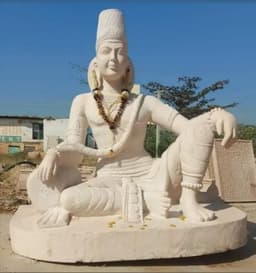
Pulakeshin II
Emperor · Medieval
62.2Total
Basic Information
Born
1459
610
Died
1530
642
Era
Medieval
Medieval
Nationality
Myanmar
India
Occupation
Emperor
Emperor
Civilization
Eastern
Indian
Score Comparison
Military (10%)
10.0
76.0
Political (20%)
54.7
60.0
Influence (20%)
53.3
62.0
Legacy (20%)
45.8
56.0
Leadership (15%)
74.0
62.4
Strategy (15%)
51.7
67.2
TOTAL
50.3
62.2
Minkyinyo — Complete Timeline
1510 AD
Minkyinyo's military campaigns against AvaWar◆ Major
Minkyinyo led a series of military campaigns against the Ava Kingdom, gradually expanding Toungoo's territory. He captured key towns and fortresses, weakening Ava and establishing Toungoo as a major power in Upper Burma.
WarExpansionAva
Impact: regional
Minkyinyo's administrative reformsReform
Minkyinyo implemented administrative reforms to centralize power and improve governance in the Toungoo kingdom. He established a system of provincial governors and standardized taxation, which strengthened the state's ability to wage war and maintain order.
ReformAdministrationCentralization
Impact: regionalconstructive
Founding of the Toungoo dynastyPolitical Action
Minkyinyo declared independence from the Ava Kingdom and established the Toungoo dynasty at the city of Toungoo. He consolidated control over central Burma and laid the foundation for the reunification of the country after the collapse of the Pagan Empire.
DynastyIndependenceUnification
Impact: regionalconstructive
Pulakeshin II — Complete Timeline
625 AD
Received an Embassy from the Sassanid Persian KingPolitical Action
Pulakeshin II received a diplomatic mission from the Sassanid Persian king Khosrow II, as recorded in the Aihole inscription. This embassy indicates the Chalukya kingdom's international prestige and trade connections with the Persian Gulf.
DiplomacyInternational Relations
Impact: regional
630 AD
Defeated Emperor Harsha at the Battle of NarmadaWar
Pulakeshin II repelled an invasion by the northern emperor Harsha of Kannauj on the banks of the Narmada River. This victory established the Chalukya kingdom as the dominant power in the Deccan and prevented Harsha from expanding southward.
BattleChalukya-Harsha War
Impact: regional
634 AD
Issued the Aihole InscriptionCultural
Pulakeshin II commissioned the Aihole inscription, composed by the poet Ravikirti. The inscription details his military campaigns, including the defeat of Harsha, and provides a key historical source for the Chalukya dynasty.
InscriptionPropaganda
Impact: regional
642 AD
Conquered the Pallava Capital KanchipuramWar◆ Major
Pulakeshin II captured the Pallava capital of Kanchipuram, defeating the Pallava king Mahendravarman I. This conquest extended Chalukya control into Tamil country and marked the height of his empire's territorial extent.
ConquestPallava War
Impact: regional
Killed in Battle by the PallavasWar◆ Major
Pulakeshin II was killed in battle against the Pallava king Narasimhavarman I, who avenged the earlier capture of Kanchipuram. The Pallavas sacked the Chalukya capital Vatapi, and Pulakeshin's death led to a temporary decline of the Chalukya empire.
BattleDeath
Impact: regionaltragic
This comparison has not been analyzed yet.
One-time AI generation (~1 minute). Scores and timeline are already available below.
Rankings
🥇
Pulakeshin IILeader
Mil: 76.0Pol: 60.0Inf: 62.0
62.2
🥈
Minkyinyo
Mil: 10.0Pol: 54.7Inf: 53.3
50.3
+11.9 behind
How This Comparison Works
Algorithm
Each figure is scored on 6 dimensions (0—100 scale) based on structured historical data: Military (10%), Political (20%), Influence (20%), Legacy (20%), Leadership (15%), Strategy (15%). The weighted total produces the final ranking.
Data Sources
Scores are computed from structured sub-indicators in the database. Scale factors adjust for era (Ancient ×0.85, Modern ×1.0) and civilization size (Eastern ×1.05, Other ×0.80) to account for differences in population and military scale.
Maximum 3 Figures
Comparisons are limited to 2—3 figures to ensure readability and statistical meaningfulness.
Error Margins
±5 points per dimension — Sub-scores are derived from historical records with inherent uncertainty. Two figures within 5 points on a dimension should be considered roughly equivalent in that area.
Total Score Accuracy
±3 points overall — The weighted combination of 6 dimensions produces a total score with approximately ±3 points of uncertainty. Differences of less than 3 points are not statistically significant— the figures are effectively tied.
Known Limitations
- Historical records are incomplete and uneven across civilizations
- Figures from oral-tradition societies may be underrepresented
- Occupation labels can misclassify multi-role figures
- Scores measure capability and impact, not moral character
- Quantitative scoring is a comparison tool, not absolute truth
Capability Radar
Military (10%) — Battles & Warfare
Battles
40
75
Win Rate
45
80
Expansion
45
85
Political (20%) — Governance & Reform
Reform
50
65
Diplomacy
40
75
Economy
35
70
Influence (20%) — Cultural & Global Reach
Cultural
30
60
Global
20
50
Legacy (20%) — Historical Impact
Historical
40
65
Longevity
35
55
Leadership (15%) — Power & Stability
Tenure
55
70
Stability
30
68
Strategy (15%) — Tactics & Innovation
Strategy
40
82
Tactics
35
78
Reform
50
60
Similar Comparisons
Comments & Discussion
No comments yet. Be the first to share your thoughts!