Loading...
Henry VII vs Minkyinyo
Minkyinyo leads by 3.8 pts · 2 figures compared
…
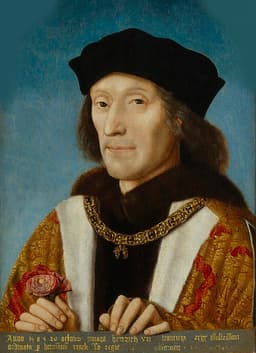
Henry VII
Emperor · Medieval
46.5Total

Minkyinyo
Emperor · Medieval
50.3Total
Basic Information
Born
1275
1459
Died
1313
1530
Era
Medieval
Medieval
Nationality
Holy Roman Empire
Myanmar
Occupation
Emperor
Emperor
Civilization
Western
Eastern
Score Comparison
Military (10%)
55.0
10.0
Political (20%)
37.9
54.7
Influence (20%)
52.5
53.3
Legacy (20%)
41.7
45.8
Leadership (15%)
48.4
74.0
Strategy (15%)
45.0
51.7
TOTAL
46.5
50.3
Henry VII — Complete Timeline
1308 AD
Elected King of GermanyPolitical Action◆ Major
Henry VII of Luxembourg was elected King of Germany after the assassination of Albert I. His election was supported by the prince-electors, who sought a compromise candidate to end the Habsburg dominance.
ElectionLuxembourgGerman Kingdom
Impact: regional
1310 AD
Led Campaign in ItalyWar◆ Major
Henry VII of Luxembourg led a military campaign into Italy to assert imperial authority over the Guelph and Ghibelline factions. He captured several cities but faced resistance from Florence and the Papal States, leading to a prolonged conflict.
Military CampaignItalyImperial Authority
Impact: regional
1312 AD
Crowned Holy Roman EmperorPolitical Action
Henry VII of Luxembourg was crowned Holy Roman Emperor by Pope Clement V in Rome. This coronation was the first imperial coronation in Rome since Frederick II, and it revived the imperial ideal of universal rule.
CoronationHoly Roman EmpirePapacy
Impact: globalconstructive
1313 AD
Died of Malaria in BuonconventoOther◆ Major
Henry VII of Luxembourg died of malaria in Buonconvento, Italy, while preparing to attack Florence. His death ended his Italian campaign and the Luxembourg dynasty's ambitions in Italy, leading to a new interregnum.
DeathItalyLuxembourg
Impact: regionaltragic
Minkyinyo — Complete Timeline
1510 AD
Minkyinyo's military campaigns against AvaWar◆ Major
Minkyinyo led a series of military campaigns against the Ava Kingdom, gradually expanding Toungoo's territory. He captured key towns and fortresses, weakening Ava and establishing Toungoo as a major power in Upper Burma.
WarExpansionAva
Impact: regional
Minkyinyo's administrative reformsReform
Minkyinyo implemented administrative reforms to centralize power and improve governance in the Toungoo kingdom. He established a system of provincial governors and standardized taxation, which strengthened the state's ability to wage war and maintain order.
ReformAdministrationCentralization
Impact: regionalconstructive
Founding of the Toungoo dynastyPolitical Action
Minkyinyo declared independence from the Ava Kingdom and established the Toungoo dynasty at the city of Toungoo. He consolidated control over central Burma and laid the foundation for the reunification of the country after the collapse of the Pagan Empire.
DynastyIndependenceUnification
Impact: regionalconstructive
Expert Analysis
Origins
Henry VII of Luxembourg was born around 1275 into the House of Luxembourg, a minor noble family in the Holy Roman Empire. His father was Henry III of Luxembourg, and his mother was Beatrice of Avesnes. Little is known of his early education, but he was raised in the chivalric and courtly traditions of the time. He became Count of Luxembourg upon his father's death in 1288 and later served as an advisor to King Adolf of Germany.
Minkyinyo, born in 1459, was the son of King Narapati I of the Ava Kingdom in modern-day Myanmar. His early life was shaped by the declining power of Ava, which faced internal rebellions and external pressures from the Shan states. As a prince, he was appointed governor of the remote town of Toungoo in 1485, a strategic frontier outpost. This posting gave him firsthand experience in military command and local governance, away from the court intrigues of Ava.
Rise to Power
Henry VII's rise began with the assassination of King Albert I in 1308. The prince-electors, seeking a compromise candidate not aligned with the powerful Habsburgs, elected Henry as King of Germany on November 27, 1308. He secured papal recognition and was crowned Holy Roman Emperor by Pope Clement V in Rome on June 29, 1312—the first imperial coronation in Rome since Frederick II in 1220. This marked the peak of his authority, but his power was limited by the fragmented nature of the empire.
Minkyinyo's rise was a gradual process of consolidation. In 1485, he was appointed governor of Toungoo, a small, fortified city. Over the next two decades, he built up its defenses and economy, attracting refugees from war-torn Ava. In 1510, he formally declared independence from Ava, establishing the Toungoo dynasty. He then waged a series of campaigns against Ava, capturing key towns like Prome (Pyay) in 1512 and extending his control over central Myanmar. His military score of 10.0 reflects limited direct combat, but his political score of 54.7 indicates his strategic acumen in forging alliances and exploiting Ava's weaknesses.
Leadership & Governance
Henry VII's leadership style was that of a medieval emperor seeking to restore imperial authority in Italy. He attempted to mediate between the Guelph (pro-papal) and Ghibelline (pro-imperial) factions, but his efforts often exacerbated tensions. His governance was characterized by reliance on feudal lords and church support, with limited administrative reforms. For example, he issued the 'Constitutio contra incendiarios' to curb arson, but his rule lacked the centralized bureaucracy seen in contemporary France or England. His leadership score of 48.4 reflects these mixed efforts.
Minkyinyo, in contrast, was a pragmatic administrator who centralized power in Toungoo. He implemented administrative reforms, appointing loyal governors to provinces and standardizing tax collection. He also promoted agriculture and trade, turning Toungoo into a prosperous center. His leadership score of 74.0 reflects his ability to build a stable state from a small base. Unlike Henry VII, who relied on existing feudal structures, Minkyinyo created a new administrative system that his successors would use to conquer all of Myanmar.
Triumph & Tragedy
Henry VII's greatest triumph was his coronation as emperor in Rome, a symbolic victory that revived the imperial ideal. He also successfully asserted imperial authority over several Italian cities, including Milan and Genoa. However, his tragedy was his untimely death from malaria in Buonconvento on August 24, 1313, while preparing to attack Florence. His Italian campaign collapsed, and the Luxembourg dynasty never regained such influence. His military score of 55.0 reflects modest success in Italy, but his political score of 37.9 shows his inability to build lasting alliances.
Minkyinyo's triumph was founding the Toungoo dynasty, which would go on to unify Myanmar under his son Tabinshwehti and grandson Bayinnaung. He successfully defended Toungoo against Ava's counterattacks and expanded its territory. His tragedy was that he died in 1531 before seeing the full extent of his dynasty's success. His legacy score of 45.8 is moderate, but his influence score of 53.3 reflects the long-term impact of his state-building efforts.
Character & Destiny
Henry VII was described by contemporaries as pious and chivalrous, but also as overly idealistic. His decision to lead a campaign into Italy without sufficient military resources or reliable allies proved fatal. His character—trusting in papal support and feudal obligations—was ill-suited for the complex politics of Italy. His destiny was cut short by disease, a common fate for medieval rulers.
Minkyinyo was a cautious and methodical leader. He avoided direct confrontation with Ava's main forces, instead using guerrilla tactics and consolidating his gains. His patience and administrative focus allowed him to build a strong foundation. His destiny was to die naturally in power, having secured his dynasty's future. His strategy score of 51.7 underscores his careful planning.
Legacy
Henry VII's legacy is primarily symbolic. He is remembered as the last emperor to be crowned in Rome before the Avignon Papacy and the Hundred Years' War shifted European power dynamics. The Luxembourg dynasty continued but never regained the imperial throne. His Italian campaign influenced later imperial interventions, but his immediate impact was limited. He scored 41.7 in legacy, reflecting his minor role in history.
Minkyinyo's legacy is more substantial. He founded the Toungoo dynasty, which would create the largest empire in Southeast Asian history under Bayinnaung. His administrative reforms became the model for subsequent Burmese kingdoms. He is remembered as a national unifier in Myanmar, though his direct achievements were modest. His legacy score of 45.8 is slightly higher than Henry's, but his influence score of 53.3 indicates a broader long-term impact.
Conclusion
Minkyinyo had a greater impact than Henry VII, despite his lower military score (10.0 vs 55.0). Henry VII's reign was a brief flash of imperial glory that ended in failure, while Minkyinyo's dynasty reshaped Southeast Asia for centuries. Minkyinyo's political (54.7 vs 37.9), influence (53.3 vs 52.5), and leadership (74.0 vs 48.4) scores all surpass Henry's. The total score difference of 3.8 points in Minkyinyo's favor reflects his more enduring contributions. While Henry VII's coronation was a symbolic high point of medieval empire, Minkyinyo's state-building created a lasting political entity. Therefore, Minkyinyo is the more significant figure in historical terms.
Rankings
🥇
MinkyinyoLeader
Mil: 10.0Pol: 54.7Inf: 53.3
50.3
🥈
Henry VII
Mil: 55.0Pol: 37.9Inf: 52.5
46.5
+3.8 behind
How This Comparison Works
Algorithm
Each figure is scored on 6 dimensions (0—100 scale) based on structured historical data: Military (10%), Political (20%), Influence (20%), Legacy (20%), Leadership (15%), Strategy (15%). The weighted total produces the final ranking.
Data Sources
Scores are computed from structured sub-indicators in the database. Scale factors adjust for era (Ancient ×0.85, Modern ×1.0) and civilization size (Eastern ×1.05, Other ×0.80) to account for differences in population and military scale.
Maximum 3 Figures
Comparisons are limited to 2—3 figures to ensure readability and statistical meaningfulness.
Error Margins
±5 points per dimension — Sub-scores are derived from historical records with inherent uncertainty. Two figures within 5 points on a dimension should be considered roughly equivalent in that area.
Total Score Accuracy
±3 points overall — The weighted combination of 6 dimensions produces a total score with approximately ±3 points of uncertainty. Differences of less than 3 points are not statistically significant— the figures are effectively tied.
Known Limitations
- Historical records are incomplete and uneven across civilizations
- Figures from oral-tradition societies may be underrepresented
- Occupation labels can misclassify multi-role figures
- Scores measure capability and impact, not moral character
- Quantitative scoring is a comparison tool, not absolute truth
Capability Radar
Military (10%) — Battles & Warfare
Battles
35
40
Win Rate
40
45
Expansion
30
45
Political (20%) — Governance & Reform
Reform
30
50
Diplomacy
45
40
Economy
25
35
Influence (20%) — Cultural & Global Reach
Cultural
25
30
Global
20
20
Legacy (20%) — Historical Impact
Historical
30
40
Longevity
20
35
Leadership (15%) — Power & Stability
Tenure
40
55
Stability
20
30
Strategy (15%) — Tactics & Innovation
Strategy
35
40
Tactics
30
35
Reform
20
50
Similar Comparisons
Comments & Discussion
No comments yet. Be the first to share your thoughts!