Loading...
This comparison has not been analyzed yet.
One-time AI generation (~1 minute). Scores and timeline are already available below.
Miguel de la Madrid vs Sushun
Miguel de la Madrid leads by 21.7 pts · 2 figures compared
…

Miguel de la Madrid
Politician · Modern
56.1Total
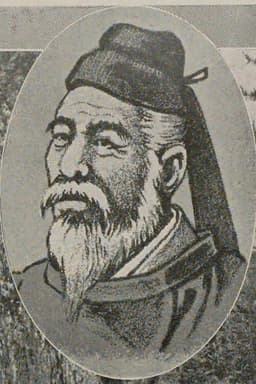
Sushun
Politician · Modern
34.4Total
Basic Information
Born
1934
1816
Died
—
1861
Era
Modern
Modern
Nationality
Mexico
China
Occupation
Politician
Politician
Civilization
Western
Eastern
Score Comparison
Military (10%)
49.8
10.2
Political (20%)
72.0
25.0
Influence (20%)
55.7
45.5
Legacy (20%)
48.3
37.5
Leadership (15%)
68.0
34.6
Strategy (15%)
40.9
36.4
TOTAL
56.1
34.4
Miguel de la Madrid — Complete Timeline
1983 AD
Implementation of neoliberal economic reformsReform
President Miguel de la Madrid initiated structural adjustment policies, including trade liberalization, privatization of state enterprises, and fiscal austerity. These reforms, aligned with IMF conditions, aimed to reduce inflation and debt but led to social hardship and labor unrest.
NeoliberalismEconomic ReformPrivatization
Impact: national
1985 AD
1985 Mexico City earthquake responseOther◆ Major
A magnitude 8.0 earthquake struck Mexico City on September 19, 1985, killing thousands and destroying buildings. De la Madrid's government was criticized for a slow and inadequate response, leading to public anger and the rise of civil society organizations.
EarthquakeDisaster ResponseCriticism
Impact: nationaltragic
1986 AD
Admission to the General Agreement on Tariffs and Trade (GATT)Political Action◆ Major
De la Madrid secured Mexico's entry into GATT, committing to reduce trade barriers and integrate into the global economy. This was a key step in abandoning protectionism and paved the way for NAFTA.
TradeGlobalizationGATT
Impact: globalconstructive
Sushun — Complete Timeline
1860 AD
Opposed the Convention of PekingPolitical Action
During the Second Opium War, Sushun opposed signing the Convention of Peking, which ceded territories to Britain and France. His resistance reflected his hardline stance against foreign concessions.
Opium WarDiplomacyForeign Relations
Impact: national
1861 AD
Appointed as regent for the Tongzhi EmperorPolitical Action◆ Major
Upon the death of the Xianfeng Emperor, Sushun was appointed as one of eight regents for the young Tongzhi Emperor. He became the de facto leader of the regency council, controlling state affairs.
RegencyPower TransitionQing Court
Impact: national
Executed in the Xinyou CoupPolitical Action
Empress Dowagers Cixi and Ci'an, allied with Prince Gong, staged a coup against the regents. Sushun was arrested, tried for treason, and publicly executed by beheading, ending his political influence.
CoupExecutionPower Struggle
Impact: nationaltragic
This comparison has not been analyzed yet.
One-time AI generation (~1 minute). Scores and timeline are already available below.
Rankings
🥇
Miguel de la MadridLeader
Mil: 49.8Pol: 72.0Inf: 55.7
56.1
🥈
Sushun
Mil: 10.2Pol: 25.0Inf: 45.5
34.4
+21.7 behind
How This Comparison Works
Algorithm
Each figure is scored on 6 dimensions (0—100 scale) based on structured historical data: Military (10%), Political (20%), Influence (20%), Legacy (20%), Leadership (15%), Strategy (15%). The weighted total produces the final ranking.
Data Sources
Scores are computed from structured sub-indicators in the database. Scale factors adjust for era (Ancient ×0.85, Modern ×1.0) and civilization size (Eastern ×1.05, Other ×0.80) to account for differences in population and military scale.
Maximum 3 Figures
Comparisons are limited to 2—3 figures to ensure readability and statistical meaningfulness.
Error Margins
±5 points per dimension — Sub-scores are derived from historical records with inherent uncertainty. Two figures within 5 points on a dimension should be considered roughly equivalent in that area.
Total Score Accuracy
±3 points overall — The weighted combination of 6 dimensions produces a total score with approximately ±3 points of uncertainty. Differences of less than 3 points are not statistically significant— the figures are effectively tied.
Known Limitations
- Historical records are incomplete and uneven across civilizations
- Figures from oral-tradition societies may be underrepresented
- Occupation labels can misclassify multi-role figures
- Scores measure capability and impact, not moral character
- Quantitative scoring is a comparison tool, not absolute truth
Capability Radar
Military (10%) — Battles & Warfare
Battles
29
16
Win Rate
31
19
Expansion
36
20
Political (20%) — Governance & Reform
Reform
70
10
Diplomacy
55
20
Economy
65
10
Influence (20%) — Cultural & Global Reach
Cultural
30
5
Global
45
5
Legacy (20%) — Historical Impact
Historical
50
20
Longevity
40
5
Leadership (15%) — Power & Stability
Tenure
60
15
Stability
45
5
Strategy (15%) — Tactics & Innovation
Strategy
37
22
Tactics
40
25
Reform
41
30
Similar Comparisons
Comments & Discussion
No comments yet. Be the first to share your thoughts!