Loading...
Leon Blum vs Sushun
Leon Blum leads by 20.0 pts · 2 figures compared
…
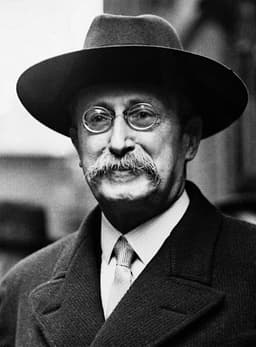
Leon Blum
Politician · Modern
54.4Total
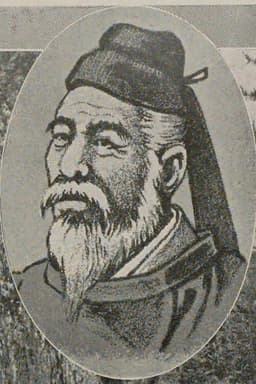
Sushun
Politician · Modern
34.4Total
Basic Information
Born
1872
1816
Died
1950
1861
Era
Modern
Modern
Nationality
France
China
Occupation
Politician
Politician
Civilization
Western
Eastern
Score Comparison
Military (10%)
50.0
10.2
Political (20%)
70.0
25.0
Influence (20%)
55.0
45.5
Legacy (20%)
52.0
37.5
Leadership (15%)
53.2
34.6
Strategy (15%)
41.8
36.4
TOTAL
54.4
34.4
Leon Blum — Complete Timeline
1936 AD
Matignon AgreementsReform◆ Major
Blum's government mediated the Matignon Agreements between employers and unions, ending a wave of strikes. The agreements mandated paid vacations, a 40-hour work week, and wage increases, transforming French labor relations and establishing key welfare state elements.
Labor ReformStrikesSocial Policy
Impact: nationalprogressive
Formation of the Popular Front GovernmentPolitical Action
Blum became Prime Minister of France leading the Popular Front coalition, a left-wing alliance of Socialists, Radicals, and Communists. His government enacted the Matignon Agreements, granting workers paid leave, a 40-hour work week, and collective bargaining rights, significantly advancing labor rights.
Popular FrontLabor RightsSocial Reform
Impact: nationalprogressive
1938 AD
Second Popular Front GovernmentPolitical Action
Blum formed a short-lived second government in March 1938, lasting only one month. He sought to broaden the coalition to address the growing threat of Nazi Germany but failed to secure support for his economic and defense policies, leading to his resignation.
Popular FrontGovernment FormationThird Republic
Impact: national
1942 AD
Arrest and Trial at RiomPolitical Action◆ Major
The Vichy regime arrested Blum and put him on trial at Riom for allegedly causing France's defeat in 1940. Blum used the trial to defend the Third Republic and criticize the Vichy government. The trial was suspended in 1943, and Blum was deported to Buchenwald concentration camp.
Vichy FranceTrialWorld War II
Impact: nationaltragic
1946 AD
Interim Presidency of the Provisional GovernmentPolitical Action
After World War II, Blum served as interim President of the Provisional Government of the French Republic from December 1946 to January 1947. He oversaw the transition to the Fourth Republic and worked to stabilize the post-war economy and political system.
Fourth RepublicPost-WarProvisional Government
Impact: nationalconstructive
Sushun — Complete Timeline
1860 AD
Opposed the Convention of PekingPolitical Action
During the Second Opium War, Sushun opposed signing the Convention of Peking, which ceded territories to Britain and France. His resistance reflected his hardline stance against foreign concessions.
Opium WarDiplomacyForeign Relations
Impact: national
1861 AD
Appointed as regent for the Tongzhi EmperorPolitical Action◆ Major
Upon the death of the Xianfeng Emperor, Sushun was appointed as one of eight regents for the young Tongzhi Emperor. He became the de facto leader of the regency council, controlling state affairs.
RegencyPower TransitionQing Court
Impact: national
Executed in the Xinyou CoupPolitical Action
Empress Dowagers Cixi and Ci'an, allied with Prince Gong, staged a coup against the regents. Sushun was arrested, tried for treason, and publicly executed by beheading, ending his political influence.
CoupExecutionPower Struggle
Impact: nationaltragic
Expert Analysis
Origins
Leon Blum was born on April 9, 1872, in Paris, France, into a Jewish middle-class family. His father was a ribbon manufacturer. Blum studied law at the Lycée Henri-IV and the University of Paris, becoming a prominent literary critic and lawyer. He was influenced by the Dreyfus Affair, which drew him into politics.
Sushun (also known as Su Shun) was born in 1816 into the Manchu Aisin Gioro clan, the imperial family of the Qing dynasty. He was a descendant of Nurhaci. He passed the imperial examinations and served in various official posts, rising through the bureaucracy. His family background gave him close ties to the imperial court.
Rise to Power
Blum entered politics as a member of the French Socialist Party (SFIO). He became a leading figure after the assassination of Jean Jaurès in 1914. In 1936, the Popular Front, a coalition of left-wing parties, won the legislative elections, and Blum became Prime Minister on June 4, 1936. His rise was marked by his intellectual reputation and his ability to unite socialists and radicals.
Sushun rose to power through his role as a trusted official of the Xianfeng Emperor. In 1860, during the Second Opium War, he opposed the Convention of Peking, which ceded territories to Britain and France. After the emperor's death in 1861, Sushun was appointed as one of eight regents for the young Tongzhi Emperor, becoming the de facto leader of the regency council.
Leadership & Governance
Blum's leadership was characterized by democratic socialism and social reform. His government implemented the Matignon Agreements in June 1936, which granted paid vacations, a 40-hour work week, and collective bargaining rights. He also nationalized some industries and increased wages. Blum faced opposition from conservatives and economic challenges, including inflation and capital flight. His governance scored 53.2 in leadership, reflecting his reformist but short-lived administrations.
Sushun's leadership was autocratic and conservative. As regent, he centralized power and resisted foreign influence. He opposed reforms and maintained traditional Qing policies. His leadership score of 34.6 indicates his inability to adapt to changing circumstances. His governance was marked by infighting among regents and opposition from Empress Dowager Cixi.
Triumph & Tragedy
Blum's greatest success was the formation of the Popular Front government and the Matignon Agreements, which improved workers' rights and set a precedent for social welfare in France. However, his government fell in June 1937 due to economic pressures and political divisions. His second government in 1938 lasted only one month. The Vichy regime arrested him in 1940 and put him on trial at Riom; his defense of the Third Republic became a moral triumph. After the war, he served as interim President of the Provisional Government from 1946 to 1947.
Sushun's triumph was his rise to regent, but his tragedy was his execution in the Xinyou Coup of 1861. He was arrested, tried for treason, and publicly executed by Empress Dowagers Cixi and Ci'an, allied with Prince Gong. His resistance to the Convention of Peking was principled but futile, as the treaty was signed anyway.
Character & Destiny
Blum was an intellectual, principled, and committed to democracy. His character led him to pursue social justice through legal means, but his idealism sometimes clashed with political realities. His Jewish identity made him a target for anti-Semitism, yet he remained steadfast. His destiny was shaped by the rise of fascism and World War II, which interrupted his career but also vindicated his values.
Sushun was conservative, stubborn, and politically naive. He underestimated the ambition of Empress Dowager Cixi and Prince Gong. His character led him to resist change and cling to power, which ultimately caused his downfall. His destiny was sealed by the coup, which ended his life and his faction's influence.
Legacy
Blum's legacy is as a champion of social democracy. The reforms of the Popular Front influenced French labor law and the welfare state. He is remembered as a symbol of left-wing unity and resistance to fascism. His scores: political 70.0, influence 55.0, legacy 52.0. His impact on French politics is enduring, but his short tenures limited his long-term influence.
Sushun's legacy is minor. He is mostly remembered as a failed regent who opposed modernization. The Xinyou Coup led to the rise of Empress Dowager Cixi, who ruled for decades. Sushun's scores: political 25.0, influence 45.5, legacy 37.5. His legacy is overshadowed by Cixi's dominance.
Conclusion
Leon Blum had a greater impact than Sushun. Blum's total score of 54.4 significantly outpaces Sushun's 34.4, a gap of 20.0 points. Blum's political achievements in social reform and his moral stand against fascism had lasting effects on France and Europe. Sushun's influence was limited to a brief regency and his execution marked the end of his faction. While both operated in challenging political environments, Blum's democratic legacy far exceeds Sushun's autocratic failure. The data supports that Blum's leadership, political skill, and lasting contributions make him the more significant figure.
Rankings
🥇
Leon BlumLeader
Mil: 50.0Pol: 70.0Inf: 55.0
54.4
🥈
Sushun
Mil: 10.2Pol: 25.0Inf: 45.5
34.4
+20.0 behind
How This Comparison Works
Algorithm
Each figure is scored on 6 dimensions (0—100 scale) based on structured historical data: Military (10%), Political (20%), Influence (20%), Legacy (20%), Leadership (15%), Strategy (15%). The weighted total produces the final ranking.
Data Sources
Scores are computed from structured sub-indicators in the database. Scale factors adjust for era (Ancient ×0.85, Modern ×1.0) and civilization size (Eastern ×1.05, Other ×0.80) to account for differences in population and military scale.
Maximum 3 Figures
Comparisons are limited to 2—3 figures to ensure readability and statistical meaningfulness.
Error Margins
±5 points per dimension — Sub-scores are derived from historical records with inherent uncertainty. Two figures within 5 points on a dimension should be considered roughly equivalent in that area.
Total Score Accuracy
±3 points overall — The weighted combination of 6 dimensions produces a total score with approximately ±3 points of uncertainty. Differences of less than 3 points are not statistically significant— the figures are effectively tied.
Known Limitations
- Historical records are incomplete and uneven across civilizations
- Figures from oral-tradition societies may be underrepresented
- Occupation labels can misclassify multi-role figures
- Scores measure capability and impact, not moral character
- Quantitative scoring is a comparison tool, not absolute truth
Capability Radar
Military (10%) — Battles & Warfare
Battles
28
16
Win Rate
29
19
Expansion
37
20
Political (20%) — Governance & Reform
Reform
75
10
Diplomacy
65
20
Economy
60
10
Influence (20%) — Cultural & Global Reach
Cultural
50
5
Global
50
5
Legacy (20%) — Historical Impact
Historical
55
20
Longevity
45
5
Leadership (15%) — Power & Stability
Tenure
60
15
Stability
40
5
Strategy (15%) — Tactics & Innovation
Strategy
37
22
Tactics
39
25
Reform
44
30
Similar Comparisons
Comments & Discussion
No comments yet. Be the first to share your thoughts!