Loading...
Mohammed Daoud Khan vs Sushun
Mohammed Daoud Khan leads by 19.2 pts · 2 figures compared
…

Mohammed Daoud Khan
Politician · Modern
53.6Total
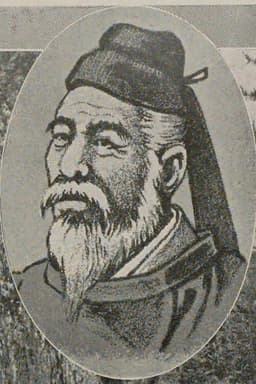
Sushun
Politician · Modern
34.4Total
Basic Information
Born
1909
1816
Died
1978
1861
Era
Modern
Modern
Nationality
Afghanistan
China
Occupation
Politician
Politician
Civilization
Middle Eastern
Eastern
Score Comparison
Military (10%)
41.6
10.2
Political (20%)
68.0
25.0
Influence (20%)
51.8
45.5
Legacy (20%)
43.3
37.5
Leadership (15%)
67.0
34.6
Strategy (15%)
54.1
36.4
TOTAL
53.6
34.4
Mohammed Daoud Khan — Complete Timeline
1950 AD
Pashtunistan Policy (1950s-1960s)Political Action◆ Major
As Prime Minister (1953-1963), Daoud aggressively pursued the Pashtunistan policy, demanding the merger of Pakistan's Pashtun-majority areas into Afghanistan. This led to severe tensions with Pakistan, including border closures and diplomatic breaks, damaging Afghanistan's economy.
PashtunistanPakistan RelationsBorder Conflict
Impact: regional
1973 AD
Abolition of the Monarchy (1973)Political Action◆ Major
Mohammed Daoud Khan led a bloodless coup on July 17, 1973, while King Zahir Shah was abroad. He abolished the monarchy and declared Afghanistan a republic, becoming its first President. This ended the 226-year rule of the Barakzai dynasty.
CoupRepublicEnd of Monarchy
Impact: national
1978 AD
Saur Revolution (1978)Political Action◆ Major
Daoud was overthrown and killed on April 28, 1978, in the Saur Revolution, a coup led by the People's Democratic Party of Afghanistan. His death marked the end of his republic and the beginning of communist rule, which led to decades of war.
CoupCommunist TakeoverDeath
Impact: nationaltragic
Sushun — Complete Timeline
1860 AD
Opposed the Convention of PekingPolitical Action
During the Second Opium War, Sushun opposed signing the Convention of Peking, which ceded territories to Britain and France. His resistance reflected his hardline stance against foreign concessions.
Opium WarDiplomacyForeign Relations
Impact: national
1861 AD
Appointed as regent for the Tongzhi EmperorPolitical Action◆ Major
Upon the death of the Xianfeng Emperor, Sushun was appointed as one of eight regents for the young Tongzhi Emperor. He became the de facto leader of the regency council, controlling state affairs.
RegencyPower TransitionQing Court
Impact: national
Executed in the Xinyou CoupPolitical Action
Empress Dowagers Cixi and Ci'an, allied with Prince Gong, staged a coup against the regents. Sushun was arrested, tried for treason, and publicly executed by beheading, ending his political influence.
CoupExecutionPower Struggle
Impact: nationaltragic
Expert Analysis
Origins
Mohammed Daoud Khan was born on July 18, 1909, in Kabul, Afghanistan, into the Musahiban royal family. He was the son of Mohammed Aziz Khan, a half-brother of King Amanullah Khan. Daoud received military training in France and Afghanistan, attending the Kabul Military Academy. His upbringing in the royal court exposed him to governance and modernization ideas.
Sushun (also known as Su Shun) was born in 1816 in Manchuria, part of the Aisin Gioro clan, the imperial family of the Qing dynasty. He was a descendant of Nurhaci. Sushun passed the imperial examinations and rose through bureaucratic ranks, serving in various posts including the Grand Council. His early career was shaped by the declining Qing state facing internal rebellions and foreign pressures.
Rise to Power
Daoud Khan became Prime Minister of Afghanistan in 1953, appointed by his cousin King Zahir Shah. He pursued a nationalist agenda, including the Pashtunistan policy, which strained relations with Pakistan. He also fostered ties with the Soviet Union, securing economic and military aid. Daoud's assertive style and centralization efforts created tensions with the monarchy. In 1963, he resigned after a dispute over foreign policy. Ten years later, on July 17, 1973, while the king was abroad, Daoud led a bloodless coup, abolished the monarchy, and declared himself President of the Republic of Afghanistan. His political score of 68.0 reflects his ability to seize power and establish a republic.
Sushun rose to prominence during the Xianfeng Emperor's reign (1850-1861). He became a trusted advisor and Grand Councillor, opposing concessions to Western powers during the Second Opium War. When the Xianfeng Emperor fled to Rehe in 1860, Sushun accompanied him and became the de facto leader of the court. Upon the emperor's death in 1861, Sushun was appointed as one of the eight regents for the young Tongzhi Emperor, effectively controlling the government. His political maneuvering earned him influence, but also enemies among the empress dowagers and Prince Gong.
Leadership & Governance
Daoud Khan's leadership was characterized by authoritarian modernization. As prime minister, he implemented five-year plans, expanded education, and built infrastructure with Soviet aid. He also promoted women's rights, including voluntary unveiling. However, his Pashtunistan policy led to border clashes with Pakistan and economic strain. As president, Daoud attempted to reduce Soviet influence and diversify foreign relations, but his repression of political opponents alienated leftists and Islamists. His military score of 41.6 reflects limited direct involvement in combat, but his strategic score of 54.1 indicates some success in navigating Cold War dynamics.
Sushun's governance was conservative and resistant to reform. He opposed the Convention of Peking (1860), which ceded Kowloon to Britain and opened more ports, arguing it weakened the dynasty. He favored traditional Confucian values and centralized control. However, his faction's corruption and arrogance alienated other courtiers. Sushun's leadership score of 34.6 and political score of 25.0 indicate ineffectiveness in navigating the Qing's decline. His strategy score of 36.4 reflects poor decision-making that led to his downfall.
Triumph & Tragedy
Daoud's greatest success was ending the monarchy and establishing a republic, a significant political shift in Afghanistan. He also modernized the economy and infrastructure, with GDP growth during his tenure. However, his failure to build broad political support and his reliance on repression led to the Saur Revolution in 1978, where he was overthrown and killed along with his family. The coup brought the communist People's Democratic Party to power, triggering decades of conflict. Daoud's legacy score of 43.3 reflects the mixed outcomes of his rule.
Sushun's triumph was his rise to regent, but his tragedy was his execution in the Xinyou Coup of 1861. Empress Dowagers Cixi and Ci'an, allied with Prince Gong, arrested Sushun and other regents, accusing them of treason. Sushun was publicly beheaded. His resistance to foreign concessions was principled but futile; the treaties were signed anyway. His influence score of 45.5 is moderate, but his overall impact was limited by his short regency.
Character & Destiny
Daoud was ambitious, decisive, and autocratic. He believed in centralized power and rapid modernization, but his intolerance of dissent created enemies. His character shaped his destiny: he seized power boldly but failed to build institutions to sustain his rule. Historical assessments note his role in modernizing Afghanistan but also his responsibility for destabilizing the country.
Sushun was stubborn, conservative, and politically inept. He underestimated the influence of the empress dowagers and Prince Gong. His opposition to reform and his faction's arrogance sealed his fate. Historians view him as a symbol of Qing intransigence that contributed to the dynasty's decline.
Legacy
Daoud Khan's legacy is contested. He is remembered as Afghanistan's first president and a modernizer, but his overthrow led to communist rule and civil war. His Pashtunistan policy remains a point of tension with Pakistan. The republic he established lasted only five years, but his actions set the stage for future conflicts. His total score of 53.6 places him above average in historical impact.
Sushun's legacy is minor. He is known primarily as a regent who opposed foreign influence but was executed in a coup. His resistance to the Convention of Peking did not prevent its signing. The Qing dynasty continued for another 50 years, but Sushun's faction lost power. His total score of 34.4 reflects limited lasting influence.
Conclusion
Mohammed Daoud Khan had a significantly greater impact on history than Sushun, with a total score of 53.6 versus 34.4. Daoud's abolition of the monarchy and modernization efforts reshaped Afghanistan, while Sushun's regency was brief and his policies ineffective. Daoud's actions, though flawed, contributed to the political evolution of Afghanistan, whereas Sushun's legacy is confined to a footnote in Qing history. The 19.2-point gap underscores Daoud's more substantial influence, despite his ultimate failure.
Rankings
🥇
Mohammed Daoud KhanLeader
Mil: 41.6Pol: 68.0Inf: 51.8
53.6
🥈
Sushun
Mil: 10.2Pol: 25.0Inf: 45.5
34.4
+19.2 behind
How This Comparison Works
Algorithm
Each figure is scored on 6 dimensions (0—100 scale) based on structured historical data: Military (10%), Political (20%), Influence (20%), Legacy (20%), Leadership (15%), Strategy (15%). The weighted total produces the final ranking.
Data Sources
Scores are computed from structured sub-indicators in the database. Scale factors adjust for era (Ancient ×0.85, Modern ×1.0) and civilization size (Eastern ×1.05, Other ×0.80) to account for differences in population and military scale.
Maximum 3 Figures
Comparisons are limited to 2—3 figures to ensure readability and statistical meaningfulness.
Error Margins
±5 points per dimension — Sub-scores are derived from historical records with inherent uncertainty. Two figures within 5 points on a dimension should be considered roughly equivalent in that area.
Total Score Accuracy
±3 points overall — The weighted combination of 6 dimensions produces a total score with approximately ±3 points of uncertainty. Differences of less than 3 points are not statistically significant— the figures are effectively tied.
Known Limitations
- Historical records are incomplete and uneven across civilizations
- Figures from oral-tradition societies may be underrepresented
- Occupation labels can misclassify multi-role figures
- Scores measure capability and impact, not moral character
- Quantitative scoring is a comparison tool, not absolute truth
Capability Radar
Military (10%) — Battles & Warfare
Battles
10
16
Win Rate
10
19
Expansion
10
20
Political (20%) — Governance & Reform
Reform
60
10
Diplomacy
40
20
Economy
30
10
Influence (20%) — Cultural & Global Reach
Cultural
30
5
Global
20
5
Legacy (20%) — Historical Impact
Historical
40
20
Longevity
20
5
Leadership (15%) — Power & Stability
Tenure
50
15
Stability
20
5
Strategy (15%) — Tactics & Innovation
Strategy
10
22
Tactics
10
25
Reform
20
30
Similar Comparisons
Comments & Discussion
No comments yet. Be the first to share your thoughts!