Loading...
This comparison has not been analyzed yet.
One-time AI generation (~1 minute). Scores and timeline are already available below.
Meral Aksener vs Saad Hariri
Meral Aksener leads by 10.8 pts · 2 figures compared
…

Meral Aksener
Politician · Modern
49.2Total
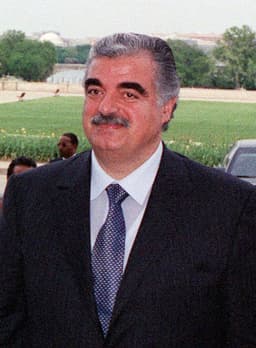
Saad Hariri
Politician · Modern
38.4Total
Basic Information
Born
1956
1970
Died
—
—
Era
Modern
Modern
Nationality
Turkey
Lebanon
Occupation
Politician
Politician
Civilization
Middle Eastern
Middle Eastern
Score Comparison
Military (10%)
34.6
15.3
Political (20%)
46.6
32.2
Influence (20%)
55.7
48.6
Legacy (20%)
45.8
37.5
Leadership (15%)
62.2
41.5
Strategy (15%)
40.4
43.2
TOTAL
49.2
38.4
Meral Aksener — Complete Timeline
2017 AD
Founded IYI (Good) PartyPolitical Action◆ Major
Aksener founded the IYI Party, a nationalist and secularist party, after leaving the MHP. The party aimed to challenge Erdogan's AKP and became a key opposition force.
Political PartyNationalismOpposition
Impact: nationalconstructive
2018 AD
Formed Nation Alliance with CHPPolitical Action◆ Major
Aksener's IYI Party joined the Nation Alliance with Kilicdaroglu's CHP and other parties to contest the 2018 elections. The alliance aimed to defeat Erdogan's AKP but fell short of a majority.
Electoral AllianceOppositionTurkey
Impact: nationalconstructive
Ran for President in 2018Political Action
Aksener initially announced her candidacy for the 2018 presidential election but withdrew to support the joint opposition candidate Muharrem Ince. She later criticized the decision.
Presidential ElectionCandidacyOpposition
Impact: national
2023 AD
Supported Opposition in 2023 ElectionsPolitical Action◆ Major
Aksener initially joined the six-party opposition alliance but later withdrew, then rejoined, causing political turmoil. Her party supported Kilicdaroglu in the presidential election, which Erdogan won.
Electoral AlliancePolitical TurmoilTurkey
Impact: national
Saad Hariri — Complete Timeline
2009 AD
Elected Prime Minister of LebanonPolitical Action◆ Major
Saad Hariri was elected Prime Minister of Lebanon on November 9, 2009, after his March 14 Alliance won parliamentary elections. He formed a national unity government that included Hezbollah, reflecting Lebanon's complex political landscape.
Prime MinisterElectionCoalition
Impact: national
2011 AD
Resigned as Prime Minister in 2011Political Action◆ Major
Hariri resigned as Prime Minister on January 12, 2011, after Hezbollah and its allies withdrew from his government, collapsing the coalition. The resignation followed tensions over the Special Tribunal for Lebanon investigating his father's assassination.
ResignationHezbollahPolitical Crisis
Impact: nationaldestructive
2016 AD
Returned as Prime Minister in 2016Political Action◆ Major
Saad Hariri was again appointed Prime Minister in December 2016 after a two-year political vacuum. He formed a unity government with Hezbollah and President Michel Aoun, but the government struggled with economic crises and corruption.
Return to PowerUnity GovernmentEconomic Crisis
Impact: national
2017 AD
Resigned from Saudi Arabia in 2017Political Action◆ Major
Hariri announced his resignation as Prime Minister on November 4, 2017, while in Saudi Arabia, sparking allegations that he was forced to resign by Saudi authorities. He later returned to Lebanon and rescinded the resignation after international mediation.
ResignationSaudi ArabiaPolitical Crisis
Impact: regionaldestructive
2022 AD
Stepped down after 2022 electionsPolitical Action
After the 2022 parliamentary elections, Hariri's Future Movement lost significant seats. He announced he would not run for prime minister again and boycotted the political process, citing Hezbollah's dominance and lack of reform.
ElectionBoycottPolitical Withdrawal
Impact: national
This comparison has not been analyzed yet.
One-time AI generation (~1 minute). Scores and timeline are already available below.
Rankings
🥇
Meral AksenerLeader
Mil: 34.6Pol: 46.6Inf: 55.7
49.2
🥈
Saad Hariri
Mil: 15.3Pol: 32.2Inf: 48.6
38.4
+10.8 behind
How This Comparison Works
Algorithm
Each figure is scored on 6 dimensions (0—100 scale) based on structured historical data: Military (10%), Political (20%), Influence (20%), Legacy (20%), Leadership (15%), Strategy (15%). The weighted total produces the final ranking.
Data Sources
Scores are computed from structured sub-indicators in the database. Scale factors adjust for era (Ancient ×0.85, Modern ×1.0) and civilization size (Eastern ×1.05, Other ×0.80) to account for differences in population and military scale.
Maximum 3 Figures
Comparisons are limited to 2—3 figures to ensure readability and statistical meaningfulness.
Error Margins
±5 points per dimension — Sub-scores are derived from historical records with inherent uncertainty. Two figures within 5 points on a dimension should be considered roughly equivalent in that area.
Total Score Accuracy
±3 points overall — The weighted combination of 6 dimensions produces a total score with approximately ±3 points of uncertainty. Differences of less than 3 points are not statistically significant— the figures are effectively tied.
Known Limitations
- Historical records are incomplete and uneven across civilizations
- Figures from oral-tradition societies may be underrepresented
- Occupation labels can misclassify multi-role figures
- Scores measure capability and impact, not moral character
- Quantitative scoring is a comparison tool, not absolute truth
Capability Radar
Military (10%) — Battles & Warfare
Battles
22
19
Win Rate
23
22
Expansion
27
27
Political (20%) — Governance & Reform
Reform
40
15
Diplomacy
45
30
Economy
30
20
Influence (20%) — Cultural & Global Reach
Cultural
40
10
Global
25
20
Legacy (20%) — Historical Impact
Historical
35
15
Longevity
30
10
Leadership (15%) — Power & Stability
Tenure
35
20
Stability
25
10
Strategy (15%) — Tactics & Innovation
Strategy
30
30
Tactics
35
32
Reform
39
35
Similar Comparisons
Comments & Discussion
No comments yet. Be the first to share your thoughts!