Loading...
This comparison has not been analyzed yet.
One-time AI generation (~1 minute). Scores and timeline are already available below.
Maulana Fazl-ur-Rehman vs Nicephore Soglo
Maulana Fazl-ur-Rehman leads by 3.0 pts · 2 figures compared
…

Maulana Fazl-ur-Rehman
Politician · Modern
49.9Total
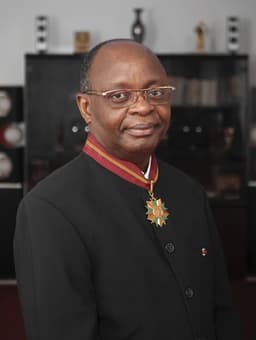
Nicephore Soglo
Politician · Modern
46.9Total
Basic Information
Born
1953
1934
Died
—
—
Era
Modern
Modern
Nationality
Pakistan
Benin
Occupation
Politician
Politician
Civilization
Indian
Other
Score Comparison
Military (10%)
21.9
36.0
Political (20%)
68.0
46.6
Influence (20%)
56.4
49.4
Legacy (20%)
47.5
41.7
Leadership (15%)
53.2
62.2
Strategy (15%)
36.0
42.3
TOTAL
49.9
46.9
Maulana Fazl-ur-Rehman — Complete Timeline
1980 AD
Leadership of JUI-FPolitical Action◆ Major
Maulana Fazl-ur-Rehman became the leader of Jamiat Ulema-e-Islam (F) after the death of his father, Maulana Mufti Mahmud, in 1980. He transformed the party into a major political force in Khyber Pakhtunkhwa and Balochistan.
JUI-FLeadershipReligious Party
Impact: regional
2002 AD
Formation of Muttahida Majlis-e-Amal (MMA)Political Action◆ Major
Maulana Fazl-ur-Rehman was a key architect of the Muttahida Majlis-e-Amal (MMA), a coalition of religious political parties. The MMA won 63 seats in the 2002 general elections, becoming the third-largest bloc in the National Assembly.
MMACoalitionReligious Parties
Impact: national
2019 AD
Azadi March ProtestPolitical Action◆ Major
Maulana Fazl-ur-Rehman led the Azadi March in October 2019, a protest against the government of Prime Minister Imran Khan. The march gathered thousands of supporters in Islamabad, demanding the resignation of the government over alleged rigging in the 2018 elections.
ProtestAzadi MarchImran Khan
Impact: nationaldestructive
Nicephore Soglo — Complete Timeline
1991 AD
Implemented economic reforms under IMF programsReform◆ Major
Soglo's government implemented structural adjustment programs mandated by the International Monetary Fund, including privatization of state enterprises and austerity measures. These reforms stabilized the economy but caused social hardship and protests.
Economic ReformIMFAusterity
Impact: national
Elected first democratically chosen President of BeninPolitical Action
Nicéphore Soglo won the 1991 presidential election, defeating incumbent Mathieu Kérékou. This marked Benin's first peaceful democratic transition of power and established Soglo as the first democratically elected president of the country.
DemocracyElectionBenin
Impact: nationalconstructive
1996 AD
Lost re-election to Mathieu KérékouPolitical Action◆ Major
Soglo was defeated in the 1996 presidential election by former dictator Mathieu K
ElectionDefeatDemocratic Transition
Impact: national
This comparison has not been analyzed yet.
One-time AI generation (~1 minute). Scores and timeline are already available below.
Rankings
🥇
Maulana Fazl-ur-RehmanLeader
Mil: 21.9Pol: 68.0Inf: 56.4
49.9
🥈
Nicephore Soglo
Mil: 36.0Pol: 46.6Inf: 49.4
46.9
+3.0 behind
How This Comparison Works
Algorithm
Each figure is scored on 6 dimensions (0—100 scale) based on structured historical data: Military (10%), Political (20%), Influence (20%), Legacy (20%), Leadership (15%), Strategy (15%). The weighted total produces the final ranking.
Data Sources
Scores are computed from structured sub-indicators in the database. Scale factors adjust for era (Ancient ×0.85, Modern ×1.0) and civilization size (Eastern ×1.05, Other ×0.80) to account for differences in population and military scale.
Maximum 3 Figures
Comparisons are limited to 2—3 figures to ensure readability and statistical meaningfulness.
Error Margins
±5 points per dimension — Sub-scores are derived from historical records with inherent uncertainty. Two figures within 5 points on a dimension should be considered roughly equivalent in that area.
Total Score Accuracy
±3 points overall — The weighted combination of 6 dimensions produces a total score with approximately ±3 points of uncertainty. Differences of less than 3 points are not statistically significant— the figures are effectively tied.
Known Limitations
- Historical records are incomplete and uneven across civilizations
- Figures from oral-tradition societies may be underrepresented
- Occupation labels can misclassify multi-role figures
- Scores measure capability and impact, not moral character
- Quantitative scoring is a comparison tool, not absolute truth
Capability Radar
Military (10%) — Battles & Warfare
Battles
21
24
Win Rate
27
22
Expansion
33
27
Political (20%) — Governance & Reform
Reform
40
40
Diplomacy
70
45
Economy
30
30
Influence (20%) — Cultural & Global Reach
Cultural
45
20
Global
35
15
Legacy (20%) — Historical Impact
Historical
40
30
Longevity
45
20
Leadership (15%) — Power & Stability
Tenure
65
35
Stability
35
25
Strategy (15%) — Tactics & Innovation
Strategy
34
32
Tactics
35
33
Reform
39
36
Similar Comparisons
Comments & Discussion
No comments yet. Be the first to share your thoughts!