Loading...
Alfonso XIII vs Wilhelm II
Wilhelm II leads by 9.4 pts · 2 figures compared
…
Alfonso XIII
Emperor · Modern
47.1Total

Wilhelm II
Emperor · Modern
56.5Total
Basic Information
Born
1886
1859
Died
1941
1941
Era
Modern
Modern
Nationality
Spain
Germany
Occupation
Emperor
Emperor
Civilization
Western
Western
Score Comparison
Military (10%)
10.2
50.0
Political (20%)
61.3
61.3
Influence (20%)
54.9
61.0
Legacy (20%)
45.0
52.0
Leadership (15%)
53.2
65.0
Strategy (15%)
39.6
43.3
TOTAL
47.1
56.5
Alfonso XIII — Complete Timeline
1886 AD
Accession to the thronePolitical Action◆ Major
Alfonso XIII became King of Spain at birth, as his father Alfonso XII had died. His mother Maria Cristina served as regent until he came of age in 1902.
SuccessionRegencyMonarchy
Impact: national
1898 AD
Spanish-American WarWar
During Alfonso XIII's minority, Spain lost the Spanish-American War, ceding Cuba, Puerto Rico, and the Philippines to the United States. This disaster led to the Generation of '98 and a crisis of national identity.
WarColonial LossCrisis
Impact: globaltragic
1921 AD
Rif War and the Disaster of AnnualWar◆ Major
Spanish forces suffered a catastrophic defeat at Annual in Morocco, with thousands killed by Rifian rebels. The disaster severely damaged the monarchy's prestige and led to political crisis.
Colonial WarDefeatMorocco
Impact: regionaltragic
1923 AD
Dictatorship of Primo de RiveraPolitical Action◆ Major
Alfonso XIII supported General Miguel Primo de Rivera's coup, which established a military dictatorship. The king's association with the dictatorship further eroded support for the monarchy.
DictatorshipCoupMonarchy
Impact: nationaldestructive
1931 AD
Exile after the Second RepublicPolitical Action
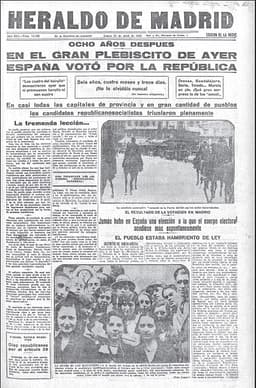
After the Republican victory in municipal elections, Alfonso XIII left Spain without abdicating. The Second Spanish Republic was proclaimed, and he lived in exile until his death in 1941.
ExileRepublicEnd of Monarchy
Impact: nationaltragic
Wilhelm II — Complete Timeline
1890 AD
Dismissed Otto von Bismarck as ChancellorPolitical Action
Wilhelm II forced Otto von Bismarck to resign as Chancellor of Germany, ending Bismarck's 28-year tenure. Wilhelm sought to rule personally and disagreed with Bismarck's domestic and foreign policies, particularly the Anti-Socialist Laws and alliance system.
BismarckChancellorshipPolicy Change
Impact: globaldestructive
1898 AD
Launched the Naval Arms Race with BritainWar◆ Major
Wilhelm II initiated a massive naval expansion program under Admiral Tirpitz, aiming to build a fleet capable of challenging the British Royal Navy. This policy, embodied in the Naval Laws of 1898 and 1900, intensified Anglo-German rivalry and contributed to World War I.
Naval Arms RaceAnglo-German RivalryWorld War I
Impact: globaldestructive
1914 AD
Ordered the Schlieffen Plan ImplementationWar◆ Major
Wilhelm II authorized the implementation of the Schlieffen Plan, a military strategy for a two-front war against France and Russia. The plan involved invading neutral Belgium, which brought Britain into the war and set the stage for the Western Front's trench warfare.
World War ISchlieffen PlanMilitary Strategy
Impact: globaldestructive
Issued the Blank Check to Austria-HungaryPolitical Action◆ Major
Wilhelm II assured Austria-Hungary of Germany's full support in its conflict with Serbia following the assassination of Archduke Franz Ferdinand. This blank check encouraged Austria-Hungary to issue an ultimatum to Serbia, escalating the July Crisis into World War I.
World War IJuly CrisisDiplomacy
Impact: globaldestructive
1918 AD
Abdicated the Throne and Fled to the NetherlandsPolitical Action
Wilhelm II abdicated as German Emperor and King of Prussia on November 9, 1918, following the German Revolution and military defeat in World War I. He fled to exile in the Netherlands, ending the Hohenzollern monarchy and the German Empire.
AbdicationGerman RevolutionWorld War I
Impact: globaltragic
Expert Analysis
Origins
Alfonso XIII was born on May 17, 1886, in Madrid, posthumously to King Alfonso XII, who had died six months earlier. His mother, Maria Christina of Austria, served as regent until he came of age in 1902. The young king was raised in a court still reeling from the loss of empire. His education was traditional, emphasizing military and monarchical values. Wilhelm II was born on January 27, 1859, in Potsdam, to Crown Prince Frederick (later Emperor Frederick III) and Victoria, eldest daughter of Queen Victoria. He had a difficult birth that left his left arm withered, a fact that shaped his insecurities. Educated at the University of Bonn and trained in the Prussian military, he was deeply influenced by his grandfather, Wilhelm I, and Otto von Bismarck. Unlike Alfonso, Wilhelm grew up with the expectation of ruling a rising great power.
Rise to Power
Alfonso XIII became king at birth but only assumed full powers in 1902 at age 16. His early reign was marked by the aftermath of the Spanish-American War (1898), which had cost Spain its remaining colonies. He navigated a weak parliamentary system, often intervening in politics. Wilhelm II ascended the throne in 1888 after the death of his father, Frederick III, who reigned only 99 days. Unlike Alfonso, Wilhelm was determined to rule personally. In 1890, he dismissed Otto von Bismarck, the architect of German unification, and embarked on a 'New Course' of aggressive foreign policy and naval expansion. Both monarchs came to power in periods of national decline or transition, but Wilhelm had more immediate authority and a stronger state.
Leadership & Governance
Alfonso XIII's leadership was characterized by oscillation between constitutionalism and authoritarianism. He supported the dictatorship of General Miguel Primo de Rivera from 1923, hoping to solve Spain's social and political crises. This alienated republicans and socialists. He scored 53.2 in leadership, reflecting his inability to maintain a stable government. Wilhelm II's leadership style was erratic and impulsive. He surrounded himself with yes-men and made contradictory decisions. His leadership score of 65.0 is higher, but his governance was destructive: he allowed the Schlieffen Plan to be implemented in 1914, leading to a two-front war. Alfonso's political score (61.3) matches Wilhelm's (61.3), indicating similar political acumen, but Alfonso's decisions were less catastrophic in global terms.
Triumph & Tragedy
Alfonso's greatest success was maintaining Spain's neutrality during World War I, which spared the country from devastation. He also engaged in humanitarian efforts, helping prisoners of war. His greatest failure was his support for Primo de Rivera's dictatorship, which discredited the monarchy and led to the Second Spanish Republic in 1931. He went into exile, never abdicating formally. Wilhelm's triumphs were initially in building a powerful navy and a unified Germany, but his tragedies were immense: his policies contributed to World War I, resulting in millions of deaths and Germany's defeat. He abdicated in 1918 and fled to the Netherlands, where he lived until 1941. Both monarchs ended their reigns in exile, but Wilhelm's actions had far more global consequences. In military terms, Wilhelm scored 50.0 against Alfonso's 10.2, reflecting Spain's weak military under Alfonso.
Character & Destiny
Alfonso XIII was charming and intelligent but indecisive and prone to seeking easy solutions. His support for dictatorship reflected a desire for order over democratic processes. Wilhelm II was arrogant, insecure, and bellicose. His withered arm fueled a need to prove his masculinity through militarism. Both men were convinced of their divine right to rule, but Wilhelm's personality was more disruptive. Historians often describe Wilhelm as 'unbalanced' and 'dangerous,' while Alfonso is seen as 'tragic' and 'ineffectual.' Their characters shaped their fates: Alfonso's passivity led to the collapse of the Spanish monarchy, while Wilhelm's aggression destroyed the German Empire.
Legacy
Alfonso XIII's legacy is mixed. He is remembered as the last king before the Spanish Civil War and Franco's regime. His humanitarian work during WWI is sometimes noted, but his association with dictatorship tarnishes his reputation. In Spain, the monarchy was restored in 1975 under his grandson, Juan Carlos I. Wilhelm II's legacy is overwhelmingly negative. He is often blamed for World War I and the suffering it caused. His naval arms race and diplomatic blunders contributed to the war's outbreak. In Germany, he is a symbol of the failed imperial system. His influence score of 61.0 is slightly higher than Alfonso's 54.9, but his legacy score (52.0) is also higher than Alfonso's (45.0), reflecting a more significant but more negative impact.
Conclusion
Wilhelm II had a greater impact on world history than Alfonso XIII, but that impact was overwhelmingly destructive. Wilhelm's total score of 56.5 exceeds Alfonso's 47.1 by 9.4 points. His decisions—the blank check to Austria-Hungary, the naval arms race, and the implementation of the Schlieffen Plan—directly contributed to the outbreak of World War I, a conflict that reshaped the 20th century. Alfonso XIII, by contrast, kept Spain neutral in that war and his failures were largely confined to Spain's internal politics. While both monarchs lost their thrones, Wilhelm's actions led to the deaths of millions and the collapse of four empires. Alfonso's legacy is more localized. Therefore, Wilhelm II had greater historical significance, for better or worse.
Rankings
🥇
Wilhelm IILeader
Mil: 50.0Pol: 61.3Inf: 61.0
56.5
🥈
Alfonso XIII
Mil: 10.2Pol: 61.3Inf: 54.9
47.1
+9.4 behind
How This Comparison Works
Algorithm
Each figure is scored on 6 dimensions (0—100 scale) based on structured historical data: Military (10%), Political (20%), Influence (20%), Legacy (20%), Leadership (15%), Strategy (15%). The weighted total produces the final ranking.
Data Sources
Scores are computed from structured sub-indicators in the database. Scale factors adjust for era (Ancient ×0.85, Modern ×1.0) and civilization size (Eastern ×1.05, Other ×0.80) to account for differences in population and military scale.
Maximum 3 Figures
Comparisons are limited to 2—3 figures to ensure readability and statistical meaningfulness.
Error Margins
±5 points per dimension — Sub-scores are derived from historical records with inherent uncertainty. Two figures within 5 points on a dimension should be considered roughly equivalent in that area.
Total Score Accuracy
±3 points overall — The weighted combination of 6 dimensions produces a total score with approximately ±3 points of uncertainty. Differences of less than 3 points are not statistically significant— the figures are effectively tied.
Known Limitations
- Historical records are incomplete and uneven across civilizations
- Figures from oral-tradition societies may be underrepresented
- Occupation labels can misclassify multi-role figures
- Scores measure capability and impact, not moral character
- Quantitative scoring is a comparison tool, not absolute truth
Capability Radar
Military (10%) — Battles & Warfare
Battles
10
20
Win Rate
10
15
Expansion
5
30
Political (20%) — Governance & Reform
Reform
30
40
Diplomacy
40
20
Economy
30
55
Influence (20%) — Cultural & Global Reach
Cultural
30
30
Global
30
65
Legacy (20%) — Historical Impact
Historical
40
70
Longevity
30
40
Leadership (15%) — Power & Stability
Tenure
60
65
Stability
20
15
Strategy (15%) — Tactics & Innovation
Strategy
10
25
Tactics
10
10
Reform
20
60
Similar Comparisons
Comments & Discussion
No comments yet. Be the first to share your thoughts!