Loading...
Marwan II vs Robert the Bruce
Robert the Bruce leads by 5.2 pts · 2 figures compared
…
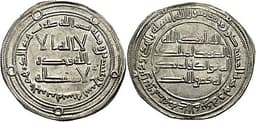
Marwan II
Emperor · Medieval
50.3Total
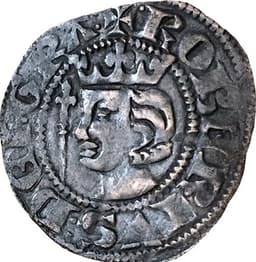
Robert the Bruce
Emperor · Medieval
55.5Total
Basic Information
Born
688
1274
Died
750
1329
Era
Medieval
Medieval
Nationality
Umayyad Caliphate
Scotland
Occupation
Emperor
Emperor
Civilization
Middle Eastern
Western
Score Comparison
Military (10%)
70.0
70.0
Political (20%)
40.8
68.0
Influence (20%)
53.3
55.0
Legacy (20%)
44.2
52.0
Leadership (15%)
48.4
40.0
Strategy (15%)
55.0
55.0
TOTAL
50.3
55.5
Marwan II — Complete Timeline
744 AD
Accession as CaliphPolitical Action◆ Major
Marwan II became the last Umayyad caliph after a period of civil war and succession disputes. He was a military commander who seized power amid the weakening of the dynasty.
SuccessionCaliphateCivil War
Impact: global
750 AD
Battle of the ZabWar
Marwan II's army was decisively defeated by the Abbasid forces at the Battle of the Zab in Iraq. This battle ended Umayyad rule and led to the establishment of the Abbasid Caliphate.
BattleDefeatAbbasid Revolution
Impact: global
Death in EgyptWar◆ Major
After the Battle of the Zab, Marwan II fled to Egypt where he was captured and killed by Abbasid forces. His death marked the end of the Umayyad Caliphate, though a surviving prince founded a dynasty in Spain.
DeathUmayyadEnd of Dynasty
Impact: globaltragic
Robert the Bruce — Complete Timeline
1306 AD
Coronation as King of ScotsPolitical Action
Robert the Bruce was crowned King of Scots at Scone Abbey by Isabella MacDuff, Countess of Buchan. The coronation occurred after Bruce murdered John Comyn, his rival, in Greyfriars Church, Dumfries, sparking a new phase of the Wars of Independence.
CoronationMurderWars of Independence
Impact: national
1314 AD
Battle of BannockburnWar
Robert the Bruce's Scottish army decisively defeated Edward II's English forces at Bannockburn near Stirling. The victory secured Scottish independence and established Bruce as the undisputed king, though the war continued for years.
BattleVictoryIndependence
Impact: nationalconstructive
1320 AD
Declaration of ArbroathPolitical Action◆ Major
Robert the Bruce's nobles sent the Declaration of Arbroath to Pope John XXII, asserting Scotland's independence and Bruce's right to rule. The document argued that Scotland was a sovereign kingdom and that the nobles would depose Bruce if he submitted to England.
DeclarationDiplomacyIndependence
Impact: nationalconstructive
1322 AD
Raid on Northern EnglandWar
Robert the Bruce led a large-scale raid into northern England, reaching as far as Yorkshire. The raid devastated English territories and forced Edward II to pay a ransom for peace, demonstrating Scottish military strength.
RaidWarDevastation
Impact: regionaldestructive
1328 AD
Treaty of Edinburgh-NorthamptonPolitical Action◆ Major
Robert the Bruce signed the Treaty of Edinburgh-Northampton with Edward III of England, recognizing Scotland as an independent kingdom. The treaty ended the First War of Scottish Independence and included the marriage of Bruce's son David to Edward III's sister Joan.
TreatyPeaceIndependence
Impact: nationalconstructive
Expert Analysis
Origins
**Marwan II (688–750)** was born into the Umayyad dynasty, the ruling family of the Islamic Caliphate. His father was Marwan I, a caliph who briefly reigned, and his mother was a Kurdish concubine. Marwan II grew up in the Umayyad court, receiving military training and education in governance. He served as governor of Armenia and Azerbaijan, gaining administrative and combat experience.
**Robert the Bruce (1274–1329)** was born into the Anglo-Norman Scottish nobility, the son of Robert de Brus, 6th Lord of Annandale, and Marjorie, Countess of Carrick. His grandfather was a claimant to the Scottish throne. Bruce was educated in both Norman chivalry and Gaelic traditions, and he inherited the Earldom of Carrick through his mother. His early life was marked by political turmoil in Scotland during the Wars of Independence.
Rise to Power
Marwan II rose to power during the Umayyad Caliphate's decline. In 744, after the death of Caliph Yazid III, civil war erupted. Marwan, then governor of Armenia, led his forces against the new caliph Ibrahim and defeated him. He was proclaimed caliph in 744, but his rule was contested by rival Umayyad factions and the growing Abbasid movement. His military campaigns initially secured Syria and Mesopotamia, but he failed to unite the Umayyads.
Robert the Bruce seized the Scottish throne in 1306 after murdering his rival John Comyn at Greyfriars Church. He was crowned king at Scone by Isabella MacDuff, but his early reign was disastrous. He was excommunicated and defeated by English forces, forced into hiding. From 1307 onward, he rebuilt his army and used guerrilla tactics against the English, gradually reclaiming Scottish castles. His turning point came at the Battle of Bannockburn in 1314.
Leadership & Governance
Marwan II was primarily a military leader, scoring 48.4 in leadership and 40.8 in politics. He centralized the caliphate's military command but neglected administrative reforms. He moved the capital from Damascus to Harran, alienating Syrian elites. His governance relied on force, and he failed to address the grievances of non-Arab Muslims (mawali), which fueled Abbasid support. He did not implement long-term policies.
Robert the Bruce scored 68.0 in politics, reflecting his diplomatic skills. He consolidated power by rewarding loyal nobles and using parliaments to gain support. He issued the Declaration of Arbroath (1320), asserting Scotland's independence to the Pope. He also reformed the Scottish economy, minting coins and promoting trade. His governance focused on national unity and legal legitimacy, contrasting with Marwan's militarism.
Triumph & Tragedy
Marwan II's greatest success was his military tenure as governor, suppressing rebellions in Armenia and against the Khazars. As caliph, he initially stabilized the empire after civil war. However, his greatest failure was the Battle of the Zab in 750, where his army was routed by the Abbasids. He fled but was captured and killed in Egypt, ending the Umayyad Caliphate. His regime's collapse was due to internal divisions and his inability to adapt politically.
Robert the Bruce's triumph was the decisive victory at Bannockburn (1314), where his smaller force defeated Edward II's army, securing de facto Scottish independence. He also led devastating raids into England, forcing the Treaty of Edinburgh-Northampton (1328), which recognized Scotland's sovereignty. His tragedy was the initial loss of his family and supporters after his coronation, including the execution of his brother Neil. He also died without a fully stable succession, though his son David II succeeded.
Character & Destiny
Marwan II was a capable general but an inflexible ruler. He relied on military solutions and failed to build alliances. His character—authoritarian and uncompromising—alienated potential allies. Historical assessments note his bravery but poor political judgment. His destiny was to be the last of the Umayyads, a dynasty he could not save.
Robert the Bruce was pragmatic and resilient. He survived defeat, excommunication, and personal loss to achieve victory. He was willing to compromise, such as submitting to Edward I temporarily, but remained committed to Scottish independence. Historians portray him as a skilled strategist and diplomat, whose character matched the needs of his nation. His destiny was to be a national liberator.
Legacy
Marwan II's legacy is largely negative: he is remembered as the last Umayyad caliph whose defeat allowed the Abbasid Revolution. The Umayyad dynasty fell, and the center of Islamic power shifted east to Baghdad. His military score of 70.0 is offset by his low political and leadership scores, resulting in a total of 50.3. His influence on subsequent Islamic governance is minimal, except as a cautionary tale.
Robert the Bruce's legacy is enduring: he secured Scottish independence, established the Bruce dynasty, and is a national hero. The Declaration of Arbroath influenced later declarations of independence. His total score of 55.5 reflects higher political and legacy scores. Bannockburn remains a symbol of resistance. His legacy is celebrated in Scotland and beyond.
Conclusion
Robert the Bruce had greater impact than Marwan II. While both scored 70.0 in military ability, Bruce's political acumen (68.0 vs. 40.8) and leadership (48.4 vs. 40.0) allowed him to achieve lasting results. Marwan II failed to preserve his dynasty, while Bruce founded a kingdom that endured for centuries. Bruce's legacy of national independence is more significant than Marwan's role in a dynastic collapse. The score gap of 5.2 points underscores Bruce's superior overall effectiveness.
Rankings
🥇
Robert the BruceLeader
Mil: 70.0Pol: 68.0Inf: 55.0
55.5
🥈
Marwan II
Mil: 70.0Pol: 40.8Inf: 53.3
50.3
+5.2 behind
How This Comparison Works
Algorithm
Each figure is scored on 6 dimensions (0—100 scale) based on structured historical data: Military (10%), Political (20%), Influence (20%), Legacy (20%), Leadership (15%), Strategy (15%). The weighted total produces the final ranking.
Data Sources
Scores are computed from structured sub-indicators in the database. Scale factors adjust for era (Ancient ×0.85, Modern ×1.0) and civilization size (Eastern ×1.05, Other ×0.80) to account for differences in population and military scale.
Maximum 3 Figures
Comparisons are limited to 2—3 figures to ensure readability and statistical meaningfulness.
Error Margins
±5 points per dimension — Sub-scores are derived from historical records with inherent uncertainty. Two figures within 5 points on a dimension should be considered roughly equivalent in that area.
Total Score Accuracy
±3 points overall — The weighted combination of 6 dimensions produces a total score with approximately ±3 points of uncertainty. Differences of less than 3 points are not statistically significant— the figures are effectively tied.
Known Limitations
- Historical records are incomplete and uneven across civilizations
- Figures from oral-tradition societies may be underrepresented
- Occupation labels can misclassify multi-role figures
- Scores measure capability and impact, not moral character
- Quantitative scoring is a comparison tool, not absolute truth
Capability Radar
Military (10%) — Battles & Warfare
Battles
75
65
Win Rate
60
60
Expansion
50
50
Political (20%) — Governance & Reform
Reform
45
55
Diplomacy
35
65
Economy
30
50
Influence (20%) — Cultural & Global Reach
Cultural
30
60
Global
30
55
Legacy (20%) — Historical Impact
Historical
40
70
Longevity
25
65
Leadership (15%) — Power & Stability
Tenure
40
60
Stability
20
55
Strategy (15%) — Tactics & Innovation
Strategy
65
70
Tactics
70
75
Reform
55
55
Similar Comparisons
Comments & Discussion
No comments yet. Be the first to share your thoughts!