Loading...
John Quincy Adams vs Maximilien Robespierre
Maximilien Robespierre leads by 4.9 pts · 2 figures compared
…

John Quincy Adams
Politician · Modern
58.3Total
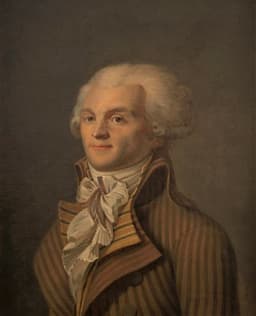
Maximilien Robespierre
Politician · Modern
63.2Total
Basic Information
Born
1767
1758
Died
1848
1794
Era
Modern
Modern
Nationality
United States
France
Occupation
Politician
Politician
Civilization
Western
Western
Score Comparison
Military (10%)
41.8
11.7
Political (20%)
65.0
68.0
Influence (20%)
58.3
82.0
Legacy (20%)
52.0
72.0
Leadership (15%)
72.0
67.0
Strategy (15%)
60.0
32.7
TOTAL
58.3
63.2
John Quincy Adams — Complete Timeline
1819 AD
Negotiated the Adams-Onís TreatyPolitical Action◆ Major
As Secretary of State, Adams negotiated the Adams-On
Adams-Onís TreatyDiplomacyFlorida
Impact: regionalconstructive
1823 AD
Articulated the Monroe DoctrinePolitical Action◆ Major
As Secretary of State, Adams helped formulate the Monroe Doctrine, which President Monroe announced in 1823. Adams advocated for a strong statement opposing European intervention in the Americas. The doctrine became a foundational principle of U.S. foreign policy, asserting hemispheric dominance.
Monroe DoctrineForeign PolicyAdams
Impact: global
1824 AD
Elected President of the United StatesPolitical Action◆ Major
John Quincy Adams was elected President by the House of Representatives on February 9, 1825, after no candidate won a majority in the Electoral College. The election was controversial, with allegations of a 'corrupt bargain' between Adams and Henry Clay, who became Secretary of State. Adams served one term.
Presidential ElectionCorrupt Bargain1824
Impact: national
1831 AD
Elected to the House of RepresentativesPolitical Action◆ Major
After his presidency, Adams was elected to the U.S. House of Representatives in 1831, serving for 17 years until his death. He was the only former president to serve in the House. Adams became a leading opponent of slavery, fighting against the gag rule and advocating for the right to petition.
House of RepresentativesAnti-SlaveryPost-Presidency
Impact: nationalconstructive
Maximilien Robespierre — Complete Timeline
1789 AD
Election to the Estates-GeneralPolitical Action◆ Major
Robespierre was elected as a deputy of the Third Estate for Artois to the Estates-General. He quickly became a leading voice for radical reforms, advocating for universal male suffrage and the rights of the common people.
French RevolutionEstates-GeneralThird Estate
Impact: nationalprogressive
1793 AD
Establishment of the Reign of TerrorPolitical Action
As a leading member of the Committee of Public Safety, Robespierre oversaw the Reign of Terror, a period of mass executions of perceived enemies of the revolution. Over 16,000 people were guillotined, including former allies like Danton.
Reign of TerrorCommittee of Public SafetyGuillotine
Impact: nationaldestructive
1794 AD
Abolition of Slavery in French ColoniesReform◆ Major
Robespierre and the National Convention voted to abolish slavery in all French colonies, a landmark decree influenced by the Haitian Revolution. This was the first abolition of slavery by a major European power, though later reversed by Napoleon.
AbolitionSlaveryFrench Colonies
Impact: globalprogressive
Cult of the Supreme BeingCultural◆ Major
Robespierre inaugurated the Cult of the Supreme Being as a state religion, replacing Catholicism and atheism. The festival in Paris promoted deism and civic virtue, but was criticized as an attempt to impose his personal beliefs.
ReligionDeismFrench Revolution
Impact: national
Execution of Maximilien RobespierrePolitical Action
Robespierre was arrested and executed by guillotine without trial after the Thermidorian Reaction. His death ended the Reign of Terror and marked a conservative turn in the French Revolution.
Thermidorian ReactionExecutionEnd of Terror
Impact: nationaltragic
Expert Analysis
Origins
John Quincy Adams was born on July 11, 1767, in Braintree, Massachusetts, into a family of political prominence. His father, John Adams, was a Founding Father and later the second U.S. president. Young Adams received an exceptional education, studying in Europe and graduating from Harvard College in 1787. He trained as a lawyer but was drawn to diplomacy and public service from an early age.
Maximilien Robespierre was born on May 6, 1758, in Arras, France, to a lawyer father and a mother who died when he was young. He studied law at the University of Paris, graduating in 1781, and returned to Arras to practice. A diligent student, he was influenced by Enlightenment philosophers like Rousseau, which shaped his radical political ideals.
Rise to Power
Adams rose through diplomatic appointments: he served as minister to the Netherlands (1794), Prussia (1797), and Russia (1809). His major breakthrough came as Secretary of State under President James Monroe (1817-1825). There, he negotiated the Adams-Onís Treaty (1819), acquiring Florida from Spain, and helped formulate the Monroe Doctrine (1823), asserting U.S. opposition to European colonialism in the Americas. In the contentious 1824 presidential election, Adams won the presidency via a contingent vote in the House of Representatives, despite Andrew Jackson having more popular and electoral votes.
Robespierre rose to prominence during the French Revolution. Elected as a deputy of the Third Estate to the Estates-General in 1789, he became a leading voice for radical reforms, advocating universal male suffrage and the abolition of slavery. He joined the Jacobin Club and gained influence through his oratory and unwavering commitment to revolutionary principles. By 1793, he was a dominant figure on the Committee of Public Safety, the de facto executive government during the Reign of Terror.
Leadership & Governance
Adams governed as a nationalist and proponent of federal power. He proposed ambitious infrastructure projects, a national university, and support for science and the arts (e.g., the Smithsonian Institution). However, his aloof demeanor and lack of political maneuvering hindered his effectiveness. He signed the Tariff of 1828, which alienated Southern states. His leadership score of 72.0 reflects his principled but often ineffective style.
Robespierre led with ideological rigidity, aiming to create a 'Republic of Virtue.' He oversaw the Committee of Public Safety, which implemented price controls, mass conscription, and the Reign of Terror (1793-1794), executing over 16,000 perceived enemies. He also established the Cult of the Supreme Being in 1794, a deist state religion. His political score of 68.0 indicates strong influence but flawed execution, as his policies led to his downfall.
Triumph & Tragedy
Adams' greatest triumph was the Adams-Onís Treaty, which secured Florida and defined U.S.-Spanish borders. His articulation of the Monroe Doctrine shaped American foreign policy for decades. After his presidency, he served 17 years in the House of Representatives (1831-1848), where he fought against slavery and the gag rule, earning the nickname 'Old Man Eloquent.' His tragedy was his single-term presidency, marked by political gridlock and his failure to win popular support.
Robespierre's triumphs include the abolition of slavery in French colonies (1794) and the expansion of democratic rights. He was a key figure in the revolutionary government that mobilized France against foreign invaders. His tragedy was the Reign of Terror, which consumed thousands, including former allies, and ultimately led to his own execution on July 28, 1794 (Thermidorian Reaction). His influence score of 82.0 reflects his profound impact, but his strategy score of 32.7 shows his failure to sustain his vision.
Character & Destiny
Adams was intelligent, principled, but often stubborn and aloof. His moral certainty and lack of political pragmatism isolated him. He believed in meritocracy and public service, but his inability to compromise cost him political capital. His character led to a post-presidential career of moral advocacy rather than executive power.
Robespierre was fanatically devoted to his ideals, earning the nickname 'The Incorruptible.' He was austere, paranoid, and increasingly authoritarian. His rigid adherence to virtue and suspicion of dissent led to the Terror's excesses and his own downfall. His character shaped his destiny as a revolutionary icon and cautionary tale.
Legacy
Adams' legacy is mixed: his presidency is often considered mediocre, but his diplomatic achievements and anti-slavery advocacy are respected. The Monroe Doctrine endured as a cornerstone of U.S. foreign policy. His post-presidential service set a precedent for former presidents. He scored 52.0 in legacy.
Robespierre's legacy is deeply contested. To some, he is a champion of democracy and social justice; to others, a tyrant who betrayed the Revolution. His role in the Terror made him a symbol of revolutionary extremism. The abolition of slavery and universal suffrage remain part of his legacy. He scored 72.0 in legacy.
Conclusion
While Adams had a longer, more varied career, Robespierre's impact on the course of history was more dramatic and far-reaching. Robespierre's political influence (68.0) and legacy (72.0) surpass Adams' (65.0 and 52.0). Adams' total score of 58.3 is lower than Robespierre's 63.2. Robespierre's actions during the French Revolution reshaped France and inspired revolutionary movements worldwide. Adams' contributions, though significant, were more incremental. Therefore, Maximilien Robespierre had a greater overall impact on history.
Rankings
🥇
Maximilien RobespierreLeader
Mil: 11.7Pol: 68.0Inf: 82.0
63.2
🥈
John Quincy Adams
Mil: 41.8Pol: 65.0Inf: 58.3
58.3
+4.9 behind
How This Comparison Works
Algorithm
Each figure is scored on 6 dimensions (0—100 scale) based on structured historical data: Military (10%), Political (20%), Influence (20%), Legacy (20%), Leadership (15%), Strategy (15%). The weighted total produces the final ranking.
Data Sources
Scores are computed from structured sub-indicators in the database. Scale factors adjust for era (Ancient ×0.85, Modern ×1.0) and civilization size (Eastern ×1.05, Other ×0.80) to account for differences in population and military scale.
Maximum 3 Figures
Comparisons are limited to 2—3 figures to ensure readability and statistical meaningfulness.
Error Margins
±5 points per dimension — Sub-scores are derived from historical records with inherent uncertainty. Two figures within 5 points on a dimension should be considered roughly equivalent in that area.
Total Score Accuracy
±3 points overall — The weighted combination of 6 dimensions produces a total score with approximately ±3 points of uncertainty. Differences of less than 3 points are not statistically significant— the figures are effectively tied.
Known Limitations
- Historical records are incomplete and uneven across civilizations
- Figures from oral-tradition societies may be underrepresented
- Occupation labels can misclassify multi-role figures
- Scores measure capability and impact, not moral character
- Quantitative scoring is a comparison tool, not absolute truth
Capability Radar
Military (10%) — Battles & Warfare
Battles
48
22
Win Rate
47
24
Expansion
54
28
Political (20%) — Governance & Reform
Reform
65
85
Diplomacy
85
40
Economy
55
30
Influence (20%) — Cultural & Global Reach
Cultural
55
70
Global
65
70
Legacy (20%) — Historical Impact
Historical
70
85
Longevity
60
75
Leadership (15%) — Power & Stability
Tenure
60
60
Stability
50
10
Strategy (15%) — Tactics & Innovation
Strategy
56
29
Tactics
58
34
Reform
62
40
Similar Comparisons
Comments & Discussion
No comments yet. Be the first to share your thoughts!