Loading...
Mario Garcia Menocal vs Su Shun
Mario Garcia Menocal leads by 12.3 pts · 2 figures compared
…
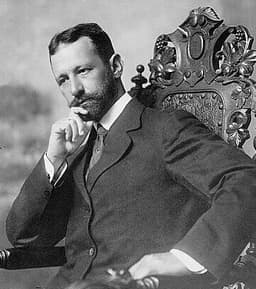
Mario Garcia Menocal
Politician · Modern
47.7Total

Su Shun
Politician · Modern
35.4Total
Basic Information
Born
1866
1816
Died
1941
1861
Era
Modern
Modern
Nationality
Cuba
China
Occupation
Politician
Politician
Civilization
Western
Eastern
Score Comparison
Military (10%)
49.5
14.8
Political (20%)
46.6
27.9
Influence (20%)
48.6
45.5
Legacy (20%)
38.3
38.3
Leadership (15%)
65.0
34.6
Strategy (15%)
43.2
36.1
TOTAL
47.7
35.4
Mario Garcia Menocal — Complete Timeline
1912 AD
Election as President of CubaPolitical Action◆ Major
Mario Garcia Menocal was elected president of Cuba as the Conservative Party candidate. His presidency focused on economic development and infrastructure projects, leveraging his engineering background.
Cuban PoliticsElectionConservative Party
Impact: nationalconstructive
1915 AD
Construction of the Central HighwayReform◆ Major
Menocal oversaw the construction of the Central Highway, a major infrastructure project connecting Havana to eastern Cuba. The highway improved transportation and trade, but was criticized for high costs and corruption.
InfrastructureDevelopmentTransportation
Impact: nationalconstructive
1916 AD
Re-election Amidst Fraud AllegationsPolitical Action◆ Major
Menocal was re-elected in a disputed election marked by allegations of fraud and voter intimidation. The opposition Liberal Party claimed the election was stolen, leading to political instability and the failed coup by Jose Miguel Gomez.
Election FraudPolitical CrisisCoup Attempt
Impact: nationaldestructive
1917 AD
Cuban Entry into World War IPolitical Action
Menocal declared war on Germany in 1917, aligning Cuba with the Allied powers. Cuba's involvement was largely symbolic, but it strengthened ties with the United States and led to economic benefits from sugar exports.
World War IForeign PolicyUS-Cuba Relations
Impact: global
Su Shun — Complete Timeline
1858 AD
Appointed Grand SecretaryPolitical Action◆ Major
Su Shun was appointed Grand Secretary of the Qing Empire, becoming a key figure in the Xianfeng Emperor's court. He was known for his conservative views and opposition to foreign influence.
AppointmentGovernmentXianfeng Era
Impact: national
1861 AD
Appointed Regent for the Tongzhi EmperorPolitical Action◆ Major
Upon the death of the Xianfeng Emperor, Su Shun was appointed as one of the eight regents for the young Tongzhi Emperor. He effectively controlled the imperial government, opposing the influence of Empress Dowager Cixi and Prince Gong.
RegencySuccessionTongzhi Era
Impact: national
Executed in the Xinyou CoupPolitical Action◆ Major
Su Shun was arrested and executed by order of Empress Dowager Cixi and Prince Gong during the Xinyou Coup. The coup removed the regents and consolidated power in the hands of Cixi, marking a turning point in Qing politics.
CoupExecutionCixi
Impact: nationaldestructive
Expert Analysis
Origins
Mario Garcia Menocal was born in 1866 in Jiguani, Cuba, into a wealthy sugar-planting family. He studied engineering at Cornell University in the United States, where he earned a degree in civil engineering in 1888. His education gave him a technical background that influenced his later focus on infrastructure. In contrast, Su Shun was born into the Manchu elite in 1816, a member of the Aisin Gioro clan. He passed the imperial examinations and rose through the Qing bureaucracy, serving in various posts before becoming Grand Secretary. His upbringing was steeped in Confucian orthodoxy and Manchu traditions, with no exposure to Western education.
Rise to Power
Menocal entered politics after Cuba's independence from Spain, aligning with the Conservative Party. He served as Minister of Public Works under President Tomas Estrada Palma, where he oversaw early infrastructure projects. In 1912, he was elected president, succeeding Jose Miguel Gomez. His rise was marked by his engineering background and promises of modernization. Su Shun's ascent was more gradual and court-based. He gained favor with the Xianfeng Emperor and was appointed Grand Secretary in 1855. By 1860, he was a key adviser, advocating for conservative policies. His power peaked in 1861 when the Xianfeng Emperor died and appointed Su Shun as one of eight regents for the child Tongzhi Emperor, effectively making him the de facto ruler of China.
Leadership & Governance
Menocal's leadership focused on economic development. He oversaw the construction of the Central Highway (1915-1920), connecting Havana to Santiago de Cuba, a 1,100 km road that improved trade and mobility. He also expanded sugar production, but his presidency was marred by corruption and electoral fraud. His re-election in 1916 was widely disputed, leading to the Liberal Party's armed uprising. In foreign policy, he declared war on Germany in 1917, aligning Cuba with the Allies, but Cuba's military contribution was minimal. Su Shun's governance was conservative and authoritarian. He resisted Western influence and modernization, purging reformist officials. He centralized power under the regency, but his policies alienated Empress Dowager Cixi and Prince Gong. His leadership score of 34.6 contrasts with Menocal's 65.0, reflecting Su Shun's inability to build coalitions.
Triumph & Tragedy
Menocal's greatest triumph was the Central Highway, a lasting infrastructure achievement. He also maintained stability during World War I, avoiding direct conflict. However, his presidency was tainted by corruption and the 1917 uprising, which he suppressed with U.S. support. His legacy score of 38.3 reflects limited long-term impact. Su Shun's triumph was his rise to the pinnacle of Qing power, controlling the empire briefly. His tragedy was his execution in the Xinyou Coup of 1861, after only a few months as regent. He was beheaded, and his family was purged. His political score of 27.9 is low due to his failed coup and lack of enduring reforms.
Character & Destiny
Menocal was pragmatic and technocratic, prioritizing infrastructure over political reform. His Cornell engineering background shaped his approach, but his tolerance for corruption undermined his effectiveness. Su Shun was rigid and overconfident, underestimating the Empress Dowager's ambition. His conservative mindset blinded him to the need for reform, leading to his downfall. Both men's characters reflected their eras: Menocal's modernizing ambition clashed with Cuban political instability; Su Shun's traditionalism could not survive the Qing decline.
Legacy
Menocal is remembered as a builder of infrastructure, particularly the Central Highway, which remains a key route. However, his presidency is overshadowed by corruption and electoral fraud. Su Shun is a footnote in Qing history, known for his brief regency and execution. His legacy is tied to the Xinyou Coup, which consolidated Cixi's power. Neither has a significant modern following, but Menocal's infrastructure projects have a tangible impact, while Su Shun's influence is negligible.
Conclusion
Mario Garcia Menocal had a greater overall impact than Su Shun. Menocal's total score of 47.7 surpasses Su Shun's 35.4 by 12.3 points. Menocal's leadership score of 65.0 is nearly double Su Shun's 34.6, reflecting his ability to govern for eight years and implement projects. Su Shun's brief regency ended in failure, and his conservative policies hindered China's modernization. While neither figure is highly influential historically, Menocal's infrastructure achievements provide a lasting, albeit modest, legacy. Su Shun's execution marked the end of his line, and his impact on Chinese history is minimal.
Rankings
🥇
Mario Garcia MenocalLeader
Mil: 49.5Pol: 46.6Inf: 48.6
47.7
🥈
Su Shun
Mil: 14.8Pol: 27.9Inf: 45.5
35.4
+12.3 behind
How This Comparison Works
Algorithm
Each figure is scored on 6 dimensions (0—100 scale) based on structured historical data: Military (10%), Political (20%), Influence (20%), Legacy (20%), Leadership (15%), Strategy (15%). The weighted total produces the final ranking.
Data Sources
Scores are computed from structured sub-indicators in the database. Scale factors adjust for era (Ancient ×0.85, Modern ×1.0) and civilization size (Eastern ×1.05, Other ×0.80) to account for differences in population and military scale.
Maximum 3 Figures
Comparisons are limited to 2—3 figures to ensure readability and statistical meaningfulness.
Error Margins
±5 points per dimension — Sub-scores are derived from historical records with inherent uncertainty. Two figures within 5 points on a dimension should be considered roughly equivalent in that area.
Total Score Accuracy
±3 points overall — The weighted combination of 6 dimensions produces a total score with approximately ±3 points of uncertainty. Differences of less than 3 points are not statistically significant— the figures are effectively tied.
Known Limitations
- Historical records are incomplete and uneven across civilizations
- Figures from oral-tradition societies may be underrepresented
- Occupation labels can misclassify multi-role figures
- Scores measure capability and impact, not moral character
- Quantitative scoring is a comparison tool, not absolute truth
Capability Radar
Military (10%) — Battles & Warfare
Battles
30
16
Win Rate
29
16
Expansion
36
18
Political (20%) — Governance & Reform
Reform
30
10
Diplomacy
40
10
Economy
45
10
Influence (20%) — Cultural & Global Reach
Cultural
15
5
Global
15
5
Legacy (20%) — Historical Impact
Historical
20
20
Longevity
10
10
Leadership (15%) — Power & Stability
Tenure
55
15
Stability
25
5
Strategy (15%) — Tactics & Innovation
Strategy
37
22
Tactics
42
25
Reform
46
29
Similar Comparisons
Comments & Discussion
No comments yet. Be the first to share your thoughts!