Loading...
Sanna Marin vs Su Shun
Sanna Marin leads by 15.2 pts · 2 figures compared
…
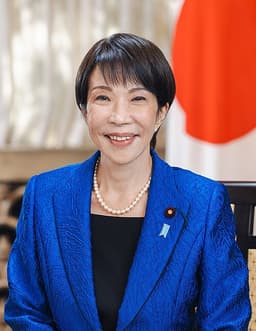
Sanna Marin
Politician · Modern
50.6Total

Su Shun
Politician · Modern
35.4Total
Basic Information
Born
1985
1816
Died
—
1861
Era
Modern
Modern
Nationality
Finland
China
Occupation
Politician
Politician
Civilization
Western
Eastern
Score Comparison
Military (10%)
49.7
14.8
Political (20%)
68.0
27.9
Influence (20%)
51.8
45.5
Legacy (20%)
37.5
38.3
Leadership (15%)
58.8
34.6
Strategy (15%)
42.7
36.1
TOTAL
50.6
35.4
Sanna Marin — Complete Timeline
2019 AD
Appointed Prime Minister of FinlandPolitical Action◆ Major
Marin became Prime Minister of Finland at age 34, leading a five-party coalition government. She was the world's youngest serving prime minister at the time, heading Finland's Social Democratic Party.
Prime MinisterYouthCoalition
Impact: nationalconstructive
2020 AD
COVID-19 Pandemic ResponsePolitical Action◆ Major
Marin's government implemented lockdowns, travel restrictions, and economic support measures during the COVID-19 pandemic. Finland maintained relatively low infection rates compared to many European countries.
PandemicPublic HealthEconomic Policy
Impact: nationalconstructive
2022 AD
NATO Membership ApplicationPolitical Action
Following Russia's invasion of Ukraine, Marin's government led Finland's application to join NATO, ending decades of military non-alignment. Finland became a NATO member in 2023.
NATOSecurityForeign Policy
Impact: globalconstructive
2023 AD
Lost 2023 Parliamentary ElectionPolitical Action◆ Major
Marin's Social Democratic Party finished third in the 2023 Finnish parliamentary election, losing to the National Coalition Party and the Finns Party. She resigned as party leader following the defeat.
ElectionDefeatResignation
Impact: national
Su Shun — Complete Timeline
1858 AD
Appointed Grand SecretaryPolitical Action◆ Major
Su Shun was appointed Grand Secretary of the Qing Empire, becoming a key figure in the Xianfeng Emperor's court. He was known for his conservative views and opposition to foreign influence.
AppointmentGovernmentXianfeng Era
Impact: national
1861 AD
Appointed Regent for the Tongzhi EmperorPolitical Action◆ Major
Upon the death of the Xianfeng Emperor, Su Shun was appointed as one of the eight regents for the young Tongzhi Emperor. He effectively controlled the imperial government, opposing the influence of Empress Dowager Cixi and Prince Gong.
RegencySuccessionTongzhi Era
Impact: national
Executed in the Xinyou CoupPolitical Action◆ Major
Su Shun was arrested and executed by order of Empress Dowager Cixi and Prince Gong during the Xinyou Coup. The coup removed the regents and consolidated power in the hands of Cixi, marking a turning point in Qing politics.
CoupExecutionCixi
Impact: nationaldestructive
Expert Analysis
Origins
**Sanna Marin** was born on November 16, 1985, in Helsinki, Finland, but grew up in the small city of Tampere. Raised by a single mother in a rented apartment, Marin experienced financial insecurity and was the first in her family to attend university. She studied administrative sciences at the University of Tampere, graduating in 2017. Her early involvement in the Social Democratic Youth paved the way for her political career.
**Su Shun** (also known as Sushun) was born in 1816 into the Aisin Gioro clan, the imperial family of the Qing dynasty. He was a sixth-generation descendant of Nurhaci, the founder of the Qing. Su Shun passed the imperial examinations and entered the bureaucracy, becoming a trusted official under the Xianfeng Emperor. His aristocratic background and conservative education shaped his worldview.
Rise to Power
**Sanna Marin** entered parliament in 2015 and quickly rose through the ranks of the Social Democratic Party. She served as Minister of Transport and Communications from June to December 2019. On December 10, 2019, following the resignation of Prime Minister Antti Rinne, Marin was elected as Finland's Prime Minister at age 34, becoming the world's youngest serving prime minister. Her coalition government included five parties, all led by women.
**Su Shun** rose to prominence under the Xianfeng Emperor, who appointed him Grand Secretary in 1855. Su Shun was a hardliner against foreign influence and supported the emperor's resistance to Western powers during the Second Opium War. In 1860, when the emperor fled Beijing after the Anglo-French occupation, Su Shun accompanied him. Upon the emperor's death in 1861, Su Shun was appointed one of eight regents for the young Tongzhi Emperor, effectively controlling the government.
Leadership & Governance
**Sanna Marin** led a center-left coalition focused on social welfare, climate action, and gender equality. Her government implemented progressive policies such as increasing parental leave for both parents and raising taxes on high earners. During the COVID-19 pandemic, her administration enacted strict lockdowns and economic support packages, resulting in one of the lowest infection rates in Europe. In foreign policy, Marin was a vocal critic of Russia's invasion of Ukraine, leading Finland's historic application to join NATO in May 2022, which ended decades of military non-alignment. Her governance style was data-driven and collaborative, but she faced criticism for a leaked video of her dancing at a party in 2022.
**Su Shun** governed as a conservative regent, resisting reforms and opposing Western influence. He centralized power, purging rivals and promoting Manchu officials over Han Chinese. His administration was marked by corruption and nepotism. Su Shun opposed the Self-Strengthening Movement, which sought to modernize China's military and industry. He also enforced harsh tax policies that exacerbated the Taiping Rebellion. His leadership score of 34.6 reflects his autocratic and short-sighted governance.
Triumph & Tragedy
**Sanna Marin's** greatest triumph was her successful handling of the COVID-19 pandemic, with Finland maintaining low mortality rates. Her government's decisive move to join NATO, approved by the Finnish parliament in June 2022, secured Finland's security in the face of Russian aggression. However, her economic policies, including increased public spending, led to rising debt. In the 2023 parliamentary election, her Social Democratic Party finished third with 19.9% of the vote, losing to the conservative National Coalition Party. This loss ended her term as prime minister.
**Su Shun's** greatest success was consolidating power as regent, but his refusal to adapt to modern challenges led to disaster. The Xinyou Coup in November 1861, orchestrated by Empress Dowager Cixi and Prince Gong, resulted in his arrest and execution. He was beheaded in public, and his family was punished. His failure to cooperate with reformers and his authoritarian tactics ultimately led to his downfall.
Character & Destiny
**Sanna Marin** is characterized by her pragmatic, progressive, and resilient nature. She grew up in modest circumstances and became a symbol of young, female leadership. Her decision-making is driven by data and consensus, but she can be outspoken, as seen in her criticism of Russia. Her political destiny was cut short by electoral defeat, but she remains a prominent figure in European politics.
**Su Shun** was known for his arrogance, stubbornness, and conservatism. He believed in the supremacy of the Manchu elite and resisted any change. His refusal to compromise led to his isolation and eventual execution. His character sealed his fate, as his enemies united against him.
Legacy
**Sanna Marin's** legacy is still forming, but she is remembered for modernizing Finnish social policies and steering Finland into NATO. Her tenure inspired many young women in politics. Her influence score of 51.8 reflects her global recognition, though her policies' long-term impact remains to be seen.
**Su Shun** is remembered as a symbol of Qing conservatism and corruption. His execution marked the rise of Empress Dowager Cixi, who would rule for decades. His legacy score of 38.3 is slightly higher than Marin's legacy score of 37.5, but his overall impact was negative, as his policies weakened the Qing dynasty.
Conclusion
Sanna Marin had a greater impact than Su Shun. Her total score of 50.6 surpasses Su Shun's 35.4 by 15.2 points. Marin's leadership in crises, such as the pandemic and NATO accession, shows effective governance, while Su Shun's autocracy and resistance to change led to his downfall. Marin's influence on global politics, especially as a young female leader, is more significant than Su Shun's brief regency. Although Su Shun had a higher legacy score (38.3 vs. 37.5), Marin's actions strengthened Finland's position in the world, whereas Su Shun's policies weakened the Qing. Therefore, Sanna Marin is the more impactful figure.
Rankings
🥇
Sanna MarinLeader
Mil: 49.7Pol: 68.0Inf: 51.8
50.6
🥈
Su Shun
Mil: 14.8Pol: 27.9Inf: 45.5
35.4
+15.2 behind
How This Comparison Works
Algorithm
Each figure is scored on 6 dimensions (0—100 scale) based on structured historical data: Military (10%), Political (20%), Influence (20%), Legacy (20%), Leadership (15%), Strategy (15%). The weighted total produces the final ranking.
Data Sources
Scores are computed from structured sub-indicators in the database. Scale factors adjust for era (Ancient ×0.85, Modern ×1.0) and civilization size (Eastern ×1.05, Other ×0.80) to account for differences in population and military scale.
Maximum 3 Figures
Comparisons are limited to 2—3 figures to ensure readability and statistical meaningfulness.
Error Margins
±5 points per dimension — Sub-scores are derived from historical records with inherent uncertainty. Two figures within 5 points on a dimension should be considered roughly equivalent in that area.
Total Score Accuracy
±3 points overall — The weighted combination of 6 dimensions produces a total score with approximately ±3 points of uncertainty. Differences of less than 3 points are not statistically significant— the figures are effectively tied.
Known Limitations
- Historical records are incomplete and uneven across civilizations
- Figures from oral-tradition societies may be underrepresented
- Occupation labels can misclassify multi-role figures
- Scores measure capability and impact, not moral character
- Quantitative scoring is a comparison tool, not absolute truth
Capability Radar
Military (10%) — Battles & Warfare
Battles
27
16
Win Rate
32
16
Expansion
37
18
Political (20%) — Governance & Reform
Reform
40
10
Diplomacy
45
10
Economy
35
10
Influence (20%) — Cultural & Global Reach
Cultural
20
5
Global
30
5
Legacy (20%) — Historical Impact
Historical
15
20
Longevity
10
10
Leadership (15%) — Power & Stability
Tenure
25
15
Stability
30
5
Strategy (15%) — Tactics & Innovation
Strategy
39
22
Tactics
43
25
Reform
41
29
Similar Comparisons
Comments & Discussion
No comments yet. Be the first to share your thoughts!