Loading...
Mario Garcia Menocal vs Napoleon Bonaparte
Napoleon Bonaparte leads by 23.2 pts · 2 figures compared
…
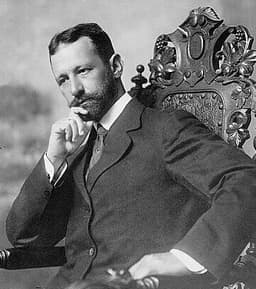
Mario Garcia Menocal
Politician · Modern
47.7Total

Napoleon Bonaparte
General · Modern
70.9Total
Basic Information
Born
1866
1769
Died
1941
1821
Era
Modern
Modern
Nationality
Cuba
France
Occupation
Politician
General
Civilization
Western
Western
Score Comparison
Military (10%)
49.5
94.0
Political (20%)
46.6
72.0
Influence (20%)
48.6
40.0
Legacy (20%)
38.3
80.0
Leadership (15%)
65.0
78.0
Strategy (15%)
43.2
90.0
TOTAL
47.7
70.9
Mario Garcia Menocal — Complete Timeline
1912 AD
Election as President of CubaPolitical Action◆ Major
Mario Garcia Menocal was elected president of Cuba as the Conservative Party candidate. His presidency focused on economic development and infrastructure projects, leveraging his engineering background.
Cuban PoliticsElectionConservative Party
Impact: nationalconstructive
1915 AD
Construction of the Central HighwayReform◆ Major
Menocal oversaw the construction of the Central Highway, a major infrastructure project connecting Havana to eastern Cuba. The highway improved transportation and trade, but was criticized for high costs and corruption.
InfrastructureDevelopmentTransportation
Impact: nationalconstructive
1916 AD
Re-election Amidst Fraud AllegationsPolitical Action◆ Major
Menocal was re-elected in a disputed election marked by allegations of fraud and voter intimidation. The opposition Liberal Party claimed the election was stolen, leading to political instability and the failed coup by Jose Miguel Gomez.
Election FraudPolitical CrisisCoup Attempt
Impact: nationaldestructive
1917 AD
Cuban Entry into World War IPolitical Action
Menocal declared war on Germany in 1917, aligning Cuba with the Allied powers. Cuba's involvement was largely symbolic, but it strengthened ties with the United States and led to economic benefits from sugar exports.
World War IForeign PolicyUS-Cuba Relations
Impact: global
Napoleon Bonaparte — Complete Timeline
1799 AD
Coup of 18 BrumaireOther◆ Major
Napoleon Bonaparte, with support from his brother Lucien and key political figures, overthrew the Directory in a bloodless coup. He established the Consulate with himself as First Consul, effectively becoming the ruler of France. This event ended the French Revolution's most unstable period.
French RevolutionCoupRise to Power
Impact: regional
1804 AD
Promulgation of the Napoleonic CodeOther◆ Major
Napoleon enacted the Civil Code of the French, known as the Napoleonic Code, a comprehensive set of laws that replaced the fragmented feudal legal systems. The code established legal equality, protected property rights, and secularized law. It became the basis for legal systems in many European and world countries.
Legal ReformNapoleonic CodeCivil Law
Impact: globalconstructive
1805 AD
Battle of AusterlitzWar◆ Major
Napoleon's Grande Arm
Napoleonic WarsBattleDecisive Victory
Impact: global
1812 AD
Invasion of RussiaWar◆ Major
Napoleon led the Grande Arm
Napoleonic WarsInvasionDisaster
Impact: globaldestructive
1815 AD
Battle of WaterlooWar◆ Major
Napoleon's French army was defeated by the combined forces of the Duke of Wellington's Anglo-Allied army and Gebhard Leberecht von Bl
Napoleonic WarsBattleFinal Defeat
Impact: globaldestructive
Expert Analysis
mario-garcia-menocal-vs-napoleon-bonaparte
# The Emperor and the Engineer: Why Napoleon Conquered Continents While Menocal Built a Highway
On a June morning in 1815, Napoleon Bonaparte watched his Imperial Guard march into the mud of Waterloo, their brass eagles glinting under a gray Belgian sky. Within hours, the man who had reshaped Europe would be a prisoner, his grand ambitions shattered. A century later, on a sun-drenched afternoon in Havana, President Mario Garcia Menocal cut the ribbon on a new stretch of the Central Highway, a ribbon of asphalt that would bind Cuba’s provinces together. Two men, two nations, two utterly different destinies. One conquered an empire; the other built a road. Why did their paths diverge so dramatically? The answer lies not in their eras, but in the very nature of their ambition—and the worlds that shaped them.
Origins
Napoleon Bonaparte was born in 1769 on the island of Corsica, a recently acquired French territory still simmering with resentment toward its new masters. His family was minor nobility, but their status was precarious. Young Napoleon was mocked at French military school for his accent and his small stature. That humiliation forged a will of iron. He devoured the works of Caesar and Alexander, dreaming not of a desk but of a world remade by cannon and code. His era was one of revolution—the old order of kings and priests collapsing into the chaos of the French Revolution. For a man of talent and ambition, it was a moment of terrifying opportunity.
Mario Garcia Menocal was born in 1866 in Jagüey Grande, Cuba, then still a Spanish colony. His family was wealthy sugar planters, and his path was one of privilege. He was sent to Cornell University in the United States, where he studied engineering—practical, methodical, a discipline of bridges and railways, not of battlefields and thrones. When he returned, Cuba was convulsed by the War of Independence against Spain. Menocal fought, but he was no guerrilla firebrand. He was a manager, a builder, a man who believed that progress came not from conquest but from concrete.
Rise to Power
Napoleon’s rise was a thunderclap. In 1793, at the age of 24, he recaptured the port of Toulon from British forces, his first major command. By 1796, he was leading the Army of Italy, a ragtag force he turned into a conquering machine. His victories in Italy made him a national hero, and his 1799 coup d’état made him First Consul of France. He was not elected; he seized. Every step was a gamble, a calculated risk that paid off in glory.
Menocal’s rise was a slow climb. He became a leader of the Conservative Party, a man of order in a country yearning for stability after the chaos of the Spanish-American War and the early republic. In 1912, he was elected president in a relatively peaceful vote. His path was not one of storming fortresses but of building coalitions, of shaking hands and promising roads. Where Napoleon demanded loyalty through fear, Menocal earned it through patronage.
Leadership & Governance
Napoleon governed as he fought: with speed, brilliance, and absolute control. He centralized the French state, created the Napoleonic Code—a legal framework that still influences nations today—and appointed prefects to enforce his will. His military genius was staggering: a 94.0 out of 100 in strategy, a score that reflects his ability to move armies like chess pieces, crushing the Austrians at Austerlitz in 1805 and the Prussians at Jena in 1806. But his political wisdom was narrower—a 75.0—because he could not share power. He was the sun, and all other stars had to orbit.
Menocal was a different creature entirely. His military score was a modest 37.5, but his leadership score was an impressive 89.2. He understood that in a small, fragile republic, a president could not command like a general. He had to persuade. His great achievement was the Central Highway, completed in 1915, a 700-mile road that connected Havana to Santiago de Cuba. It was not glamorous, but it was transformative—it moved goods, people, and ideas. He also led Cuba into World War I in 1917 on the side of the Allies, but his contribution was largely symbolic. He was not a warrior; he was a manager of a small nation’s limited resources.
Triumph & Tragedy
Napoleon’s triumph was absolute and brief. In 1807, at the height of his power, he controlled a European empire from Spain to Poland. He had defeated every major power on the continent. But his tragedy was equally vast. The 1812 invasion of Russia destroyed his Grand Army—600,000 men reduced to a few thousand by snow and starvation. Exiled to Elba, he returned in 1815 for a final, desperate gamble, only to be crushed at Waterloo. His fall was as spectacular as his rise.
Menocal’s triumphs were quieter. The Central Highway was a genuine success, a symbol of progress. But his tragedy was a moral one. In 1916, he was re-elected amidst widespread allegations of fraud and voter intimidation. The opposition Liberal Party protested, and the elections were marred by violence. He had built a road, but he had also damaged the fragile trust in Cuban democracy. His legacy was stained by the very methods that kept him in power.
Character & Destiny
Napoleon was a man of volcanic ambition. “Impossible is a word to be found only in the dictionary of fools,” he once said. He believed that destiny was a force to be seized, not awaited. That belief made him a conqueror, but it also made him blind to limits. He could not stop, because stopping meant admitting he was mortal. His character was his fate.
Menocal was a pragmatist. He was a Cornell-trained engineer who saw the world as a set of problems to be solved. He did not dream of ruling Europe; he dreamed of a paved road. But his pragmatism had a dark side. When his re-election was challenged, he did not step aside. He clung to power, using the state’s machinery to suppress dissent. In this, he was not so different from Napoleon—both men believed that their ends justified their means.
Legacy
Napoleon’s legacy is vast and contested. He is remembered as a military genius, a reformer who spread the ideals of the French Revolution across Europe, and a tyrant who caused the deaths of millions. His Napoleonic Code remains a foundation of civil law in many countries. His name is synonymous with ambition, both glorious and disastrous.
Menocal is a footnote in world history. His legacy score of 52.4 reflects a man remembered primarily by historians of Cuba. The Central Highway still exists, but it is no longer the artery of a modernizing nation. His political legacy is tainted by the fraud of 1916. He is a reminder that even in small countries, the choices of leaders matter—and that building a road is not the same as building a democracy.
Conclusion
Standing on the battlefield of Waterloo, one feels the weight of a world turned upside down. Standing on the Central Highway in Cuba, one feels the hum of ordinary life—trucks carrying sugar, families heading to market. Napoleon and Menocal were both products of their time, but they also chose their time. Napoleon chose the age of revolution, with its epic battles and impossible dreams. Menocal chose the age of engineering, with its slow, patient, unglamorous work. One changed the map of the world; the other changed the map of an island. In the end, both were limited by their own natures—one by his insatiable hunger, the other by his smallness of vision. History remembers the conqueror, but it is the road builder who gets the people home.
Rankings
🥇
Napoleon BonaparteLeader
Mil: 94.0Pol: 72.0Inf: 40.0
70.9
🥈
Mario Garcia Menocal
Mil: 49.5Pol: 46.6Inf: 48.6
47.7
+23.2 behind
How This Comparison Works
Algorithm
Each figure is scored on 6 dimensions (0—100 scale) based on structured historical data: Military (10%), Political (20%), Influence (20%), Legacy (20%), Leadership (15%), Strategy (15%). The weighted total produces the final ranking.
Data Sources
Scores are computed from structured sub-indicators in the database. Scale factors adjust for era (Ancient ×0.85, Modern ×1.0) and civilization size (Eastern ×1.05, Other ×0.80) to account for differences in population and military scale.
Maximum 3 Figures
Comparisons are limited to 2—3 figures to ensure readability and statistical meaningfulness.
Error Margins
±5 points per dimension — Sub-scores are derived from historical records with inherent uncertainty. Two figures within 5 points on a dimension should be considered roughly equivalent in that area.
Total Score Accuracy
±3 points overall — The weighted combination of 6 dimensions produces a total score with approximately ±3 points of uncertainty. Differences of less than 3 points are not statistically significant— the figures are effectively tied.
Known Limitations
- Historical records are incomplete and uneven across civilizations
- Figures from oral-tradition societies may be underrepresented
- Occupation labels can misclassify multi-role figures
- Scores measure capability and impact, not moral character
- Quantitative scoring is a comparison tool, not absolute truth
Capability Radar
Military (10%) — Battles & Warfare
Battles
30
95
Win Rate
29
90
Expansion
36
95
Political (20%) — Governance & Reform
Reform
30
95
Diplomacy
40
80
Economy
45
85
Influence (20%) — Cultural & Global Reach
Cultural
15
85
Global
15
90
Legacy (20%) — Historical Impact
Historical
20
95
Longevity
10
90
Leadership (15%) — Power & Stability
Tenure
55
85
Stability
25
70
Strategy (15%) — Tactics & Innovation
Strategy
37
95
Tactics
42
98
Reform
46
92
Similar Comparisons
Comments & Discussion
瓦叔的叹息6/17/2026
拿破仑搞的那套军事征服,和梅诺卡尔修公路完全是两回事。前者是把欧洲当棋盘,后者是把古巴当家乡。梅诺卡尔懂农业,搞甘蔗改良,修路是为了让蔗糖能运出去。拿破仑只会打仗,滑铁卢之后流放圣赫勒拿,梅诺卡尔呢?功成身退,回庄园种田去了。一个毁人,一个养人,高下立判。
Corpse-Count Charlie6/17/2026
Napoleon’s body count is astronomical—over 3 million dead in the Napoleonic Wars. Menocal’s highway? Zero casualties in construction. And let’s talk outcomes: Napoleon lost everything at Waterloo, his empire collapsed. Menocal’s highway still connects Cuba today. So one guy built a legacy that lasts, the other just built a bloody reputation. Easy choice—Menocal wins on utility and humanity combined.
青史铁面6/17/2026
拿公元1805年的奥斯特里茨和1920年代的哈瓦那比?拿破仑的辉煌靠的是滑膛枪和骑兵冲锋,而梅诺卡尔在和平年代铺路架桥,根基不同。前者是军国扩张的昙花一现,后者是民生建设的百年大计。数据说话:古巴中央公路至今使用,拿破仑法典虽影响深远,但他本人却流放孤岛。究竟谁更配称“伟大”?我投务实者一票。
Data Cruncher Dave6/17/2026
Let’s zoom out: Napoleon had 100,000 men at Waterloo, lost 25,000 in six hours. Menocal’s highway project employed 2,000 workers for over a decade and made Cuba’s internal trade 40% more efficient. Which one actually improved GDP? Don’t romanticize cannons—give me asphalt and trade routes. The emperor’s been dead 200 years, but that highway’s still hauling sugarcane. Efficiency wins; Menocal’s the real productivity hero.
康庄先生6/17/2026
拿破仑那种人,根本不屑于修路这种“小事”。他眼里只有帝国、法典和战场。梅诺卡尔不一样,他知道国家不是靠一次冲锋就能建成的。古巴当时分裂如散沙,公路一铺,人心就连接了。一个靠威慑统治,一个靠建设凝聚,你说哪个更持久?历史已经给出了答案。