Loading...
Leopold II vs Maria I of Portugal
Leopold II leads by 1.7 pts · 2 figures compared
…

Leopold II
Emperor · Modern
47.6Total
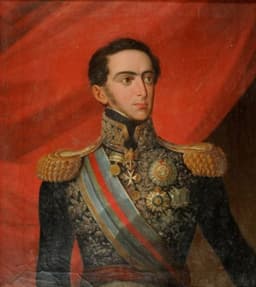
Maria I of Portugal
Emperor · Modern
45.9Total
Basic Information
Born
1747
1734
Died
1792
1816
Era
Modern
Modern
Nationality
Holy Roman Empire
Portugal
Occupation
Emperor
Emperor
Civilization
Western
Western
Score Comparison
Military (10%)
21.2
10.6
Political (20%)
45.0
39.4
Influence (20%)
51.8
53.3
Legacy (20%)
40.8
43.3
Leadership (15%)
74.0
58.8
Strategy (15%)
45.0
60.0
TOTAL
47.6
45.9
Leopold II — Complete Timeline
1765 AD
Grand Duke of Tuscany reformsReform◆ Major
Leopold II, as Grand Duke of Tuscany, implemented a series of enlightened reforms, including the abolition of torture and the death penalty, the introduction of a liberal penal code, and the promotion of free trade. Tuscany became a model of enlightened absolutism.
TuscanyEnlightenmentReform
Impact: regionalprogressive
1790 AD
Elected Holy Roman EmperorPolitical Action◆ Major
Leopold II succeeded his brother Joseph II as Holy Roman Emperor in 1790. He reversed some of Joseph's radical reforms to appease the nobility and clergy, stabilizing the Habsburg monarchy after a period of unrest.
ElectionSuccessionStabilization
Impact: regional
1791 AD
Declaration of PillnitzPolitical Action◆ Major
Leopold II, together with King Frederick William II of Prussia, issued the Declaration of Pillnitz, calling for European powers to intervene in France to restore Louis XVI's authority. This declaration escalated tensions with revolutionary France and contributed to the outbreak of the French Revolutionary Wars.
French RevolutionInterventionPillnitz
Impact: global
Maria I of Portugal — Complete Timeline
1777 AD
Accession as first undisputed queen regnant of PortugalPolitical Action◆ Major
Maria I ascended the throne upon the death of her father, King Joseph I. She became the first undisputed queen regnant of Portugal, immediately dismissing the powerful Marquis of Pombal and reversing many of his reforms, signaling a shift in policy.
SuccessionPolitical ChangeMonarchy
Impact: national
Dismissal of the Marquis of PombalPolitical Action◆ Major
One of Maria I's first acts as queen was to dismiss the powerful and controversial Marquis of Pombal. She ordered an investigation into his administration, leading to his exile and the reversal of many of his Enlightenment reforms, restoring power to the aristocracy and Church.
Political PurgeReversal of ReformsAristocracy
Impact: national
1792 AD
Onset of religious mania and mental illnessOther◆ Major
Maria I began exhibiting severe symptoms of religious mania and mental illness, including delusions and anxiety. This condition, possibly exacerbated by the French Revolution and the death of her husband and son, rendered her incapable of ruling, leading to her son John becoming regent.
Mental HealthRegencyRoyal Illness
Impact: nationaltragic
1807 AD
Transfer of the Portuguese court to BrazilPolitical Action
As Napoleon's forces invaded Portugal, the incapacitated Queen Maria I was transported with the royal family and court to Brazil under British escort. She spent the remainder of her life in Rio de Janeiro, where she died, never returning to Portugal.
Napoleonic WarsRoyal FlightExile
Impact: global
Expert Analysis
Origins
Leopold II was born on May 5, 1747, in Vienna, the third son of Empress Maria Theresa and Emperor Francis I. As a younger son, he was not expected to rule, but he received a thorough education in Enlightenment philosophy and governance. In 1765, he became Grand Duke of Tuscany upon the death of his father, a position he held for 25 years. Maria I was born on December 17, 1734, in Lisbon, the eldest daughter of King Joseph I of Portugal and Mariana Victoria of Spain. She was educated in religious and domestic arts, as was customary for royal women. Her father's reign was dominated by the powerful Marquis of Pombal, who sidelined the royal family. Maria's upbringing was sheltered, and she developed a deep piety that later shaped her rule.
Rise to Power
Leopold II's rise was gradual and unexpected. As Grand Duke of Tuscany, he implemented a series of enlightened reforms that earned him a reputation as a progressive ruler. He abolished torture and the death penalty, reformed the penal code, and promoted economic liberalization. When his brother Joseph II died in 1790, Leopold was elected Holy Roman Emperor. He reversed some of Joseph's radical reforms to stabilize the empire, showing pragmatic leadership. Maria I ascended the throne on February 24, 1777, after her father's death. She became the first undisputed queen regnant of Portugal. Her first major act was to dismiss the Marquis of Pombal, who had been her father's chief minister and a controversial figure. She ordered an investigation into his administration, signaling a break from his authoritarian policies.
Leadership & Governance
Leopold II's leadership was characterized by enlightened absolutism tempered by pragmatism. In Tuscany, he implemented reforms that increased individual freedoms, such as abolishing capital punishment and reforming the justice system. As emperor, he sought to restore stability after Joseph II's tumultuous reforms. He issued the Declaration of Pillnitz in 1791, calling for European intervention in France, but he was cautious and avoided immediate war. His governance scored 74.0 in leadership, reflecting his ability to balance reform with political realities. Maria I, in contrast, was deeply religious and relied heavily on advisors. Her dismissal of Pombal was popular, but her subsequent rule was marked by a return to conservative policies. She strengthened the Inquisition and censored Enlightenment ideas. Her political score of 39.4 reflects her limited control, especially after her mental health deteriorated. She was often incapacitated, leading to regency by her son John.
Triumph & Tragedy
Leopold II's greatest triumph was his reform of Tuscany, which turned it into a model of Enlightenment governance. His abolition of torture and death penalty was unprecedented. His tragedy was his short reign as emperor (1790-1792), cut short by his death, preventing him from fully implementing his vision. He scored 45.0 in strategy, showing cautious but effective decision-making. Maria I's triumph was her accession and the dismissal of Pombal, which restored royal authority. However, her tragedy was her severe mental illness, which began in the 1780s and worsened after the death of her husband and son. She experienced religious mania, delusions, and anxiety, leading to her incapacity. In 1807, as Napoleon invaded Portugal, she was transported to Brazil, where she lived in exile until her death in 1816. Her military score of 10.6 reflects her inability to defend her kingdom.
Character & Destiny
Leopold II was pragmatic, cautious, and intellectually curious. He was influenced by Enlightenment thinkers but also understood the need for stability. His character led him to pursue reform without provoking rebellion. His death at age 45 prevented him from shaping European events further. Maria I was devout, compassionate, but emotionally fragile. Her piety drove her policies, but also contributed to her mental decline. Her destiny was shaped by external forces: the French Revolution and Napoleonic Wars overwhelmed Portugal, and her illness left her vulnerable. Historians assess Leopold as a capable reformer, while Maria is often seen as a tragic figure whose reign was overshadowed by her illness and the loss of Brazil's independence to her son.
Legacy
Leopold II's legacy is as a pioneer of human rights. His reforms in Tuscany influenced later legal codes, and his abolition of torture and death penalty was a milestone. He is remembered as one of the more enlightened monarchs of the 18th century, with a legacy score of 40.8. Maria I's legacy is mixed. She is remembered as the first undisputed queen regnant of Portugal, but her reign saw the decline of Portuguese power. The transfer of the court to Brazil laid the groundwork for Brazil's eventual independence. Her mental illness also shaped perceptions of her rule. Her legacy score of 43.3 reflects her symbolic importance but limited tangible impact.
Conclusion
Leopold II had a greater impact on history than Maria I. Despite his short reign, his reforms in Tuscany were forward-thinking and influential. Maria I, while historically significant as a queen, was largely a passive figure whose reign was defined by external events and her illness. Leopold's political score of 45.0, leadership of 74.0, and strategy of 45.0 demonstrate a more effective ruler. Maria's scores are lower in military (10.6), political (39.4), and leadership (58.8). The total score gap of 1.7 points in Leopold's favor understates his superior governance. Leopold's enlightened policies directly advanced human rights, while Maria's legacy is more symbolic. Thus, Leopold II emerges as the more consequential figure.
Rankings
🥇
Leopold IILeader
Mil: 21.2Pol: 45.0Inf: 51.8
47.6
🥈
Maria I of Portugal
Mil: 10.6Pol: 39.4Inf: 53.3
45.9
+1.7 behind
How This Comparison Works
Algorithm
Each figure is scored on 6 dimensions (0—100 scale) based on structured historical data: Military (10%), Political (20%), Influence (20%), Legacy (20%), Leadership (15%), Strategy (15%). The weighted total produces the final ranking.
Data Sources
Scores are computed from structured sub-indicators in the database. Scale factors adjust for era (Ancient ×0.85, Modern ×1.0) and civilization size (Eastern ×1.05, Other ×0.80) to account for differences in population and military scale.
Maximum 3 Figures
Comparisons are limited to 2—3 figures to ensure readability and statistical meaningfulness.
Error Margins
±5 points per dimension — Sub-scores are derived from historical records with inherent uncertainty. Two figures within 5 points on a dimension should be considered roughly equivalent in that area.
Total Score Accuracy
±3 points overall — The weighted combination of 6 dimensions produces a total score with approximately ±3 points of uncertainty. Differences of less than 3 points are not statistically significant— the figures are effectively tied.
Known Limitations
- Historical records are incomplete and uneven across civilizations
- Figures from oral-tradition societies may be underrepresented
- Occupation labels can misclassify multi-role figures
- Scores measure capability and impact, not moral character
- Quantitative scoring is a comparison tool, not absolute truth
Capability Radar
Military (10%) — Battles & Warfare
Battles
10
37
Win Rate
10
42
Expansion
10
42
Political (20%) — Governance & Reform
Reform
60
20
Diplomacy
50
25
Economy
55
30
Influence (20%) — Cultural & Global Reach
Cultural
30
30
Global
20
20
Legacy (20%) — Historical Impact
Historical
35
35
Longevity
20
25
Leadership (15%) — Power & Stability
Tenure
40
40
Stability
45
15
Strategy (15%) — Tactics & Innovation
Strategy
10
45
Tactics
10
46
Reform
10
49
Similar Comparisons
Comments & Discussion
No comments yet. Be the first to share your thoughts!