Loading...
Margaret of Parma vs Nicolas Maduro
Margaret of Parma leads by 11.7 pts · 2 figures compared
…

Margaret of Parma
Politician · Modern
55.8Total
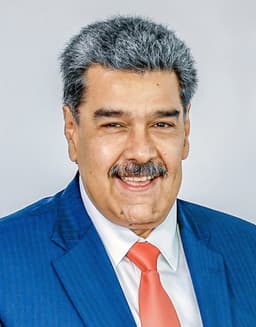
Nicolas Maduro
Politician · Modern
44.1Total
Basic Information
Born
1522
1962
Died
1586
—
Era
Modern
Modern
Nationality
Netherlands
Venezuela
Occupation
Politician
Politician
Civilization
Western
Western
Score Comparison
Military (10%)
39.9
50.0
Political (20%)
68.0
25.0
Influence (20%)
54.9
47.9
Legacy (20%)
45.8
37.5
Leadership (15%)
74.0
65.7
Strategy (15%)
53.8
41.9
TOTAL
55.8
44.1
Margaret of Parma — Complete Timeline
1559 AD
Appointed Governor of the NetherlandsPolitical Action◆ Major
Margaret of Parma was appointed Governor of the Netherlands by her half-brother King Philip II of Spain. She governed during the early stages of the Dutch Revolt, implementing policies that sought to suppress Protestantism and maintain Spanish control.
Dutch RevoltSpanish NetherlandsGovernorship
Impact: regional
1566 AD
Issued the Edict of 1566Political Action◆ Major
Margaret issued an edict moderating the anti-heresy laws in the Netherlands, allowing limited Protestant worship in an attempt to quell unrest. This concession failed to satisfy Calvinist radicals and contributed to the outbreak of the Iconoclastic Fury later that year.
Religious PolicyDutch RevoltCompromise
Impact: regional
Iconoclastic Fury (Beeldenstorm)Other◆ Major
Calvinist mobs destroyed Catholic church art and statues across the Netherlands. Margaret's government was unable to prevent the widespread destruction, which deepened the religious divide and prompted Philip II to send the Duke of Alba with an army to restore order.
IconoclasmDutch RevoltReligious Violence
Impact: regionaldestructive
1567 AD
Resigned as GovernorPolitical Action◆ Major
Margaret resigned as Governor of the Netherlands after the arrival of the Duke of Alba, who was sent by Philip II to suppress the revolt. She opposed Alba's harsh policies and left the Netherlands, returning to Italy.
Dutch RevoltResignationAlba
Impact: regional
Nicolas Maduro — Complete Timeline
2013 AD
Assumption of Presidency (2013)Political Action◆ Major
Following the death of Hugo Ch
SuccessionBolivarian RevolutionElection
Impact: national
2014 AD
Economic Collapse and Hyperinflation (2014-2019)Other◆ Major
Under Maduro's presidency, Venezuela entered a severe socioeconomic crisis. The collapse of oil prices, combined with economic mismanagement and sanctions, led to hyperinflation, widespread shortages of food and medicine, and a massive emigration crisis, with millions of Venezuelans leaving the country.
Economic CrisisHyperinflationEmigration
Impact: regionaltragic
2019 AD
Presidential Crisis and Guaidó Challenge (2019)Political Action◆ Major
Following a disputed 2018 election, opposition leader Juan Guaid
Political CrisisDual PresidencyInternational Recognition
Impact: globaldestructive
Expert Analysis
Origins
Margaret of Parma was born in 1522 in Oudenaarde, Flanders, as the illegitimate daughter of Holy Roman Emperor Charles V. Raised by relatives, she received a solid education and later married Alessandro de' Medici, Duke of Florence, and later Ottavio Farnese, Duke of Parma. Her noble lineage and connections to the Habsburg court positioned her for high office. Nicolas Maduro was born in 1962 in Caracas, Venezuela, into a working-class family. He became a bus driver and union activist, later aligning with Hugo Chávez's political movement. Maduro lacked formal higher education and rose through the ranks of the United Socialist Party of Venezuela (PSUV).
Rise to Power
Margaret's rise came through dynastic appointment: In 1559, her half-brother King Philip II of Spain appointed her Governor of the Netherlands, a region of 17 provinces. She initially relied on Cardinal Granvelle as advisor but later distanced herself. Her governance faced the growing Protestant Reformation and noble opposition. Maduro's rise was as Chávez's protégé: He served as Foreign Minister (2006-2012) and Vice President (2012-2013). After Chávez's death in March 2013, Maduro won a special election in April 2013 with 50.6% of the vote against Henrique Capriles, a margin of 1.5 percentage points. The election was contested by the opposition.
Leadership & Governance
Margaret governed with a political score of 68.0, attempting to balance Spanish royal authority with Dutch demands for autonomy. She issued the Edict of 1566, moderating anti-heresy laws to allow limited Protestant worship, hoping to quell unrest. However, her concessions were seen as weak by both Catholics and Calvinists. She lacked military power (score 39.9) and relied on Spanish troops. Maduro's political score is 25.0, reflecting his inability to manage Venezuela's economy. He continued Chávez's socialist policies, including price controls and nationalizations, but after the 2014 oil price collapse, economic mismanagement led to hyperinflation (reaching 65,000% in 2018) and shortages of food and medicine. His leadership style was authoritarian, suppressing dissent and rigging elections.
Triumph & Tragedy
Margaret's greatest success was temporarily stabilizing the Netherlands through the Edict of 1566, which delayed full revolt. Her tragedy was the Iconoclastic Fury (Beeldenstorm) in August 1566, when Calvinist mobs destroyed Catholic church art across the country. Her government failed to prevent the destruction, leading Philip II to send the Duke of Alba with a Spanish army. Margaret resigned in 1567 in protest, her moderate approach rejected. Maduro's triumph was surviving numerous challenges, including the 2019 presidential crisis where opposition leader Juan Guaidó declared himself interim president, backed by over 50 countries. Maduro retained power through military loyalty and repression. His tragedy is presiding over one of the worst peacetime economic collapses. GDP contracted by 75% between 2013 and 2020, and over 7 million Venezuelans fled the country.
Character & Destiny
Margaret was pragmatic and diplomatic, seeking compromise. Her decision to moderate heresy laws showed flexibility, but her inability to control the radical elements and her resignation demonstrated a limit to her resolve. She scored 74.0 in leadership, but her strategic score of 53.8 suggests she was reactive rather than proactive. Maduro is dogmatic and authoritarian, lacking the charisma of Chávez. His strategy score of 41.9 is low, as he doubled down on failed policies. His leadership score of 65.7 reflects his ability to maintain power through coercion, but his political score of 25.0 indicates poor governance outcomes. Both figures were shaped by their contexts: Margaret by the rigid Habsburg system, Maduro by the cult of Chavismo.
Legacy
Margaret's legacy is as a transitional figure in the Dutch Revolt. Her moderate policies were overshadowed by Alba's brutal repression. She is remembered historically as a capable administrator who failed to prevent the conflict. Her influence score of 54.9 reflects her limited impact beyond her tenure. Maduro's legacy is catastrophic: He is blamed for Venezuela's collapse, with his name synonymous with hyperinflation, corruption, and humanitarian crisis. His legacy score of 37.5 is low, but he has shaped the country's trajectory for a generation. Both left negative legacies, but Margaret's was due to circumstances, while Maduro's is largely self-inflicted.
Conclusion
Margaret of Parma, with a total score of 55.8, had greater impact than Nicolas Maduro (44.1). Margaret's governance during the early Dutch Revolt was a key factor in the Netherlands' eventual independence, even if her role was indirect. Maduro's tenure has been an unmitigated disaster, but his impact is more destructive than constructive. Taking a clear stance: Margaret of Parma was the more effective leader, despite her failures, because she operated within a complex political system and attempted reform. Maduro, by contrast, has destroyed his country with little to show for it. The score gap of 11.7 points reflects this assessment.
Rankings
🥇
Margaret of ParmaLeader
Mil: 39.9Pol: 68.0Inf: 54.9
55.8
🥈
Nicolas Maduro
Mil: 50.0Pol: 25.0Inf: 47.9
44.1
+11.7 behind
How This Comparison Works
Algorithm
Each figure is scored on 6 dimensions (0—100 scale) based on structured historical data: Military (10%), Political (20%), Influence (20%), Legacy (20%), Leadership (15%), Strategy (15%). The weighted total produces the final ranking.
Data Sources
Scores are computed from structured sub-indicators in the database. Scale factors adjust for era (Ancient ×0.85, Modern ×1.0) and civilization size (Eastern ×1.05, Other ×0.80) to account for differences in population and military scale.
Maximum 3 Figures
Comparisons are limited to 2—3 figures to ensure readability and statistical meaningfulness.
Error Margins
±5 points per dimension — Sub-scores are derived from historical records with inherent uncertainty. Two figures within 5 points on a dimension should be considered roughly equivalent in that area.
Total Score Accuracy
±3 points overall — The weighted combination of 6 dimensions produces a total score with approximately ±3 points of uncertainty. Differences of less than 3 points are not statistically significant— the figures are effectively tied.
Known Limitations
- Historical records are incomplete and uneven across civilizations
- Figures from oral-tradition societies may be underrepresented
- Occupation labels can misclassify multi-role figures
- Scores measure capability and impact, not moral character
- Quantitative scoring is a comparison tool, not absolute truth
Capability Radar
Military (10%) — Battles & Warfare
Battles
10
30
Win Rate
10
31
Expansion
5
32
Political (20%) — Governance & Reform
Reform
40
15
Diplomacy
55
20
Economy
45
5
Influence (20%) — Cultural & Global Reach
Cultural
30
10
Global
30
15
Legacy (20%) — Historical Impact
Historical
45
15
Longevity
30
10
Leadership (15%) — Power & Stability
Tenure
60
60
Stability
30
5
Strategy (15%) — Tactics & Innovation
Strategy
15
36
Tactics
10
39
Reform
10
46
Similar Comparisons
Comments & Discussion
No comments yet. Be the first to share your thoughts!