Loading...
Mardonius vs Yu Jin
Mardonius leads by 3.5 pts · 2 figures compared
…

Mardonius
General · Ancient
47.4Total
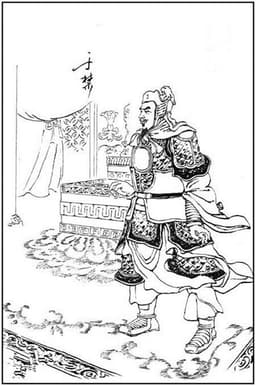
Yu Jin
General · Ancient
43.9Total
Basic Information
Born
-550
166
Died
-479
221
Era
Ancient
Ancient
Nationality
Achaemenid Empire
China
Occupation
General
General
Civilization
Middle Eastern
Eastern
Score Comparison
Military (10%)
52.5
47.5
Political (20%)
35.0
35.0
Influence (20%)
49.4
47.1
Legacy (20%)
40.8
40.0
Leadership (15%)
57.1
40.9
Strategy (15%)
57.5
60.0
TOTAL
47.4
43.9
Mardonius — Complete Timeline
492 BC
Led the Persian campaign in Thrace and MacedonWar◆ Major
Mardonius led a Persian expedition to subdue Thrace and Macedon, forcing them into submission. This campaign secured the northern flank of the Persian Empire and prepared the ground for the invasion of Greece.
CampaignThraceMacedon
Impact: regional
490 BC
Commanded Persian forces at the Battle of MarathonWar◆ Major
Mardonius was a key commander in the first Persian invasion of Greece. He led the Persian army at the Battle of Marathon, where they were defeated by the Athenians and Plataeans. This defeat delayed Persian plans to conquer Greece.
BattleGreco-Persian Wars
Impact: regionaltragic
481 BC
Advised Xerxes to invade GreecePolitical Action◆ Major
Mardonius was a strong advocate for the second Persian invasion of Greece, urging Xerxes to avenge the defeat at Marathon. His advice influenced Xerxes' decision to launch the massive invasion in 480 BC.
AdviceInvasionGreco-Persian Wars
Impact: regional
479 BC
Commanded Persian forces at the Battle of PlataeaWar
Mardonius commanded the Persian army at the Battle of Plataea, the decisive land battle of the second Persian invasion. The Persian forces were defeated by the Greek coalition, and Mardonius was killed in the fighting. This defeat ended Persian ambitions in Greece.
BattleGreco-Persian WarsDeath
Impact: globaltragic
Yu Jin — Complete Timeline
200 AD
Battle of GuanduWar◆ Major
Yu Jin served under Cao Cao at Guandu. He commanded the rear guard and maintained discipline, executing deserters to keep morale.
Three KingdomsBattleDiscipline
Impact: national
219 AD
Battle of FanchengWar
Yu Jin was sent to relieve Fancheng but was defeated by Guan Yu. His army was trapped by flooding, and he surrendered to Guan Yu, a major disgrace.
Three KingdomsDefeatSurrender
Impact: nationaltragic
220 AD
Capture by Sun QuanWar
After Guan Yu's death, Yu Jin was captured by Sun Quan's forces. He was held prisoner in Wu for several years.
Three KingdomsCaptureSun Quan
Impact: nationaltragic
221 AD
Return to Wei and DeathOther
Yu Jin was returned to Wei after negotiations. Cao Pi humiliated him by showing a painting of his surrender, and Yu Jin died of shame shortly after.
Three KingdomsDeathDisgrace
Impact: nationaltragic
Expert Analysis
Origins
**Mardonius** was born around 500 BCE into the Achaemenid Persian aristocracy. He was the son of Gobryas, one of the seven conspirators who helped Darius I seize the throne, and married Darius's daughter. This connection placed him at the heart of Persian power. He likely received the typical education of a Persian noble, emphasizing horsemanship, archery, and military command. His early career included leading expeditions to subdue Greek cities in Ionia and the Hellespont.
**Yu Jin** was born in 159 CE in Juye, Shandong, during the late Eastern Han dynasty. He came from a modest background and joined the army of Cao Cao early in the warlord's rise. Unlike Mardonius, Yu Jin had no noble lineage; his advancement came through demonstrated loyalty and competence. He was known for strict discipline and harsh punishment of deserters, which earned him a reputation as a no-nonsense commander.
Rise to Power
Mardonius rose under Darius I, leading a campaign in 492 BCE to secure Thrace and Macedon. He successfully forced the Macedonian king Alexander I to submit, opening the way for a future invasion of Greece. However, his fleet was wrecked off Mount Athos, delaying further action. After Darius's death, Mardonius became a key advisor to Xerxes I, urging the new king to avenge the defeat at Marathon. His influence was pivotal in launching the second Persian invasion of Greece in 480 BCE.
Yu Jin rose under Cao Cao during the turbulent years of the Han collapse. At the Battle of Guandu in 200 CE, he commanded the rear guard and executed deserters to maintain order, earning Cao Cao's trust. He was promoted to general and led campaigns against rival warlords, including Lü Bu and Liu Bei. By the 210s, he was one of Cao Cao's most trusted generals, often given independent commands.
Leadership & Governance
Mardonius's leadership was characterized by boldness and a desire to prove Persian superiority. He advocated for a direct confrontation with the Greeks, believing that a decisive victory would end the war. He was also a diplomat, attempting to win over Athens through offers of peace and autonomy. However, his governance of conquered territories was harsh, and he failed to secure local loyalty. His military leadership at Plataea was marked by tactical errors, including fighting on unfavorable terrain.
Yu Jin was a disciplinarian who emphasized order and punishment. He executed deserters without hesitation, which kept his troops in line but also fostered resentment. He was known for his strict adherence to Cao Cao's orders, but lacked flexibility and strategic creativity. His governance of captured areas was efficient but lacked the leniency that might have won over local populations. His leadership style scored 40.9, reflecting rigidity under pressure.
Triumph & Tragedy
Mardonius's greatest triumph was the successful campaign in Thrace and Macedon, which secured the Persian northern flank. He also commanded the Persian forces at the crucial Battle of Marathon, but was wounded and the Persians lost. His greatest failure was the Battle of Plataea in 479 BCE, where he commanded the Persian army of around 100,000 men against a Greek coalition of roughly 40,000. Mardonius was killed in the battle, and his army was routed, ending Persian ambitions in Greece. His military score of 52.5 reflects mixed results.
Yu Jin's greatest triumph was his service at Guandu, where he maintained discipline and helped Cao Cao secure victory. He also successfully captured the city of Xiangyang from Liu Bei's forces. His greatest failure was the Battle of Fancheng in 219 CE, where he was trapped by floodwaters and surrendered to Guan Yu. This surrender was a major disgrace, as Yu Jin chose capture over death. He was later humiliated by Cao Pi and died of shame. His military score of 47.5 shows a competent but flawed commander.
Character & Destiny
Mardonius was ambitious and confident, driven by a desire to restore Persian honor after Marathon. He was persuasive, convincing Xerxes to invade, but also reckless, underestimating the Greek hoplite phalanx. His death at Plataea was a direct result of his aggressive tactics. He scored 57.1 in leadership, indicating a charismatic but impetuous nature.
Yu Jin was rigid and prideful, valuing discipline above all. His surrender at Fancheng was a shock to his contemporaries, as he had always preached loyalty and death before dishonor. His inability to live with the shame led to his death. He scored 40.9 in leadership, reflecting a brittle temperament that cracked under pressure.
Legacy
Mardonius is remembered as the architect of the second Persian invasion and the commander who lost it. His defeat at Plataea ensured Greek independence and the rise of Athenian power. Historians often cite him as a cautionary example of overreach. His influence score of 49.4 reflects his role in shaping the Greco-Persian Wars.
Yu Jin is remembered primarily for his surrender, which overshadowed his earlier service. He is often contrasted with other Wei generals who died fighting. His legacy is one of shame, and he is not celebrated in Chinese history. His legacy score of 40.0 is among the lowest for a general of his rank.
Conclusion
Mardonius had a greater impact on history than Yu Jin. While both were competent generals who suffered decisive defeats, Mardonius's actions shaped the course of the Greco-Persian Wars and the development of Western civilization. His defeat at Plataea ended Persian expansion into Europe and preserved Greek city-states. Yu Jin's surrender, while a personal tragedy, did not alter the trajectory of the Three Kingdoms period. Mardonius's total score of 47.4 versus Yu Jin's 43.9 reflects this difference. Mardonius's influence and leadership, despite his flaws, had more far-reaching consequences.
Rankings
🥇
MardoniusLeader
Mil: 52.5Pol: 35.0Inf: 49.4
47.4
🥈
Yu Jin
Mil: 47.5Pol: 35.0Inf: 47.1
43.9
+3.5 behind
How This Comparison Works
Algorithm
Each figure is scored on 6 dimensions (0—100 scale) based on structured historical data: Military (10%), Political (20%), Influence (20%), Legacy (20%), Leadership (15%), Strategy (15%). The weighted total produces the final ranking.
Data Sources
Scores are computed from structured sub-indicators in the database. Scale factors adjust for era (Ancient ×0.85, Modern ×1.0) and civilization size (Eastern ×1.05, Other ×0.80) to account for differences in population and military scale.
Maximum 3 Figures
Comparisons are limited to 2—3 figures to ensure readability and statistical meaningfulness.
Error Margins
±5 points per dimension — Sub-scores are derived from historical records with inherent uncertainty. Two figures within 5 points on a dimension should be considered roughly equivalent in that area.
Total Score Accuracy
±3 points overall — The weighted combination of 6 dimensions produces a total score with approximately ±3 points of uncertainty. Differences of less than 3 points are not statistically significant— the figures are effectively tied.
Known Limitations
- Historical records are incomplete and uneven across civilizations
- Figures from oral-tradition societies may be underrepresented
- Occupation labels can misclassify multi-role figures
- Scores measure capability and impact, not moral character
- Quantitative scoring is a comparison tool, not absolute truth
Capability Radar
Military (10%) — Battles & Warfare
Battles
45
45
Win Rate
30
40
Expansion
40
20
Political (20%) — Governance & Reform
Reform
10
10
Diplomacy
25
25
Economy
15
15
Influence (20%) — Cultural & Global Reach
Cultural
20
20
Global
25
10
Legacy (20%) — Historical Impact
Historical
35
30
Longevity
20
20
Leadership (15%) — Power & Stability
Tenure
20
30
Stability
15
20
Strategy (15%) — Tactics & Innovation
Strategy
50
45
Tactics
55
50
Reform
10
10
Similar Comparisons
Comments & Discussion
No comments yet. Be the first to share your thoughts!