Loading...
Lai Xi vs Yu Jin
Yu Jin leads by 2.2 pts · 2 figures compared
…

Lai Xi
General · Ancient
41.7Total
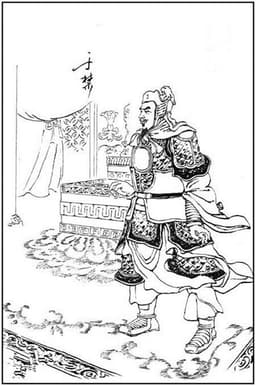
Yu Jin
General · Ancient
43.9Total
Basic Information
Born
-20
166
Died
35
221
Era
Ancient
Ancient
Nationality
China
China
Occupation
General
General
Civilization
Eastern
Eastern
Score Comparison
Military (10%)
45.0
47.5
Political (20%)
35.0
35.0
Influence (20%)
44.0
47.1
Legacy (20%)
34.2
40.0
Leadership (15%)
57.1
40.9
Strategy (15%)
38.6
60.0
TOTAL
41.7
43.9
Lai Xi — Complete Timeline
35 AD
Assassination by Gongsun ShuPolitical Action◆ Major
Lai Xi, an Eastern Han general, was assassinated by agents of the rebel Gongsun Shu. The assassination occurred during the Han campaign to suppress Gongsun Shu's rebellion in Sichuan, removing a key commander from the conflict.
Eastern HanRebellionAssassination
Impact: regionaltragic
Yu Jin — Complete Timeline
200 AD
Battle of GuanduWar◆ Major
Yu Jin served under Cao Cao at Guandu. He commanded the rear guard and maintained discipline, executing deserters to keep morale.
Three KingdomsBattleDiscipline
Impact: national
219 AD
Battle of FanchengWar
Yu Jin was sent to relieve Fancheng but was defeated by Guan Yu. His army was trapped by flooding, and he surrendered to Guan Yu, a major disgrace.
Three KingdomsDefeatSurrender
Impact: nationaltragic
220 AD
Capture by Sun QuanWar
After Guan Yu's death, Yu Jin was captured by Sun Quan's forces. He was held prisoner in Wu for several years.
Three KingdomsCaptureSun Quan
Impact: nationaltragic
221 AD
Return to Wei and DeathOther
Yu Jin was returned to Wei after negotiations. Cao Pi humiliated him by showing a painting of his surrender, and Yu Jin died of shame shortly after.
Three KingdomsDeathDisgrace
Impact: nationaltragic
Expert Analysis
Origins
Lai Xi (born c. 1st century AD) came from a family of officials in the Eastern Han dynasty. Little is known of his early life, but he rose as a military officer during the reign of Emperor Guangwu. His background was typical for a Han general: loyal to the central court, with no recorded exceptional education or family legacy. In contrast, Yu Jin (born c. 2nd century AD) emerged from a military family in the late Eastern Han. He joined Cao Cao early in the warlord's rise, serving as a trusted commander. Yu Jin's formative years were shaped by the chaos of the Three Kingdoms period, where discipline and loyalty were prized.
Rise to Power
Lai Xi gained prominence as a general under Emperor Guangwu, tasked with suppressing rebellions in the south. He participated in the campaign against Gongsun Shu, a warlord who declared himself emperor in Shu. Lai Xi's key event was his assassination by Gongsun Shu's agents in 35 AD, which cut short his career. His rise was unremarkable beyond his appointment, and he never achieved a major victory. Yu Jin, however, rose through Cao Cao's ranks by demonstrating strict discipline. At the Battle of Guandu (200 AD), he commanded the rear guard, executing deserters to maintain morale. This earned him Cao Cao's trust, leading to commands in later campaigns. His turning point came at Fancheng (219 AD), where he was sent to relieve the besieged city but was defeated by Guan Yu's flooding tactics and surrendered.
Leadership & Governance
Lai Xi's leadership is poorly documented, but he likely followed standard Han military protocols. His governance approach was typical of a frontier general: enforce imperial authority, suppress local revolts. He scored 57.1 in leadership, indicating adequate command but no innovation. Yu Jin, by contrast, was known for harsh discipline. At Guandu, he executed deserters without hesitation, a policy praised by Cao Cao for maintaining order. However, his rigidity may have contributed to his surrender at Fancheng, as he failed to adapt to the flooding. Yu Jin's political score is 35.0, reflecting his inability to navigate the complex politics of Wei, leading to his posthumous humiliation by Cao Pi.
Triumph & Tragedy
Lai Xi's greatest success was his role in the Han campaign against Gongsun Shu, though his assassination prevented any major victory. His tragedy is his sudden death, which left no lasting achievements. He scored 44.0 in influence and 34.2 in legacy, reflecting his minimal impact. Yu Jin's triumph was his service at Guandu, where he demonstrated loyalty and discipline. However, his surrender at Fancheng (his greatest failure) tarnished his reputation. After being captured by Sun Quan and later returned to Wei, he was publicly shamed by Cao Pi, who showed him a painting of his surrender. Yu Jin died of shame shortly after, a tragic end for a once-respected general. His military score of 47.5 and strategy score of 60.0 reflect his competence in battle but failure in command decisions.
Character & Destiny
Lai Xi appears as a loyal but unremarkable figure, whose destiny was cut short by assassination. His character is not well-documented, but his death suggests he was either careless or outmaneuvered by Gongsun Shu's spies. Yu Jin's character was defined by rigid discipline and pride. His decision to surrender at Fancheng, while pragmatic to save his men, was seen as cowardice in a culture that valued death over dishonor. His subsequent humiliation by Cao Pi broke his spirit. Historical assessments note that Yu Jin was a competent general who lacked the flexibility to navigate the complex loyalties of the Three Kingdoms. His total score of 43.9 reflects a solid but flawed career.
Legacy
Lai Xi is barely remembered in Chinese history, mentioned only in passing in the Book of the Later Han. His assassination is a footnote in the campaign against Gongsun Shu. He scored 34.2 in legacy, indicating negligible long-term impact. Yu Jin, however, is a cautionary tale in the Romance of the Three Kingdoms and historical records. His surrender at Fancheng is a key episode illustrating the dangers of pride and the importance of loyalty. His legacy is mixed: he is remembered as a capable general whose one failure defined his life. Yu Jin's influence score of 47.1 reflects his role in a major turning point of the Three Kingdoms period.
Conclusion
While Lai Xi and Yu Jin were both Eastern Han generals, Yu Jin had a greater impact due to his involvement in pivotal events like the Battle of Guandu and the Battle of Fancheng. Lai Xi's career was cut short before he could achieve anything significant. Yu Jin's total score of 43.9 surpasses Lai Xi's 41.7, and his strategy score of 60.0 indicates higher tactical competence. Despite his disgrace, Yu Jin's actions influenced the course of the Three Kingdoms, whereas Lai Xi remains a minor figure. Therefore, Yu Jin had a greater, albeit flawed, impact on history.
Rankings
🥇
Yu JinLeader
Mil: 47.5Pol: 35.0Inf: 47.1
43.9
🥈
Lai Xi
Mil: 45.0Pol: 35.0Inf: 44.0
41.7
+2.2 behind
How This Comparison Works
Algorithm
Each figure is scored on 6 dimensions (0—100 scale) based on structured historical data: Military (10%), Political (20%), Influence (20%), Legacy (20%), Leadership (15%), Strategy (15%). The weighted total produces the final ranking.
Data Sources
Scores are computed from structured sub-indicators in the database. Scale factors adjust for era (Ancient ×0.85, Modern ×1.0) and civilization size (Eastern ×1.05, Other ×0.80) to account for differences in population and military scale.
Maximum 3 Figures
Comparisons are limited to 2—3 figures to ensure readability and statistical meaningfulness.
Error Margins
±5 points per dimension — Sub-scores are derived from historical records with inherent uncertainty. Two figures within 5 points on a dimension should be considered roughly equivalent in that area.
Total Score Accuracy
±3 points overall — The weighted combination of 6 dimensions produces a total score with approximately ±3 points of uncertainty. Differences of less than 3 points are not statistically significant— the figures are effectively tied.
Known Limitations
- Historical records are incomplete and uneven across civilizations
- Figures from oral-tradition societies may be underrepresented
- Occupation labels can misclassify multi-role figures
- Scores measure capability and impact, not moral character
- Quantitative scoring is a comparison tool, not absolute truth
Capability Radar
Military (10%) — Battles & Warfare
Battles
10
45
Win Rate
10
40
Expansion
5
20
Political (20%) — Governance & Reform
Reform
5
10
Diplomacy
10
25
Economy
5
15
Influence (20%) — Cultural & Global Reach
Cultural
5
20
Global
5
10
Legacy (20%) — Historical Impact
Historical
10
30
Longevity
5
20
Leadership (15%) — Power & Stability
Tenure
10
30
Stability
5
20
Strategy (15%) — Tactics & Innovation
Strategy
10
45
Tactics
15
50
Reform
5
10
Similar Comparisons
Comments & Discussion
No comments yet. Be the first to share your thoughts!