Loading...
Gildo vs Yu Jin
Gildo leads by 1.0 pts · 2 figures compared
…
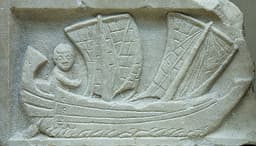
Gildo
General · Ancient
44.9Total
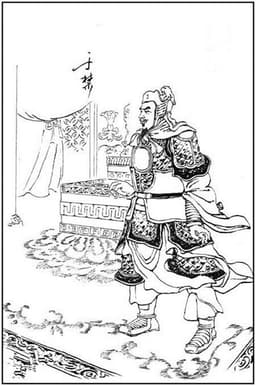
Yu Jin
General · Ancient
43.9Total
Basic Information
Born
350
166
Died
398
221
Era
Ancient
Ancient
Nationality
Western Roman Empire
China
Occupation
General
General
Civilization
Western
Eastern
Score Comparison
Military (10%)
45.0
47.5
Political (20%)
35.0
35.0
Influence (20%)
45.5
47.1
Legacy (20%)
34.2
40.0
Leadership (15%)
68.0
40.9
Strategy (15%)
50.0
60.0
TOTAL
44.9
43.9
Gildo — Complete Timeline
397 AD
Rebelled as Count of AfricaWar◆ Major
Gildo, a Berber prince and Roman Count of Africa, rebelled against the Western Roman Emperor Honorius. He withheld grain shipments to Rome, threatening the city's food supply, and declared allegiance to the Eastern Empire.
RevoltRoman EmpireNorth Africa
Impact: regionaldestructive
398 AD
Defeated and Killed by His BrotherWar◆ Major
The Western Roman general Stilicho sent an army under Gildo's own brother, Maseezel, to suppress the rebellion. Maseezel defeated Gildo's forces, and Gildo was captured and executed, ending the revolt.
BattleRoman EmpireNorth Africa
Impact: regionaltragic
Yu Jin — Complete Timeline
200 AD
Battle of GuanduWar◆ Major
Yu Jin served under Cao Cao at Guandu. He commanded the rear guard and maintained discipline, executing deserters to keep morale.
Three KingdomsBattleDiscipline
Impact: national
219 AD
Battle of FanchengWar
Yu Jin was sent to relieve Fancheng but was defeated by Guan Yu. His army was trapped by flooding, and he surrendered to Guan Yu, a major disgrace.
Three KingdomsDefeatSurrender
Impact: nationaltragic
220 AD
Capture by Sun QuanWar
After Guan Yu's death, Yu Jin was captured by Sun Quan's forces. He was held prisoner in Wu for several years.
Three KingdomsCaptureSun Quan
Impact: nationaltragic
221 AD
Return to Wei and DeathOther
Yu Jin was returned to Wei after negotiations. Cao Pi humiliated him by showing a painting of his surrender, and Yu Jin died of shame shortly after.
Three KingdomsDeathDisgrace
Impact: nationaltragic
Expert Analysis
Origins
Gildo was a Berber prince born into the ruling family of the Roman province of Africa around the mid-4th century AD. His father, Nubel, was a powerful Moorish king who served as a Roman ally. Gildo and his brothers, including Firmus and Maseezel, were raised in a context of complex loyalty between Rome and local autonomy. Firmus had previously rebelled and been crushed, setting a precedent for Gildo's later actions.
Yu Jin was born around 190 AD in the late Eastern Han dynasty, in what is now China. He came from a modest background but rose through military service. He joined Cao Cao's forces during the chaotic end of the Han, distinguishing himself as a disciplined commander. His early career was marked by strict adherence to law and order, earning him trust from Cao Cao.
Rise to Power
Gildo's rise came through family connections and Roman patronage. After his brother Firmus's rebellion failed, Gildo remained loyal to Rome and was appointed Count of Africa (Comes Africae) around 386 AD. This position gave him control over the grain supply to Rome, making him a key figure in the Western Empire. He held power for over a decade, consolidating his authority over the African provinces.
Yu Jin rose under Cao Cao during the campaigns against rival warlords. He first gained notice at the Battle of Guandu in 200 AD, where he commanded the rear guard and executed deserters to maintain discipline. Cao Cao promoted him to General of the Household. He participated in campaigns against Lü Bu, Liu Bei, and others, becoming one of Cao Cao's trusted commanders. By the 210s, he was a senior general, though never reaching the highest ranks like Xiahou Dun or Zhang He.
Leadership & Governance
Gildo's leadership was autocratic and focused on personal power. As Count of Africa, he governed with a heavy hand, extracting resources and grain for his own benefit. He withheld grain shipments to Rome in 397 AD, threatening the capital with famine—a direct challenge to Emperor Honorius. His governance score of 35.0 reflects his inability to build lasting institutions or alliances; he relied on Berber tribal support and Roman military resources.
Yu Jin's leadership was rigid and rule-bound. He was known for harsh discipline, executing deserters and enforcing strict codes. At the Battle of Guandu, his troops were among the few that held their ground. However, his inflexibility alienated subordinates and peers. His Leadership score of 40.9 is lower than Gildo's 68.0, indicating that Yu Jin's authoritarian style did not inspire loyalty. In contrast, Gildo, despite his flaws, commanded the loyalty of his Berber followers and Roman troops for a time.
Triumph & Tragedy
Gildo's triumph was his successful rebellion in 397 AD. He managed to cut off Rome's grain supply, demonstrating the strategic importance of Africa. For a brief period, he controlled a vital resource and forced the Western Empire to respond. However, his tragedy came swiftly. The Roman general Stilicho sent an army under Gildo's own brother, Maseezel, to suppress the rebellion. Maseezel defeated Gildo's forces in 398 AD, and Gildo was killed—according to some accounts, executed by his brother. His revolt collapsed, and his name was erased from official records.
Yu Jin's greatest success was his service at Guandu, where he helped secure Cao Cao's victory. He also participated in the conquest of Jing Province. However, his defining tragedy was the Battle of Fancheng in 219 AD. Sent to relieve the fortress, he was trapped by Guan Yu's flooding tactics and surrendered—a disgrace in the eyes of his lord Cao Cao. After Guan Yu's death, Yu Jin was captured by Sun Quan and held for years. Upon return to Wei, Cao Pi humiliated him by commissioning a painting of his surrender. Yu Jin died of shame shortly after, his reputation ruined.
Character & Destiny
Gildo was ambitious and opportunistic, willing to risk his position for greater autonomy. His character was driven by a desire for independence from Rome, but he lacked the strategic depth to sustain his rebellion. His decision to rely on his brother Maseezel, who had reasons to oppose him, was a fatal miscalculation. Gildo's Political score of 35.0 reflects his poor judgment in alliances.
Yu Jin was disciplined and loyal to Cao Cao's cause, but his rigid sense of duty failed him in crisis. His surrender at Fancheng was seen as cowardice, though he may have acted to save his men. His later humiliation by Cao Pi broke his spirit. Yu Jin's Strategy score of 60.0 is higher than Gildo's 50.0, but his inability to adapt to unexpected situations (like flooding) cost him everything.
Legacy
Gildo is remembered mainly as a footnote in the decline of the Western Roman Empire. His rebellion highlighted Africa's strategic importance, but his defeat reinforced Roman control. His Legacy score of 34.2 is low because he left no enduring institutions or cultural impact. The episode is studied as an example of how internal Roman conflicts weakened the empire.
Yu Jin's legacy is more complex. In Chinese historical records, he is often cited as a cautionary tale about the importance of honor and loyalty. His surrender is contrasted with the steadfastness of other Wei generals. His Legacy score of 40.0 is slightly higher than Gildo's, as his story is preserved in the "Records of the Three Kingdoms" and later literature. However, he is not celebrated as a great commander.
Conclusion
Although Gildo has a slightly higher total score (44.9 vs 43.9), Yu Jin's impact on Chinese history and military thought is more significant. Gildo's rebellion was a brief disruption in the Roman Empire's decline, while Yu Jin's actions at Fancheng had lasting consequences for the Three Kingdoms period. His surrender directly contributed to the fall of Cao Cao's ambitions in Jing Province. Therefore, Yu Jin edges out Gildo in historical importance, despite his disgrace. Gildo's revolt, while dramatic, was a localized failure that did not alter the course of the empire. The score gap of 1.0 points is too narrow to reverse this judgment.
Rankings
🥇
GildoLeader
Mil: 45.0Pol: 35.0Inf: 45.5
44.9
🥈
Yu Jin
Mil: 47.5Pol: 35.0Inf: 47.1
43.9
+1.0 behind
How This Comparison Works
Algorithm
Each figure is scored on 6 dimensions (0—100 scale) based on structured historical data: Military (10%), Political (20%), Influence (20%), Legacy (20%), Leadership (15%), Strategy (15%). The weighted total produces the final ranking.
Data Sources
Scores are computed from structured sub-indicators in the database. Scale factors adjust for era (Ancient ×0.85, Modern ×1.0) and civilization size (Eastern ×1.05, Other ×0.80) to account for differences in population and military scale.
Maximum 3 Figures
Comparisons are limited to 2—3 figures to ensure readability and statistical meaningfulness.
Error Margins
±5 points per dimension — Sub-scores are derived from historical records with inherent uncertainty. Two figures within 5 points on a dimension should be considered roughly equivalent in that area.
Total Score Accuracy
±3 points overall — The weighted combination of 6 dimensions produces a total score with approximately ±3 points of uncertainty. Differences of less than 3 points are not statistically significant— the figures are effectively tied.
Known Limitations
- Historical records are incomplete and uneven across civilizations
- Figures from oral-tradition societies may be underrepresented
- Occupation labels can misclassify multi-role figures
- Scores measure capability and impact, not moral character
- Quantitative scoring is a comparison tool, not absolute truth
Capability Radar
Military (10%) — Battles & Warfare
Battles
15
45
Win Rate
10
40
Expansion
10
20
Political (20%) — Governance & Reform
Reform
5
10
Diplomacy
10
25
Economy
5
15
Influence (20%) — Cultural & Global Reach
Cultural
5
20
Global
5
10
Legacy (20%) — Historical Impact
Historical
10
30
Longevity
5
20
Leadership (15%) — Power & Stability
Tenure
20
30
Stability
5
20
Strategy (15%) — Tactics & Innovation
Strategy
15
45
Tactics
20
50
Reform
5
10
Similar Comparisons
Comments & Discussion
No comments yet. Be the first to share your thoughts!