Loading...
Manuel Zelaya vs Napoleon Bonaparte
Napoleon Bonaparte leads by 25.4 pts · 2 figures compared
…
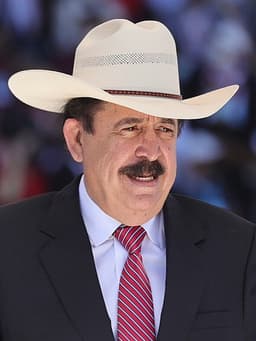
Manuel Zelaya
Politician · Modern
45.5Total

Napoleon Bonaparte
General · Modern
70.9Total
Basic Information
Born
1952
1769
Died
—
1821
Era
Modern
Modern
Nationality
Honduras
France
Occupation
Politician
General
Civilization
Western
Western
Score Comparison
Military (10%)
50.0
94.0
Political (20%)
43.7
72.0
Influence (20%)
50.2
40.0
Legacy (20%)
40.0
80.0
Leadership (15%)
48.4
78.0
Strategy (15%)
41.7
90.0
TOTAL
45.5
70.9
Manuel Zelaya — Complete Timeline
2005 AD
Election as President of HondurasPolitical Action◆ Major
Zelaya was elected president as the candidate of the Liberal Party, defeating Porfirio Pepe Lobo. His campaign focused on poverty reduction and social programs, and he initially governed as a centrist before shifting leftward.
ElectionLiberal PartyPresidency
Impact: nationalconstructive
2008 AD
Ally with ALBA and Hugo ChávezPolitical Action◆ Major
Zelaya aligned Honduras with the Bolivarian Alliance for the Peoples of Our America (ALBA), led by Venezuela's Hugo Ch
ALBAChávezLeftist ShiftPetrocaribe
Impact: regional
2009 AD
2009 Honduran coup d'étatPolitical Action
Zelaya was ousted in a military coup and forced into exile in Costa Rica. The coup occurred after he pushed for a non-binding referendum on constitutional reform, which was deemed illegal by the Supreme Court. The OAS and UN condemned the coup.
CoupConstitutional CrisisExileOAS
Impact: regionaldestructive
Napoleon Bonaparte — Complete Timeline
1799 AD
Coup of 18 BrumaireOther◆ Major
Napoleon Bonaparte, with support from his brother Lucien and key political figures, overthrew the Directory in a bloodless coup. He established the Consulate with himself as First Consul, effectively becoming the ruler of France. This event ended the French Revolution's most unstable period.
French RevolutionCoupRise to Power
Impact: regional
1804 AD
Promulgation of the Napoleonic CodeOther◆ Major
Napoleon enacted the Civil Code of the French, known as the Napoleonic Code, a comprehensive set of laws that replaced the fragmented feudal legal systems. The code established legal equality, protected property rights, and secularized law. It became the basis for legal systems in many European and world countries.
Legal ReformNapoleonic CodeCivil Law
Impact: globalconstructive
1805 AD
Battle of AusterlitzWar◆ Major
Napoleon's Grande Arm
Napoleonic WarsBattleDecisive Victory
Impact: global
1812 AD
Invasion of RussiaWar◆ Major
Napoleon led the Grande Arm
Napoleonic WarsInvasionDisaster
Impact: globaldestructive
1815 AD
Battle of WaterlooWar◆ Major
Napoleon's French army was defeated by the combined forces of the Duke of Wellington's Anglo-Allied army and Gebhard Leberecht von Bl
Napoleonic WarsBattleFinal Defeat
Impact: globaldestructive
Expert Analysis
manuel-zelaya-vs-napoleon-bonaparte
# The Emperor and the Exile: Why Ambition Needs a Foundation
On a June morning in 1815, a man who had once commanded half a million soldiers stood alone on a windswept Belgian field, watching his empire dissolve into smoke and mud. Nearly two centuries later, on another June morning in 2009, a Central American president was roused from his bed by soldiers, bundled into a plane, and dropped in a foreign country without a passport. Both men saw their power vanish in a single day. But the distance between Waterloo and Tegucigalpa is more than geography—it is the gap between building a world and merely trying to change one.
Origins
Napoleon Bonaparte was born in 1769 on the island of Corsica, a place that France had acquired only months before. His family was minor nobility, poor enough that young Napoleon wore hand-me-down uniforms to military school, where his classmates mocked his accent. That sting of humiliation never left him. It drove him to master mathematics, artillery tactics, and the psychology of men in battle. He studied the campaigns of Alexander and Caesar the way a pianist studies Chopin—not to memorize, but to absorb.
Manuel Zelaya was born in 1952 in Catacamas, Honduras, into a family of wealthy landowners. His father had been a local caudillo, a strongman who settled disputes with a pistol on the table. Zelaya studied civil engineering but never practiced it; politics was his inheritance. He grew up in a nation where power flowed through family networks, where the constitution was a suggestion, and where presidents often left office in handcuffs—or on stretchers.
The difference in their worlds was not just size but structure. Napoleon inherited a revolution that had shattered every institution in France, leaving a vacuum that a man of will could fill. Zelaya inherited a fragile democracy that had only emerged from military rule in 1982, held together by agreements among elites who did not trust each other.
Rise to Power
Napoleon’s ascent was a masterpiece of timing and terror. At 24, he drove the British out of Toulon with a plan no one else had thought of. At 26, he saved the revolutionary government from a royalist mob by ordering his cannon to fire into the crowd—not warning shots, but grapeshot that tore men apart. By 30, he had conquered Italy and Egypt and returned to France to find the government so weak that he could overthrow it with 500 grenadiers. The coup of 18 Brumaire in 1799 was not a battle; it was a takeover by a man who understood that power belongs to those who take it.
Zelaya’s path was different. He won the presidency in 2005 with 49.9% of the vote, running as a centrist Liberal. He had no military background, no revolutionary credentials. He was a rancher and businessman who spoke in folksy proverbs. His rise was not a conquest but an election—and elections in Honduras were contests between the same two parties that had traded power for decades.
Leadership & Governance
As emperor, Napoleon governed with terrifying energy. He wrote 33,000 letters, personally reviewed every detail of his new legal code, and reorganized France into departments, schools, and banks that still exist. The Napoleonic Code swept away feudal privileges and established equality before the law—at least for men. He appointed prefects who reported directly to him, creating a centralized state that could mobilize resources faster than any rival. His military reforms were even more profound: he created the corps system, promoted officers based on merit, and turned the French army into a machine that could march 20 miles a day and fight the next morning.
Zelaya governed in a different key. He increased the minimum wage, subsidized fuel and electricity, and built roads to rural areas. Then he made a fateful turn: in 2008, he aligned Honduras with Hugo Chávez’s ALBA alliance, accepting Venezuelan oil subsidies and advice. He began talking about rewriting the constitution to allow presidential re-election—the same move that had allowed Chávez to stay in power. The Honduran Supreme Court ruled it illegal. The military refused to distribute the ballots. Zelaya pushed ahead anyway.
Triumph & Tragedy
Napoleon’s greatest triumph was not a battle but a transformation. He took a bankrupt, divided France and made it the strongest power in Europe. His greatest tragedy was that he could not stop. After Austerlitz in 1805, he could have offered peace on generous terms. Instead, he invaded Spain, then Russia, then kept fighting until every great power in Europe united against him. The invasion of Russia in 1812 consumed 400,000 men—the largest army ever assembled—and returned with fewer than 30,000.
Zelaya’s triumph was smaller but real: he raised the minimum wage by 60% and cut poverty rates. His tragedy came on June 28, 2009, when soldiers took him to a waiting plane. The coup was illegal, brutal, and internationally condemned. But it succeeded because Zelaya had overreached without securing the institutions—the courts, the military, the congress—that could protect him. He had no loyal generals, no network of prefects, no system that would continue without him.
Character & Destiny
Napoleon was a man of infinite ambition and infinite suspicion. He trusted no one completely, not even his brothers whom he placed on thrones. He believed that “impossible is a word to be found only in the dictionary of fools.” That belief made him great and destroyed him. When he escaped from Elba in 1815, France rallied to him again. But he had learned nothing. He attacked the allied armies at Waterloo with the same tactics he had used for twenty years, against enemies who had finally learned his tricks.
Zelaya was a man of charm and impatience. He had the instinct of a populist but not the discipline of an organizer. He believed that popularity could substitute for institutional power. In Honduras, where the military had overthrown governments nine times in the 20th century, that was a fatal miscalculation. He was not overthrown because he was leftist; he was overthrown because he tried to change the rules of the game without controlling the referees.
Legacy
Napoleon’s legacy is written into the legal codes of half of Europe, the layout of Paris, the metric system, and the very concept of modern meritocracy. He remains a figure of endless fascination—a man who proved that a Corsican artillery officer could remake the world, and who proved that remaking the world requires more than genius. It requires knowing when to stop.
Zelaya’s legacy is more contested. He became a symbol of the fragility of democracy in Latin America, a warning that even elected presidents can be removed by force. After the coup, Honduras sank into violence and instability. Zelaya returned to the country in 2011 under a deal that restored neither him nor democracy. His wife was elected president in 2022, continuing the family dynasty. The coup that removed him did not end the problems he had tried to address—it only proved that those problems were stronger than any one man.
Conclusion
The difference between Napoleon and Zelaya is not a matter of scale alone. Both men believed that will could overcome structure. Both were wrong. Napoleon’s empire fell because he could not imagine limits. Zelaya’s presidency fell because he could not build foundations. One was a genius who destroyed himself. The other was a reformer who failed to secure his reforms. History does not reward ambition alone. It rewards the ability to build institutions that survive the builder. Napoleon built many; Zelaya built few. In the end, that is the difference between an emperor and a exile.
Rankings
🥇
Napoleon BonaparteLeader
Mil: 94.0Pol: 72.0Inf: 40.0
70.9
🥈
Manuel Zelaya
Mil: 50.0Pol: 43.7Inf: 50.2
45.5
+25.4 behind
How This Comparison Works
Algorithm
Each figure is scored on 6 dimensions (0—100 scale) based on structured historical data: Military (10%), Political (20%), Influence (20%), Legacy (20%), Leadership (15%), Strategy (15%). The weighted total produces the final ranking.
Data Sources
Scores are computed from structured sub-indicators in the database. Scale factors adjust for era (Ancient ×0.85, Modern ×1.0) and civilization size (Eastern ×1.05, Other ×0.80) to account for differences in population and military scale.
Maximum 3 Figures
Comparisons are limited to 2—3 figures to ensure readability and statistical meaningfulness.
Error Margins
±5 points per dimension — Sub-scores are derived from historical records with inherent uncertainty. Two figures within 5 points on a dimension should be considered roughly equivalent in that area.
Total Score Accuracy
±3 points overall — The weighted combination of 6 dimensions produces a total score with approximately ±3 points of uncertainty. Differences of less than 3 points are not statistically significant— the figures are effectively tied.
Known Limitations
- Historical records are incomplete and uneven across civilizations
- Figures from oral-tradition societies may be underrepresented
- Occupation labels can misclassify multi-role figures
- Scores measure capability and impact, not moral character
- Quantitative scoring is a comparison tool, not absolute truth
Capability Radar
Military (10%) — Battles & Warfare
Battles
28
95
Win Rate
31
90
Expansion
36
95
Political (20%) — Governance & Reform
Reform
40
95
Diplomacy
35
80
Economy
30
85
Influence (20%) — Cultural & Global Reach
Cultural
20
85
Global
20
90
Legacy (20%) — Historical Impact
Historical
25
95
Longevity
15
90
Leadership (15%) — Power & Stability
Tenure
30
85
Stability
10
70
Strategy (15%) — Tactics & Innovation
Strategy
36
95
Tactics
40
98
Reform
44
92
Similar Comparisons
Comments & Discussion
数据侦探6/17/2026
拿破仑打了60多场战役,平均两周一次,后勤线横跨整个欧洲。泽拉亚从没指挥过一场正规战斗,连自家的政变都没防住。一个用十万大军征服大陆,一个连护照都被人没收。这不是量级的问题,是压根不在一个维度。硬要比,那是拿纸飞机对比洲际导弹。
史海钩沉6/17/2026
别忘了拿破仑下台后还从厄尔巴岛逃回法国,重组军队打了一百天,差点翻盘。泽拉亚呢?被送到多米尼加后直接消声,靠奥巴马发话才露个面。一个被流放还能让整个欧洲发抖,一个被赶下台后连邻国都不当回事。这差距不是运气,是骨子里的统治本能。
修正主义炮台6/17/2026
你们别老捧拿破仑贬泽拉亚。拿破仑把法国拖入十年战争,死了百万青壮,最后被反法同盟围殴流放,算个什么天才?泽拉亚好歹推动的是全民公投,想给穷人分点福利就被美国中情局的政变搞下台。一个是靠战功装点自家的野心家,一个是真敢碰精英蛋糕的民粹斗士。站哪边看你屁股坐哪。
Historian9236/17/2026
Napoleon was obsessed with Caesar’s Commentaries and Alexander’s phalanxes—he literally studied their battles as templates. Zelaya’s political toolkit meanwhile came from family patronage and coffee estate power dynamics. There's a difference between a man who read the ancient masters to build an empire, and one whose peak strategy was changing his mind on term limits. One studied history; the other was studied by historians as a footnote.
Chronicler53786/17/2026
Comparing Zelaya to Napoleon is like comparing a domino to a chess grandmaster. Napoleon personally led 60 campaigns, redrew Europe’s map from scratch, and codified laws still used today. Zelaya’s biggest gamble was a non-binding poll on constitutional reform that got him ousted by his own military in pajamas. One shaped continents; the other couldn’t hold his own country.